
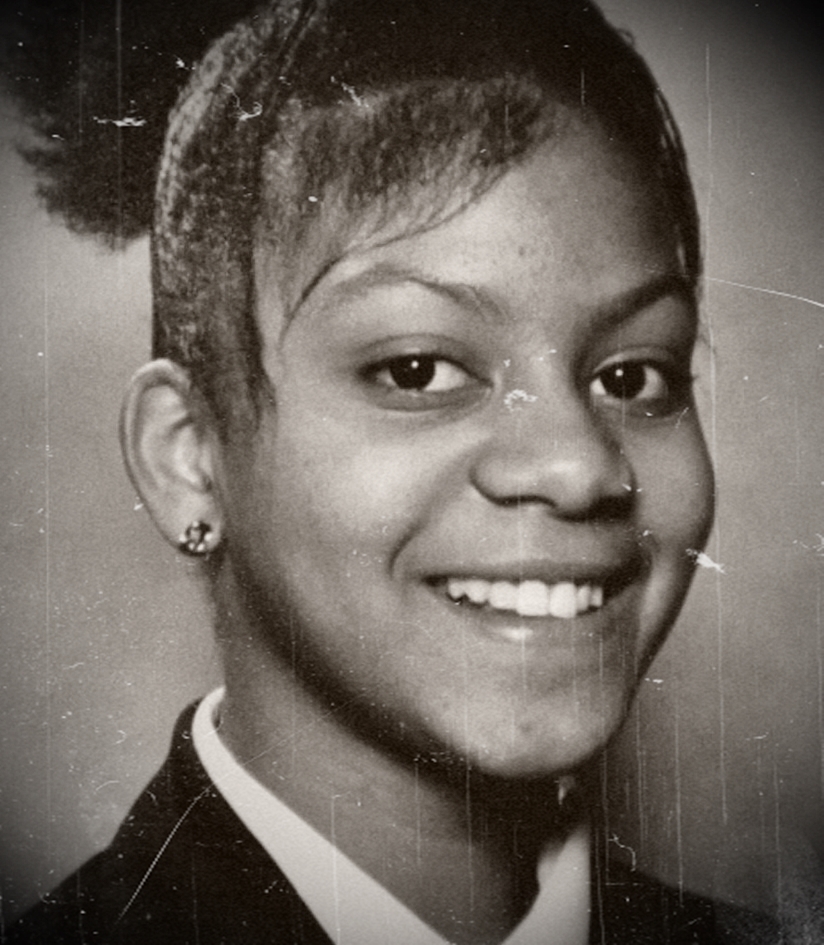
Fifteen-year-old Hannah Deterville was an outgoing, friendly girl, a well-known fixture in the London neighborhood where she lived. Her mother was the director of the Yaa Asantew community center, and organized floats for the yearly Notting Hill carnival. Because of her family’s high visibility, Hannah herself knew most of the shopkeepers along Harrow Road on a first-name basis. In early 1998, the teenager was studying for her GCSE exams at St. Thomas More Catholic School in Chelsea, where she played sports and studied theater.
At around seven p.m. on January 2nd, Hannah—dressed in a gray bomber jacket, orange jeans, and red Reeboks—told her mother she was going out to visit a friend, and that she would be back in a few hours. Sadly, she never returned home.
Hannah’s family was immediately alarmed, and reported her missing right away, also putting up their own flyers around West London. However, it appears that police didn’t initially take the girl’s disappearance seriously, only focusing their investigation after an agonizing two weeks had passed.
On January 24th, three weeks after Hannah had vanished, an anonymous phone call came into the Gay and Lesbian Switchboard; the caller tipped off police that there was a body dumped near a golf course in Hornseden Hill. The area was a well-known gay cruising spot, as well as being popular with dog walkers and joggers.
When officers arrived, they found Hannah’s remains partially hidden in the brush. She had been stabbed more than twenty times in the face and neck, a savage attack for which there seemed no clear motive. The teenager had not been raped, and none of her money or jewelry had been stolen.
Forensic examination determined that Hannah had probably been killed less than twelve hours after going missing, and her body had been kept somewhere for a while before being dumped. There was also speculation that more than one perpetrator might have been involved in disposing of the remains.
Authorities were completely baffled as to why someone would murder the popular, well-liked young woman, and though they floated the possibility that she’d been the victim of a wandering psychopath, they leaned more toward the theory that she had been killed by someone she knew. Hannah was described as a streetwise girl who wouldn’t have gotten into a vehicle with a stranger, and what’s more, the brutal nature of the killing suggested a personal vendetta.
The only tenuous lead investigators had was the testimony of the owner of a convenience store on Harrow Road who knew Hannah. He claimed that he had heard Hannah arguing with some unidentified individual on the afternoon of January 2nd, only hours before she disappeared. It is not known whether this person had any connection with Hannah’s murder.
The senseless slaying of Hannah Deterville is still unsolved, more than a quarter century later.
 Crime Immemorial