
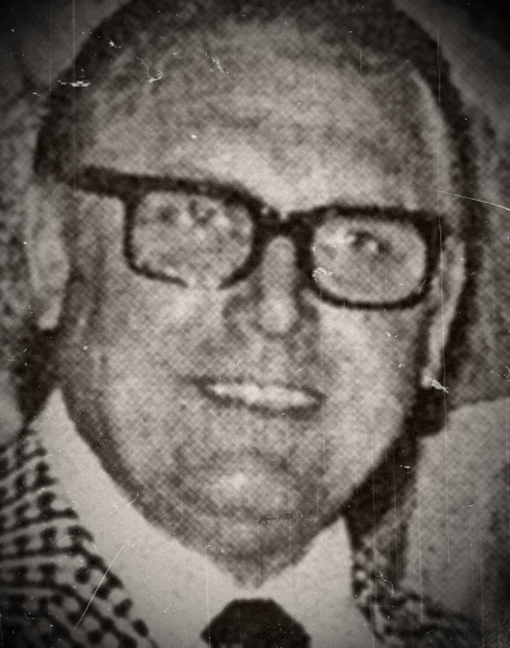
Seventy-five-year-old Herbert John Strehl was originally from Germany but emigrated to New York City in 1951. Seven years later, he moved to Salt Lake City, Utah, where he eventually founded a successful tool and die company. By the time the year 2000 rolled around, he had taken a step back from his business in order to spend more time with his three grown children and five grandchildren. He was described as friendly and generous, but also very private.
At around three-thirty on the afternoon of Sunday, December 3rd, 2000, a neighbor saw Herbert leave his Olympus Cove home in his gold 2000 Jeep Cherokee. A second, unidentified person followed the Jeep in Herbert’s other vehicle, a green Mercedes.
Both cars returned at approximately five p.m., at which point the neighbor stated that Herbert appeared “focused” and much more serious than usual. An hour and a half later, the Jeep left the house again, this time with two people inside, who were obviously in a hurry. This was the last known sighting of Herbert Strehl alive.
At eight-fifteen p.m. on the same night, a passerby phoned police about a body in a quarry in Parleys Canyon, near Ranch Exit 131. Upon arrival, investigators discovered the remains of Herbert Strehl, who had been tied up and shot in the head multiple times. It wasn’t initially clear whether the victim had been killed at the quarry or had been murdered elsewhere and then dumped there.
Whoever the killer (or killers) was, he likely drove away in Herbert’s gold Jeep Cherokee, and a search for the vehicle commenced, but it was never recovered.
At first, there was speculation that robbery had been the motive for the execution-style slaying, but detectives also pursued leads having to do with Herbert’s business dealings. It turned out that in 1989, Herbert’s company, Tool Design & Engineering & Mfg., had been ordered to clean up some soil on its property that was contaminated with lead and chrome. Rather than complying with the demand, Herbert instead ordered that the soil be illegally dumped in a landfill.
When the deception was uncovered, Herbert plead guilty to communications fraud for lying about the cleanup, and had to pay a substantial fine and have the contaminated soil removed from the landfill. In 1999, Herbert’s attorney, Byron Stubbs, was disbarred for his part in the cover-up.
It was also suspected that the business had not been doing well, judging by a number of layoffs that had occurred earlier in the year. Despite the troubles, though, employees who were interviewed stated that Herbert had been a good boss, demanding but fair, and there didn’t seem to be any obvious signs of disgruntled workers who might have wanted the company president dead.
Whether Herbert’s murder was a targeted hit or a simple robbery remains unknown, but the Strehl family is still hopeful that the case will someday be resolved.
 Crime Immemorial