
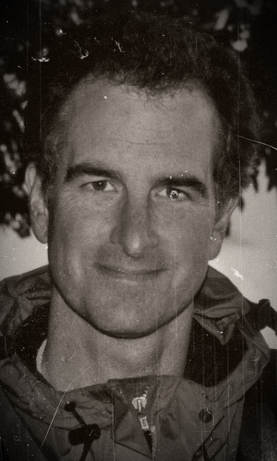
Thomas Crane Wales was born in 1952 and graduated from Harvard University and later from Hofstra University School of Law. He joined the U.S. Attorney’s Office in Seattle in 1983, specializing in white-collar crime. Known for his integrity, meticulous legal mind, and commitment to justice, Wales earned a reputation as a tough but fair prosecutor.
Outside his professional life, Wales was deeply committed to gun control advocacy. He served as the president of Washington CeaseFire, a nonprofit group pushing for stricter gun laws. This dual role—as both a federal prosecutor and an anti-gun violence activist—would later become central to theories about his murder.
On the night of October 11, 2001, Thomas Wales was working at his computer in the basement of his Queen Anne neighborhood home in Seattle. At approximately 10:40 p.m., an unknown assailant fired multiple shots through a basement window, hitting Wales in the neck and killing him. His body was discovered by a neighbor the following morning.
The manner of the attack was precise and seemingly premeditated. Investigators quickly ruled out a random act of violence or burglary. The killer had come prepared and disappeared without leaving any significant trace.
The murder of a sitting federal prosecutor was unprecedented at the time, triggering a massive response. The FBI launched a full-scale investigation, treating the case with the utmost urgency. Hundreds of interviews were conducted, and a reward of up to $1 million was offered for information leading to an arrest, an amount that was later increased to $2.5 million.
Several theories emerged over the years. For example, Wales had prosecuted a number of white-collar criminals, including a high-profile case against a Bellevue airline pilot for fraud. That pilot, later identified publicly by news organizations as a “person of interest,” had reportedly harbored deep resentment toward Wales. Despite intense scrutiny and surveillance, no charges were ever filed against him, and he has denied involvement.
In addition, Wales was one of the most outspoken gun control advocates in the Pacific Northwest. As president of Washington CeaseFire, he had made enemies in the gun rights community. However, while this line of inquiry was pursued, investigators found no direct threats or concrete leads from this angle.
Furthermore, the precise execution of the murder led some investigators to suspect a professional hitman. The weapon used—a Makarov pistol with an aftermarket barrel—was uncommon and potentially traceable, suggesting a calculated attempt to avoid detection.
In 2006, federal authorities confirmed they had a suspect in mind, but lacked the evidence to charge him. Over the years, multiple FBI agents and U.S. Attorneys have worked on the case. In 2018, the FBI conducted a raid on a property in Snoqualmie, Washington, believed to be linked to a potential accomplice, but again, no charges were filed.
In 2021, on the 20th anniversary of Wales’ murder, the FBI reaffirmed its commitment to solving the case and renewed public interest in any leads. Despite advances in forensic technology and occasional new tips, however, the case remains unsolved.
 Crime Immemorial