
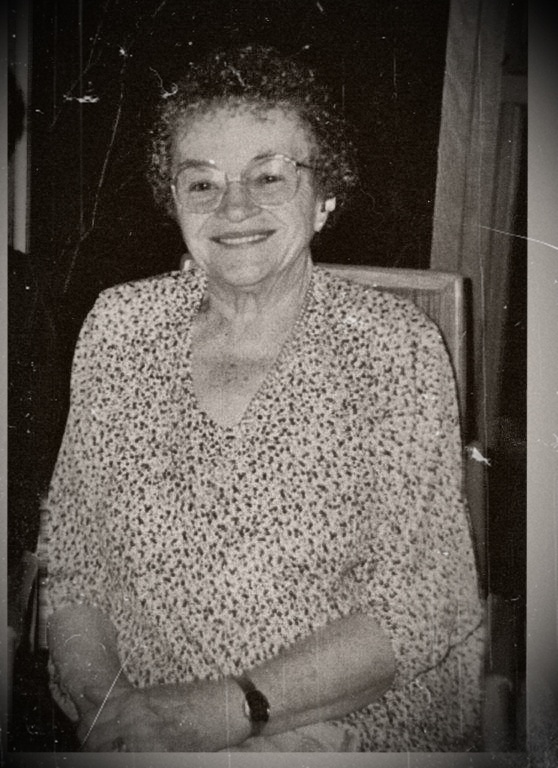
Seventy-nine-year-old Leah Buck lived alone in the quiet seaside suburb of Williamstown, Victoria, Australia. A profoundly deaf woman who also suffered some mobility challenges from a recent hip replacement, Leah was a familiar figure in her community, often seen pushing her shopping trolley to local shops or visiting friends.
September 20th, 1994 began like any other day for Leah. At around twelve thirty p.m., she spoke with a family member, mentioning an appointment with a local optometrist. Investigators believe she left the optometrist’s office around two thirty p..m. and was seen shortly afterward pushing her shopping trolley along Dover Road, heading toward a friend’s home. It was a routine journey for the elderly woman, who was known for her resilience and determination to maintain her independence.
A short time later, a witness reported a chilling sight: Leah was found kneeling against a brick wall beside the footpath on Dover Road, her shopping trolley overturned beside her. She was bleeding heavily and disoriented, repeatedly telling the passerby that “something had hit her.” The injuries to the back of her head suggested a violent assault, likely from behind. Emergency services rushed her to the hospital, where surgeons attempted to address severe bleeding on her brain. Tragically, Leah fell unconscious and passed away the following day, September 21st, 1994.
Police believe the assault may have been linked to a series of similar incidents in Melbourne’s western suburbs around the same time. In these cases, elderly women were targeted, struck from behind, and robbed of their handbags or purses. Leah’s handbag, purse, and personal belongings were missing after the attack and have never been recovered, suggesting robbery as a possible motive. However, the ferocity of the assault—resulting in fatal head injuries—raises questions about whether the attack was purely opportunistic or driven by something more sinister.
The Victoria Police Homicide Squad launched an extensive investigation, but despite decades of effort, no one has been charged with Leah’s murder. Detectives interviewed numerous witnesses and followed leads connecting the case to the spate of attacks on elderly women in the area, but the trail grew cold. The lack of forensic evidence, combined with the absence of Leah’s belongings, has made it difficult to identify a suspect.
In December 2014, Victoria Police announced a $1 million reward for information leading to the apprehension and conviction of those responsible for Leah’s death. The reward, one of the highest offered for a cold case in Victoria, reflects the police’s determination to bring closure to Leah’s family and justice to the community. Additionally, the Director of Public Prosecutions has offered potential indemnification from prosecution for anyone providing information about the principal offender, an incentive aimed at encouraging reluctant witnesses to come forward.
As of 2025, Leah Buck’s murder remains unsolved, one of over 200 cold cases in Victoria Police’s archives. The Homicide Squad’s Cold Case Team continues to investigate, leveraging advances in forensic science and appealing to the public for new leads.
 Crime Immemorial