
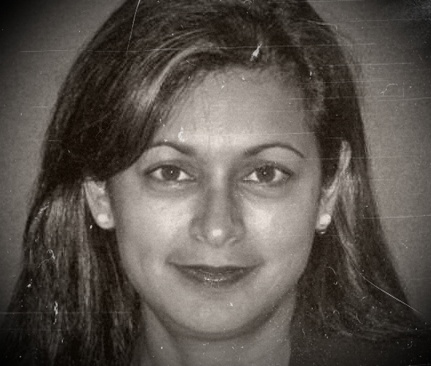
Corryn Rayney was born in 1963 and migrated to Australia with her Indian family in 1973, fleeing Idi Amin’s regime in Uganda. A dedicated professional, she studied law and rose to the position of registrar at the Supreme Court of Western Australia. She was married to Lloyd Rayney, a prominent barrister and former Crown prosecutor, and the couple lived in the affluent Perth suburb of Como with their two daughters, Caitlyn and Sarah.
By 2007, though, when Corryn was forty-four years old, the marriage was strained, and the couple was in the process of negotiating a separation, with a planned meeting to discuss financial and custody arrangements scheduled for the night of Corryn’s disappearance.
Corryn was described as a strong-willed, family-oriented woman who was deeply committed to her daughters and her career. Her love for boot-scooting, a country-style dance, was a personal passion, and she regularly attended classes at the Bentley Community Centre. It was after one such class on August 7th, 2007, that she was last seen alive.
On that night, Corryn attended her class, leaving around nine thirty p.m. She was expected to return home to Como, approximately a fifteen-minute drive away, but she never arrived. Her husband, Lloyd, reported her missing the following morning after she failed to show up for work at the Supreme Court, an unusual occurrence that immediately raised concerns.
On August 14th, police located Corryn’s silver 2005 Ford Fairmont abandoned on Kershaw Street in Subiaco, a suburb near Perth’s city center. The car was damaged, and a trail of oil leaking from its engine led investigators to Kings Park, a large public park in central Perth. On August 16th, following the oil trail, police discovered Corryn’s body buried head-first in a shallow grave off Lovekin Drive, in a secluded area known as Wattle Track. The discovery confirmed that her death was a homicide, and the Western Australia Police launched a major murder investigation.
Forensic evidence suggested that Corryn had been violently assaulted, sustaining injuries to her brain and intervertebral discs that likely rendered her unconscious. Although she suffered from coronary artery disease, which could have made her susceptible to a cardiac event, the court later concluded that her death was not due to natural causes but resulted from a violent attack. The exact cause of death, however, was never definitively established.
From the outset, the investigation focused heavily on Lloyd Rayney. On September 20th, 2007, Senior Sergeant Jack Lee, a lead investigator, publicly named Lloyd as the “prime and only suspect” during a press conference, a move that sparked significant controversy and criticism from the legal community for potentially prejudicing the case. At the time, Lloyd was a well-known figure in Perth’s legal circles, having worked as a state prosecutor and representing police in a Corruption and Crime Commission inquiry into misconduct in a separate murder investigation.
The Rayneys’ strained marriage and the planned meeting on the night of Corryn’s disappearance fueled police suspicion. Prosecutors later alleged that Lloyd killed Corryn at their Como home while their younger daughter, Sarah, was asleep upstairs, and their older daughter, Caitlyn, was at a concert. However, both daughters testified that they noticed nothing unusual that night, with Caitlyn stating that her father appeared normal and helped her with homework upon her return home.
Police searched the Rayney family home multiple times, uncovering evidence that Lloyd had secretly recorded Corryn’s conversations, in breach of the Surveillance Devices Act, and had disposed of the recording devices when he knew police had a warrant to search for them. This led to his law license being temporarily revoked in 2015, though it was reinstated in 2016 after he was cleared of charges related to evidence tampering. In 2020, however, the Supreme Court of Western Australia permanently struck him off the roll of solicitors for giving false evidence about the recordings.
Despite the focus on Lloyd, other potential suspects emerged. A cigarette butt with DNA matching Ivan Eades, a known criminal, was found on the footpath outside the Rayney home a week after Corryn’s body was discovered. Eades and his cousin, Allon Lacco, a convicted sex offender described as one of Western Australia’s most violent criminals, lived near the Rayneys and had an apartment overlooking the Bentley Community Centre. Lacco moved to Melbourne shortly after Corryn’s disappearance, and a 2009 search of his home revealed a map of Kings Park, a layout of the Supreme Court, and a calendar page from August 2007. Both men were questioned but cleared due to alibis, though defense lawyers argued that they were not investigated with the same rigor as Lloyd Rayney.
Lloyd Rayney was not charged with Corryn’s murder until December 8th, 2010, more than three years after her death. Citing extensive media coverage, he successfully requested a judge-only trial, arguing that a fair jury trial was impossible. The trial, which began on July 16th, 2012, was presided over by former Northern Territory Chief Justice Brian Martin to ensure impartiality, given the prominence of both Corryn and Lloyd in Western Australia’s legal community.
The prosecution’s case was circumstantial, relying on evidence such as a dinner place card with Lloyd’s name found near the burial site and the alleged timing of the murder. However, Justice Martin found the case “beset by improbabilities and uncertainties” and lacking “crucial evidence.” He concluded that the evidence did not prove Lloyd’s guilt beyond a reasonable doubt, and on November 1st, 2012, Lloyd was acquitted of both murder and manslaughter. The acquittal was unanimously upheld by Western Australia’s Court of Appeal in August 2013, dismissing prosecution claims that the judge had not properly assessed the evidence.
Following his acquittal, Lloyd Rayney pursued defamation actions against the state and individuals involved in the investigation. In December 2017, the Supreme Court of Western Australia awarded him $2.62 million—one of the largest defamation payouts in Australian history—for Senior Sergeant Jack Lee’s 2007 statement naming him the “prime and only suspect.” The court found that the statement implied Lloyd’s guilt and caused significant harm to his reputation and career. Rayney appealed for higher damages, arguing that the impact extended beyond the three years covered by the award, but the case was stayed pending other legal proceedings.
In 2020, Rayney won an additional $438,000 in damages against a forensic investigator who, during a 2014 seminar at Curtin University, claimed that Lloyd “murdered his wife and got away with it.” These legal victories highlighted the significant reputational damage Lloyd endured, though they did little to resolve the question of who killed Corryn.
In May 2015, Western Australia Police Commissioner Karl O’Callaghan ordered a cold case review of Corryn’s murder, led by Assistant Commissioner Gary Budge and including investigators from eastern Australia. Despite this effort, no new suspects were identified, and the case remains unsolved. Lloyd Rayney has since called for a new, independent investigation, claiming that police ignored crucial evidence and that he has “a good idea” of who killed his wife, though he has not publicly named anyone. He expressed confidence that the case could be solved with “experienced and courageous” investigators.
The failure to identify Corryn’s killer has led to accusations of police bias and procedural errors. Defense lawyers and legal experts, including prominent Perth lawyer Tom Percy QC, criticized the investigation for its narrow focus on Lloyd Rayney and its failure to thoroughly explore other suspects, such as Eades and Lacco. The presence of forensic evidence suggesting a possible sexual assault, combined with the lack of a definitive cause of death, has further complicated the case.
The murder of Corryn Rayney remains one of Australia’s most perplexing unsolved mysteries. Nearly two decades later, the case continues in public discourse, with calls for a federal or independent investigation to uncover the truth.
 Crime Immemorial