
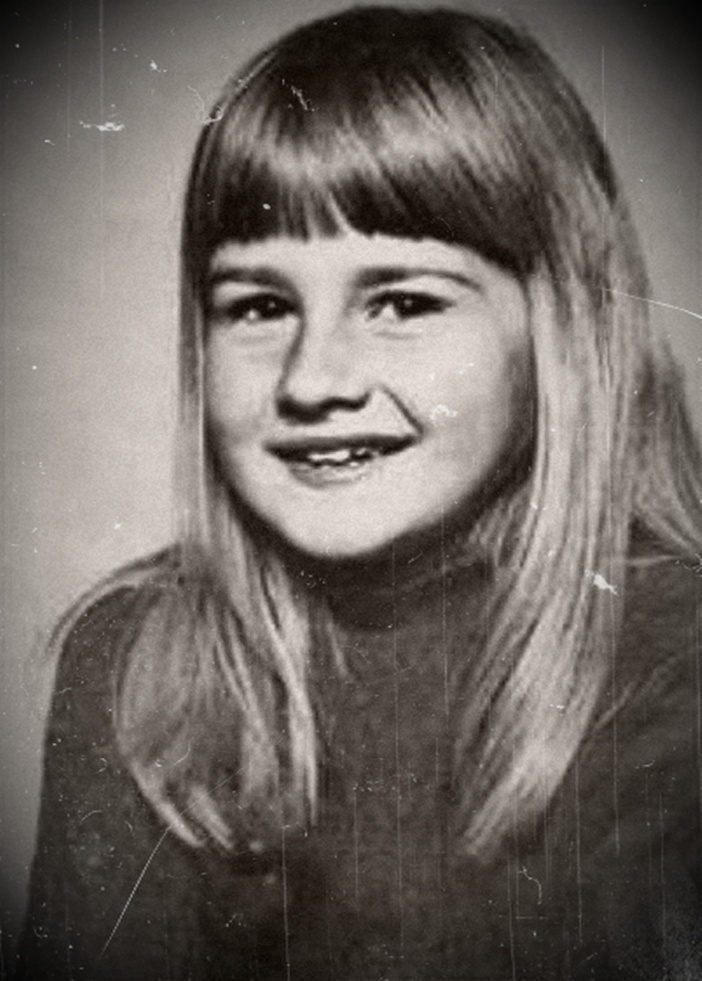
Eight-year-old Eloise Worledge was the eldest child of Lindsey and Patsy Worledge. She lived with her parents and younger siblings, six-year-old Anna and four-year-old Blake, in a modest four-bedroom home just over a quarter mile from Beaumaris Beach in Victoria, Australia.
Described as shy but intelligent, Eloise was a creative child with a flair for art, nurtured by her mother, a qualified arts and crafts teacher, and her involvement in Brownies and the local Hubble Bubble Club. She was set to begin grade four at Beaumaris Primary School, located just two streets away, when her life was abruptly disrupted.
The Worledge family appeared to lead an idyllic suburban life, but beneath the surface, tensions were brewing. Lindsey, a New Zealand-born academic and lecturer at the Caulfield Institute of Technology, and Patsy, a vibrant and outgoing student teacher, were grappling with marital difficulties. By early 1976, their marriage was on the verge of collapse, with Lindsey scheduled to move out on January 10th, Patsy’s thirty-third birthday. He postponed the move, adding strain to an already fraught household. The children were aware of their parents’ impending separation, and on the evening of January 12th, the family’s routine carried an undercurrent of unease.
Lindsey had had a busy day, including a speaking engagement and drinks with colleagues, consuming significant amounts of alcohol before returning home that evening. He played Monopoly with the children, had dinner with the family, and continued drinking until he fell asleep in front of the television. Patsy, who had attended a jazz ballet class, returned home to find the front door unlocked and wide open, a detail that would later prove significant. The family went to bed, leaving a hallway light on for the children, a routine they typically followed.
At around seven-thirty a.m. on January 13th, 1976, four-year-old Blake woke his parents with alarming news: Eloise was not in her room. There were no signs of a struggle, but the scene in her bedroom raised questions. The window was open, with a small hole cut in the screen, and bark from a tree outside was found on the sea-grass floor covering. Blake later told police he had heard “robbers” in the night and crackling noises, which investigators believed were consistent with footsteps on the sea-grass flooring, but he was too frightened to speak up, fearing he might also be taken.
The discovery triggered an immediate response from Victoria Police, with Sergeant Cyril Wilson from the Beaumaris station arriving within eight minutes of the call. Recognizing the gravity of the situation, he called for backup, and within thirty minutes, local detectives were on the scene. What followed was the largest missing persons search in Victoria’s history, involving over 250 police officers, including search and rescue teams, the mounted branch, dog squad, and independent patrol groups. The search, which lasted nearly three weeks, scoured Beaumaris and surrounding areas but found no trace of Eloise.
Investigators quickly noted inconsistencies at the scene. The hole in the screen, initially thought to suggest an intruder, was found to have been cut from the inside, and the window’s fifteen-inch opening was deemed too small for an adult to climb through without disturbing dust and cobwebs, which remained intact. Bark on the floor hinted at someone having been near the tree outside, but police concluded it was unlikely Eloise was taken through the window. Instead, they hypothesized that she was lured from her bed by someone she knew and trusted, exiting through the unlocked front door.
The hallway light, typically left on for the children and turned off by the last parent to bed, provided another clue. Lindsey claimed he left it on, but when Patsy woke at four-forty-five a.m. to use the bathroom, she noticed it was off, suggesting Eloise may have been taken before then. The unlocked front door further supported the theory that the abductor entered and exited through the main entrance, bypassing the sleeping parents.
Neighbors reported several suspicious observations that night. Around midnight, Ann Same saw a young man walking along the fenceline of the Worledge home, prompting her to cross the street to avoid him. At the same time, Molly Salts witnessed a young man jump the fence onto the Worledge property after running in front of her car. At two a.m., Daphne Owen-Smith and Ann Same heard a child’s cry and a car door slam. A dark green car, possibly a Holden station wagon, was seen speeding down Scott Street at two a.m., and another neighbor reported an unfamiliar green Holden parked nearby. This vehicle, which matched the description of a car stolen weeks earlier, was never located.
The investigation initially focused on Lindsey and Patsy due to the lack of forced entry and the staged appearance of the window. Their marital strife, coupled with Lindsey’s heavy drinking and aloof demeanor, made him a primary suspect. Some speculated he might have orchestrated Eloise’s disappearance to spite Patsy or delay their separation. Patsy told police she suspected Lindsey’s involvement, though no evidence substantiated this claim. Lindsey underwent a polygraph test in 2002, but the results were inconclusive, and a 2001 police review found no evidence implicating either parent.
Police also explored other leads. A balding, elderly man with glasses had been seen with young girls near the local shopping center in the days prior, but he was never identified. Connections to two local child molesters—one linked to a shop the family frequented and another involved in a Beaumaris drama group—were investigated, but no evidence tied them to the abduction. In 2023, journalist John Silvester highlighted that Beaumaris Primary School, where Eloise was a student, was later investigated for the activities of five pedophile teachers active in the 1960s and 1970s. Although none were suspects at the time, this revelation raised questions about whether the police missed critical leads due to the school’s failure to report allegations against two teachers.
Other theories included a prowler known to be active in the area, supported by reports of a nearby toolshed break-in that night, with items left on a nature strip. A young man conducting a supposed child education survey door-to-door in the days prior also drew suspicion, but led nowhere. Despite exploring ten suspect categories, including sex offenders, local service providers, and school staff, police found no conclusive evidence.
The disappearance of Eloise Worledge sent shockwaves through Beaumaris and beyond, prompting many families to begin locking their doors at night. The case, which remains open, saw renewed efforts in 2001 by homicide cold case detectives, but no new leads emerged. A $10,000 reward (equivalent to $70,429 in 2022) announced in 1976 remains unclaimed. In 2003, Coroner Frank Hender ruled that Eloise’s disappearance and presumed death were suspicious but could not pinpoint a culprit, leaving the family with no closure.
Lindsey Worledge, who faced ongoing scrutiny, died in 2017, forty-one years after his daughter’s disappearance. Patsy, who channeled her grief into art through her brand Worledge Creations, told the coroner in 2003 that the family had found their own form of closure. Tragically, Blake, who first raised the alarm, was killed in a car accident as a young adult, compounding the family’s loss.
Victoria Police’s Missing Persons Squad continues to seek information in the disappearance and likely murder of Eloise Worledge.
 Crime Immemorial