
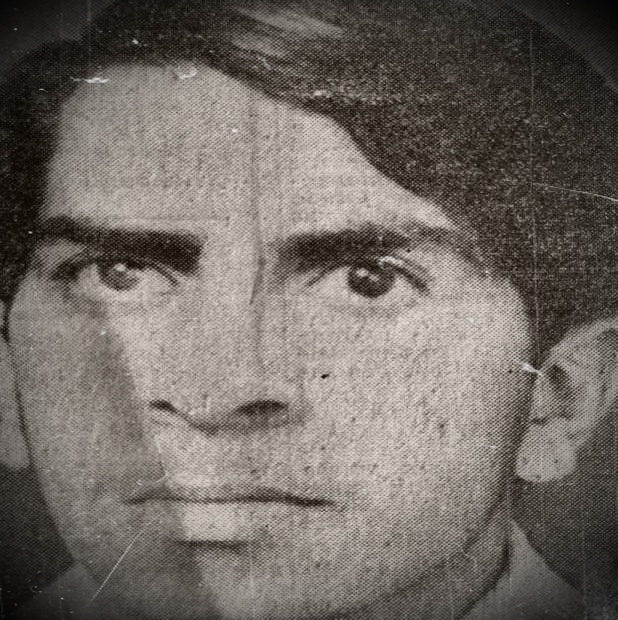
Eighteen-year-old Mohammed Arif was a Pakistani national who lived in Nelson, Lancashire, England, and worked as a laborer at Courtaulds Valley Mills. He was described as a conscientious young man who had a bright future ahead of him.
In January of 1980, Mohammed was walking home from a night out when he was attacked on Southfield Street. The assault occurred in the early hours, under the cover of darkness, in a seemingly random act of violence.
According to reports, Arif was set upon by an assailant who beat him severely around the head with a stick or similar object. The attacker fled towards Barkerhouse Road as a group of four people approached the scene, interrupting the assault but not in time to save Arif’s life.
Arif, gravely injured, was rushed to the hospital, but he succumbed to his injuries. The brutality of the attack shocked the community, and the fact that the perpetrator escaped without a trace only deepened the sense of unease.
Lancashire Police launched an immediate investigation into the murder, but the case quickly proved challenging. The attack appeared to lack a clear motive, and police stated at the time that they had no reason to believe it was connected to other crimes in the area. The absence of forensic evidence, combined with the fleeting nature of the eyewitness account, made it difficult to identify the suspect. The assailant was described only vaguely, and no arrests were made in the immediate aftermath.
The investigation relied heavily on appeals for public information, with police urging anyone with knowledge of the incident to come forward. Despite these efforts, no significant leads emerged, and the case gradually went cold.
The murder occurred at a time when racial tensions were a significant issue in parts of the UK, including Lancashire. While police did not explicitly link Arif’s murder to racial motives, the lack of clarity around the motive led to speculation and unease among minority communities.
More than four decades later, the murder of Mohammed Arif is still unresolved.
 Crime Immemorial