
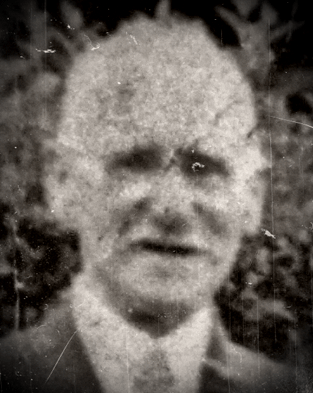
Seventy-one-year-old Evan David Harris lived a modest and reserved life at 21 Lon Draenen in Tycoch, Swansea, Wales with his elder daughter, whose husband had been called up for military service. A widower and retired chemist, Harris had spent nearly two decades working at the English Crown Spelter Works, followed by stints at Pritchard’s Oxalic Acid Company and the National Oil Refinery in Skewen. After retiring, he sought to stay active and support his daughter’s household expenses. A nephew-in-law secured him a position as a night watchman at Consolidated Fisheries Ltd., a job that, unbeknownst to him, would lead to his untimely death.
Described by police as a man of simple habits, Harris was a teetotaler but a heavy pipe smoker. His amusements were few, limited to occasional bets on football pools. Thrifty by nature, he had saved approximately £350 in cash and National Savings Certificates, a significant sum for the time. Earning a weekly wage of about £5, supplemented by an old-age pension of £1 6s, Harris paid his daughter £2 weekly for board and lodgings. On February 27th, 1948, at around three p.m., his daughter prepared his dinner and packed him cheese sandwiches and an orange for his night shift. It was the last time she saw him alive.
At six a.m. on February 28th, 1948, Harris’s body was found floating in approximately five feet of water at the Consolidated Fisheries Dry Dock, between the wall of the dry dock and the steam trawler Brecon Castle, which was undergoing repairs. Two members of the Swansea Dock Police recovered the body and alerted the Swansea Borough Police, who requested an ambulance. As officers removed Harris’s body, a dock workman pointed out suspicious marks in the nearby boiler maker’s shop, a corrugated iron and steel structure located on the north side of the dry dock.
The marks suggested that something—or someone—had been dragged through the shop, across railway lines, and toward the quay opposite where Harris’s body was found. A closer inspection revealed additional evidence: five yards from the quay, an upper denture was found partially embedded in the earth. In the northwest corner of the boiler maker’s shop, near an anvil, police noted marks consistent with a struggle. Dr. Claude Hamilton Davies, the police surgeon, examined Harris’s body at Swansea Public Mortuary and noted multiple superficial abrasions on his face and head. Despite the absence of other significant injuries, Davies concluded that Harris’s death resulted from drowning, raising suspicions of foul play.
Convinced that Harris had been murdered, the Swansea Borough Police sought assistance from New Scotland Yard. On the evening of February 28th, two detectives departed London shortly before six p.m., arriving in Swansea at at a quarter to eleven p.m. They met with the Chief Inspector and Chief Constable before heading to the crime scene. The dry dock, bounded by the River Tawe to the east, South Dock to the west, a lock gate to the south, and Gloucester Place to the north, was thoroughly examined. The detectives focused on the boiler maker’s shop and the drag marks, which suggested that Harris had been attacked, incapacitated, and moved to the dock.
The police surgeon’s findings, combined with the physical evidence, painted a chilling picture: Harris had likely been assaulted in the boiler maker’s shop, dragged to the quay, and either pushed or thrown into the water, where he drowned. The absence of severe injuries beyond abrasions suggested that the attacker may have relied on surprise or minimal force to subdue the elderly watchman.
As investigators delved into Harris’s life, they uncovered a potential clue to his murder. Harris was known for his generosity, often providing small loans to those in need. While this was common knowledge in the community, the identities of those who benefited from his kindness were not widely known, as Harris was private about his personal affairs. Police inquiries revealed one intriguing detail from a thirty-five-year-old bus conductor living at 5 Holyhead Place, Fforestfach, Swansea, employed by the South Wales Transport Company.
The conductor, who knew Harris well, recounted an encounter on February 6th, 1948, three weeks before the murder. At eight a.m., Harris boarded the conductor’s No. 79 bus, which ran from the Exchange to Gors Avenue, and disembarked at the Gwent Road stop. The conductor’s statement offered no direct link to the crime, but it underscored Harris’s routine and visibility in the area, potentially making him a target for someone aware of his habits or financial generosity.
Police speculated that Harris’s loans might have created tensions, perhaps with someone who owed him money or resented his assistance. However, without specific names or evidence of disputes, this lead remained speculative. Other motives, such as robbery or a personal grudge, were considered, but Harris’s modest lifestyle and reserved nature offered few clues.
Despite the involvement of Scotland Yard and an exhaustive search for suspects, the investigation failed to identify a definitive perpetrator. The physical evidence provided a clear sequence of events but no fingerprints, murder weapon, or eyewitnesses. The dock’s industrial setting, with its heavy machinery and open access, made it difficult to isolate forensic evidence. The case generated significant local interest, with newspaper reports detailing the police efforts, but leads gradually dried up.
Harris’s family, including his married daughter in St. Nicholas, near Cardiff, and his son in Colchester, were left grappling with his loss and the lack of closure. The community, too, was shaken by the murder of a well-regarded man in a city where such crimes were rare. The case was added to South Wales Police’s list of unsolved murders, periodically reviewed alongside other cold cases dating back to World War II.
The murder of Evan David Harris remains one of Swansea’s most perplexing unsolved mysteries. In 2009, South Wales Police announced a review of twenty-eight unsolved murders, including Harris’s, but as of this writing in July 2025, no new evidence has emerged to crack the case.
 Crime Immemorial