
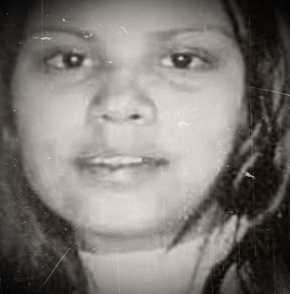
Seventeen-year-old Cherisse Houle was born to Barbara Houle in Ebb and Flow First Nation, Manitoba, Canada. The youngest of four children, she was described as a happy, easygoing child with a radiant smile that could “light up a room.”
Despite her vibrant personality, though, Cherisse faced significant struggles. She and her older sister, Jessica, were placed in the care of Manitoba’s Child and Family Services (CFS) at ages eight and ten, respectively. The sisters were separated, moving through multiple foster homes and group placements, which led to periods of instability.
Cherisse, a chronic runaway, often sought to reconnect with her sister or escape the system. She became involved in the sex trade and struggled with substance abuse, though she made efforts to turn her life around, including enrolling in a program at Ka Ni Kanichihk, an Aboriginal counselling and job training service in Winnipeg. She had hopes of a brighter future, aspiring to leave behind the challenges of her youth and create a stable life for herself and her eighteen-month-old son.
In the months before her death, Cherisse reached out for help, requesting a drug warrant from her social worker to access treatment at the Manitoba Youth Centre. Tragically, she was turned away from several treatment facilities due to lack of space.
Her family last saw her in June 2009, as they were planning a celebration for her upcoming eighteenth birthday, a milestone that would have marked her transition out of the CFS system. She was last seen alive on June 26th, 2009, in Winnipeg.
On July 1st, 2009, just six days before her birthday, Cherisse’s body was found in Sturgeon Creek, approximately ten miles west of Winnipeg, by a construction crew working near the riverbank. An autopsy was conducted the following day, but the Royal Canadian Mounted Police (RCMP) did not publicly release her cause of death, though her mother, Barbara, was told that Cherisse had drowned. The Winnipeg Police Service (WPS) initially investigated her death, but in 2012, the case was transferred to Project Devote, a joint task force between the WPS and RCMP dedicated to investigating missing and murdered persons cases in Manitoba.
Project Devote focuses on cases involving exploited or vulnerable individuals where foul play is suspected. Despite their efforts, communication with Cherisse’s family was limited, with Barbara Houle noting that she did not meet with investigators until November 2014, five years after her daughter’s death. The lack of transparency and updates left the family frustrated, with Jessica Houle expressing that “somebody knows something” and urging anyone with information to come forward.
Cherisse’s death, sadly, was not an isolated tragedy. She was friends with Hillary Angel Wilson, an eighteen-year-old who was found dead on August 20th, 2009, in East St. Paul, Manitoba, in a case confirmed as a homicide. The two young women, along with another teenager, Fonassa Bruyere, murdered in 2007, were reportedly connected to a group of men who exploited them for sex in exchange for drugs, food, and clothing. This connection raised concerns among their families and friends about a possible link between their deaths, though the RCMP has not confirmed any such connection, citing the need to protect ongoing investigations.
Cherisse’s death is part of a larger epidemic of violence against Indigenous women and girls in Canada. According to the Native Women’s Association of Canada, at least seventy-one Indigenous women had gone missing or been murdered in Manitoba since 1980 as of 2009, with estimates of over 4,000 cases nationwide. The lack of resolution in many of these cases, including Cherisse’s, has fueled calls for systemic change, including better support for vulnerable youth, more safe houses, and stronger relationships between police and Indigenous communities.
Cherisse’s loss has had a profound impact on her family. Her mother, Barbara, spiraled into depression and substance abuse following her daughter’s death. Cherisse’s brother, Jordan Houle, was killed in a shooting in Winnipeg in 2012, compounding the family’s grief. Cherisse’s young son, now in his teens, has grown up without his mother.
Her murder remains unsolved as of this writing, with no arrests or charges laid.
 Crime Immemorial