
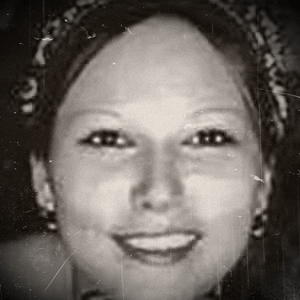
Twenty-year-old Donna Marie Kasyon, an Indigenous woman, was last seen alive between ten and ten thirty p.m. on June 14th, 2002, in the 1900 block of 22nd Street West in Saskatoon, Saskatchewan, Canada, an area known for its proximity to the Riversdale and Pleasant Hill neighborhoods, which have historically struggled with crime.
Just hours later, at approximately twelve forty-five a.m., she was found critically injured at the Confederation Mall bus shelter, a location not far from where she was last seen.
Leonardo Rodriguez, the transit worker who found her, described a heartbreaking scene. “She was kind of crying, and hurting,” he recalled. “She was a tiny lady, very tiny. But even though she was in pain, a lot of pain, when I came to her, when I was talking to her, she tried to pull her blouse to cover herself.” His immediate call to the police ensured a rapid response, but despite medical efforts, Donna could not be saved. An autopsy later confirmed her death as a homicide caused by a stab wound.
The Saskatoon Police Service (SPS) quickly launched an investigation through its Major Crime Section. Investigators canvassed the area, focusing on the local sex trade, as Donna was known to police as a sex worker and struggled with drug addiction. Detectives interviewed sex workers in the vicinity, inquiring about “bad johns” or clients who exhibited erratic or violent behavior, hoping to uncover leads.
The police also explored a potential connection to the disappearance of twenty-three-year-old Maxine Wapass, another sex worker who had vanished three weeks earlier in May 2002. The timing and similarities in the women’s lifestyles raised suspicions of a possible link, though no definitive connection has been established.
The investigation focused on reconstructing Donna’s movements in the hours before her death. Police sought information about her whereabouts between her last sighting on 22nd Street West and the discovery of her body on Laurier Drive. Despite these efforts, no suspects have been arrested, and the case remains open.
Interestingly, the early 2000s were a period of heightened scrutiny for the Saskatoon Police Service due to allegations of “starlight tours,” a practice where police allegedly drove Indigenous individuals to the city’s outskirts and abandoned them in freezing conditions. While there is no evidence linking Donna’s case to this practice, the broader mistrust between Indigenous communities and law enforcement may have impacted cooperation with the investigation.
The potential connection to Maxine Wapass’s disappearance also drew parallels to other high-profile cases, such as the crimes of serial killer John Martin Crawford, who targeted Indigenous women in Saskatoon in the 1990s, and the notorious Robert Pickton case in British Columbia. These cases heightened fears of a serial predator targeting vulnerable women in Saskatoon, though no such link has been confirmed in Donna’s case.
Donna Kasyon’s murder is one of twenty-eight unsolved homicides in Saskatoon involving thirty victims.
 Crime Immemorial