
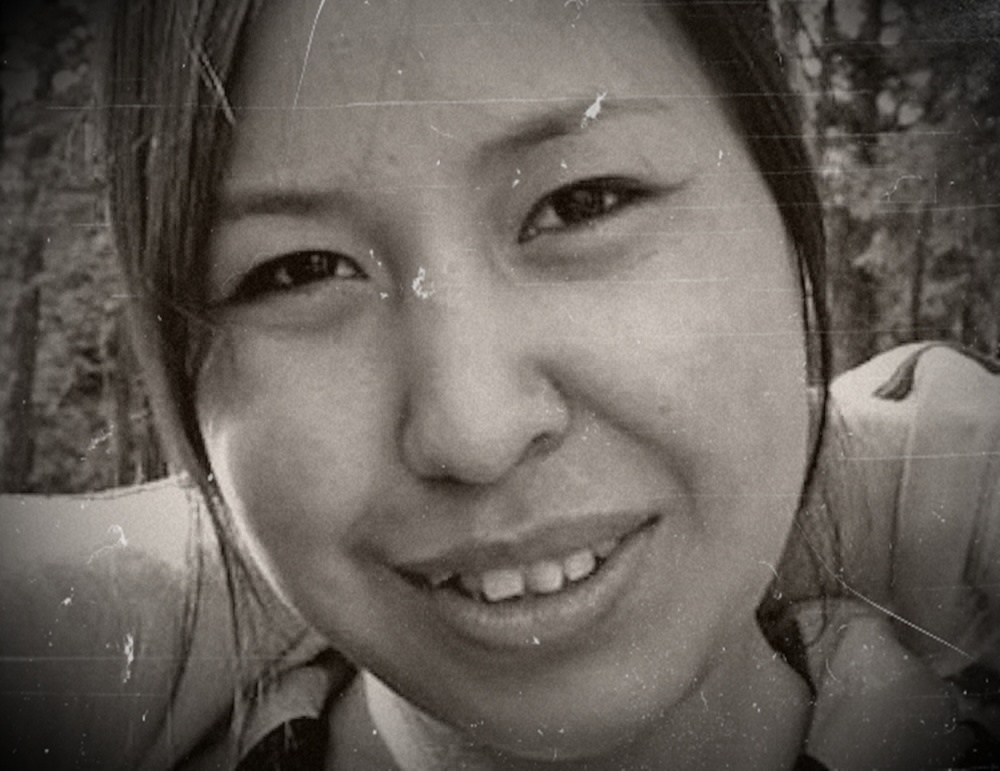
Born on June 11th, 1988, in the remote village of Dease Lake, British Columbia, Canada, Angel Carlick grew up in Good Hope Lake alongside her mother, Wendy Carlick, and younger brother, Alex (later known as Billy).
Life was far from easy for the family. As members of the Kaska Dena First Nation, they navigated poverty, unstable housing, and the harsh realities of remote Indigenous communities. In March 2004, social services intervened, relocating the family to Whitehorse, Yukon in search of stability. But the transition brought new struggles: eviction, bouts of homelessness, and the pull of street life. Angel dropped out of school and turned to alcohol as a teen.
At seventeen, however, Angel turned a corner. She sought help through local support programs and landed a job at the Blue Feather Youth Centre. There, she thrived, earning her high school diploma through dedicated evening classes at the Aboriginal Learning Centre. She ran a dinner program for at-risk children, ensuring they had hot meals and a safe space to gather. Sober and saving every paycheck, she dreamed big: buying a home to shelter her brother from the child welfare system and building a stable future for her family.
May 27th, 2007 was a big day for Angel. Now nineteen, she was preparing for her graduation ceremony, shopping for new shoes with her mother and attending a family barbecue that afternoon. That evening, she left a friend’s home in downtown Whitehorse. From a payphone, she called another friend, promising to join a group later—a simple, unremarkable plan that would become her final known contact with loved ones.
Complicating the timeline, Angel had been approached by the Royal Canadian Mounted Police (RCMP) in late May regarding a violent incident in the city. On May 24th, fifty-two-year-old Colin Stephen Sawrenko, a homeless First Nations man, was fatally stabbed near Shipyards Park in Whitehorse. Angel, who had been in the area, witnessed the assault and was questioned as a potential witness by officers on May 31st—though reports vary slightly on the exact date, placing the interaction shortly before her disappearance. She was not a suspect and cooperated fully, but the encounter may have placed her in a vulnerable position amid the city’s underbelly.
The next day, May 28th, Angel missed her graduation ceremony, an event where her photo was displayed on screen to cheers from the audience. She also failed to show up for work at the youth center, leaving behind her ID and clothes. Friends and family grew worried; Angel was dependable, the type to check in. By early June, she was officially reported missing to the Whitehorse RCMP.
Initial police response was tepid. Officers categorized her as a possible runaway, a common assumption that delayed a full-scale search and drew criticism from her loved ones, who pointed to systemic biases in how Indigenous cases are handled. Volunteers, including about forty family members and community members, combed riverbanks along the Yukon River in July, fearing she had met a tragic end in the waters. Rumors swirled—sightings in Alaska, whispers of foul play tied to the Sawrenko case—but leads evaporated.
On November 9th, 2007, nearly six months after her vanishing, a hiker stumbled upon a grim scene in the dense bush north of Whitehorse’s Pilot Mountain subdivision, along a hydro access road. Angel’s decomposed remains lay in a shallow grave, hidden in an area not previously searched by investigators. The remote location, about twelve miles from the city, suggested deliberate concealment. An autopsy was inconclusive; the cause and manner of death could not be determined due to the body’s condition, though it was officially ruled a homicide.
The RCMP’s probe into Angel’s death has been exhaustive but fruitless. Over 100 interviews were conducted, with searches extending by air, ground, and water into neighboring provinces and Alaska. Forensic analysis yielded no DNA matches, and the time elapsed between disappearance and discovery eroded potential evidence. A key lead lingers: Angel was reportedly last seen in the company of two unidentified males in downtown Whitehorse on the night she vanished. These men have never come forward, and their identities remain a critical unknown.
False trails have frustrated progress. In 2013, investigators ruled out a link to serial killer Israel Keyes, who confessed to crimes across North America but was not in Yukon at the time. A 2010 case review and the 2018 formation of the Yukon RCMP Historical Case Unit brought fresh eyes—and annual funding of $442,000 for three years—but the file stays active with only three dedicated officers as of recent updates.
In a horrifying coda to the case, Angel’s mother Wendy and Wendy’s friend Sarah MacIntosh were themselves murdered in April of 2017, found beaten to death in Sarah’s home. Though it’s unknown if their deaths are linked to Angel’s, a forty-four-year-old man named Everett Chief was charged with the double murder in May of 2018. He plead guilty in 2022 and was sentenced to eighteen years.
In September of 2023, the RCMP renewed pleas for information in the murder of Angel Carlick, but as of this writing, there have been no new developments.
 Crime Immemorial