
Kristin Paldi Gurholt was born in Norway but immigrated to Canada at the tender age of four, settling in Dartmouth, Nova Scotia, with her family. Raised in a warm, supportive household alongside five sisters and three brothers, she blossomed into a bright and creative child. From an early age, Kristin displayed a profound talent for music, particularly the piano. She devoured books and excelled academically, earning honors in the Royal Conservatory of Music exams and later pursuing a master’s degree in education.
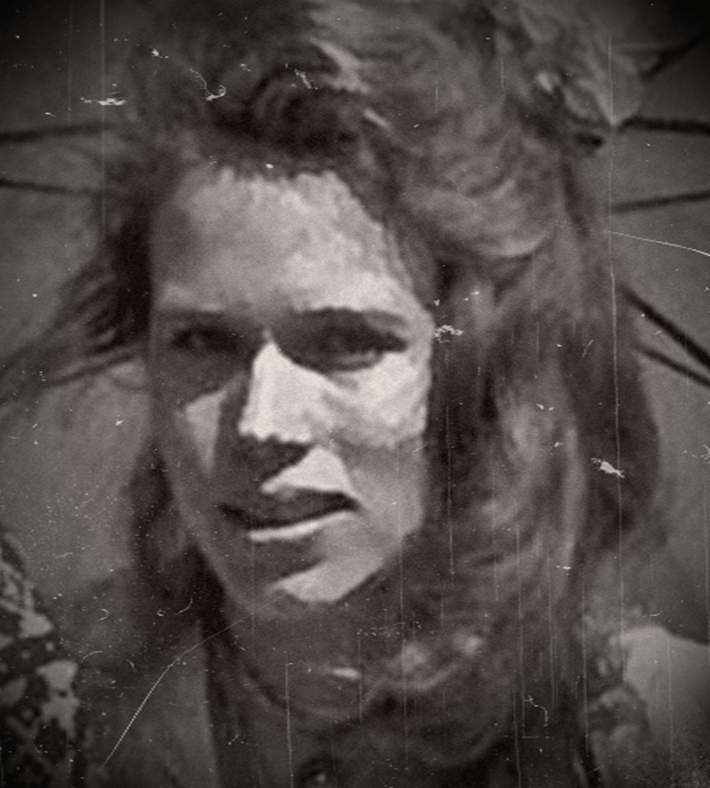
Those who knew her as a young girl remembered her as vibrant and full of life. Her nickname “Sunny” seemed fitting—a beacon of joy in her family’s world.
As Kristin entered young adulthood, shadows began to creep into her bright life. While studying at university, she received a devastating diagnosis: schizophrenia. The illness, which often strikes in one’s late teens or early twenties, upended her world, straining her relationships and derailing her dreams of a stable career in education or music.
Undeterred at first, Kristin married and gave birth to a son, whom she described as the love of her life and her greatest joy. Motherhood brought fleeting moments of fulfillment, but the marriage dissolved after a few years. When her son was seven, he went to live with his father in British Columbia. Heartbroken but determined to stay close, Kristin relocated to Vancouver, where she could visit him on weekends. She adopted another moniker, “Misty,” perhaps a nod to the fog that had settled over her once-clear path.
In Vancouver, Kristin’s mental health challenges compounded with the harsh realities of urban life. She found temporary shelter in the Marble Arch Hotel, a notorious single-room occupancy building in the Downtown Eastside—a neighborhood plagued by poverty, addiction, and transient despair.
On September 4th, 1981, thirty-four-year-old Kristin was evicted from the Marble Arch Hotel for reasons lost to time—perhaps unpaid rent or a minor infraction in a system that tolerated little. With nowhere else to turn, she wandered into the nearby alley behind 575 Richards Street, clutching a suitcase filled with her few personal belongings.
Around two a.m., tragedy struck. Police believe Kristin encountered a stranger in the alcove at the rear of the building. What began as a possible overture for shelter or companionship turned violent when she rejected sexual advances. In a frenzy of rage, her assailant fractured her skull with brutal force, leaving her naked and lifeless. Her clothes were scattered haphazardly around the scene.
Her body was discovered shortly after by passersby or patrolling officers (accounts differ). The suitcase, containing irreplaceable mementos of her life, lay abandoned nearby.
The Vancouver Police Department (VPD) launched an immediate investigation, but leads evaporated quickly in the mire of the Eastside’s anonymity. Homicide detectives canvassed the area, interviewing hotel residents and alley frequenters, but no witnesses came forward with damning evidence. The lack of forensic technology in 1981—decades before DNA databases and surveillance ubiquity—hampered progress. Kristin’s schizophrenia may have isolated her further, making it harder to trace her final hours.
Theories remain sparse. Investigators lean toward a spontaneous assault by an opportunistic predator, fueled by rejection rather than premeditated malice. No suspects have ever been named publicly, and the case file gathers dust among Vancouver’s dozens of unsolved homicides.
In 2014, the VPD revitalized the investigation by launching a dedicated cold cases website, spotlighting Kristin Gurholt as its oldest entry. The site appeals to the public: “No lead is too small.” Updates are sporadic, but the file remains active.
 Crime Immemorial