
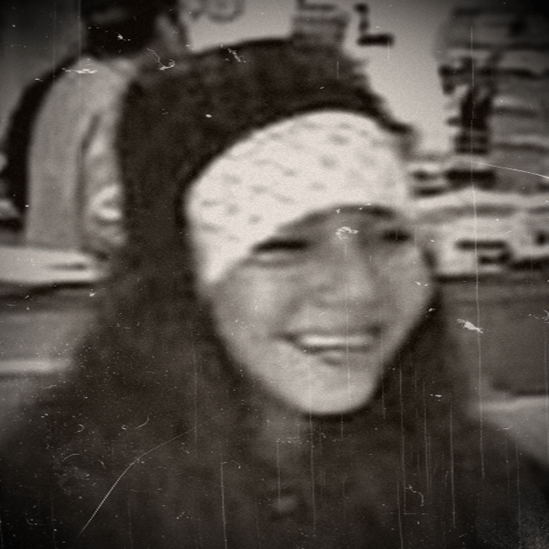
Marie Lynn Lasas was born in Regina, Saskatchewan, but her roots ran deep in the Cowessess First Nation. Raised primarily in urban settings, she spent parts of her childhood in foster care before settling with her grandfather in Saskatoon. Despite a turbulent youth, Marie was remembered by those who knew her as a pillar of warmth and resilience—a “kokum” to her peers, an affectionate Cree term for grandmother, despite her young age.
At nineteen, Marie was a devoted mother to two young daughters, living with her aunt Carol. She was the eldest of four siblings, sharing an especially close bond with her sister Leslie, who was just a year younger. Her other younger sister Suzanne described Marie as caring and supportive, recounting how Marie had gifted her a cheerleader outfit to encourage her dreams. Even amid personal struggles with alcohol in the months leading up to her vanishing, Marie was not considered to live a high-risk lifestyle; she mentored at-risk youth and organized events like the Day of Mourning for victims of the sex trade.
September 24th, 2006, began like many evenings for Marie. Around ten thirty p.m., she left a friend’s house in the 600 block of Avenue H South in Saskatoon’s Riversdale neighborhood. She told her friend she planned to walk to a family member’s home on 28th Street, a route that should have taken her through familiar streets.
She never arrived at her destination. Days turned to weeks without word. Marie missed routine calls to her children and failed to collect a government check—uncharacteristic lapses that alarmed her family. By mid-October, they reported her missing to the Saskatoon Police Service. The initial search yielded no clues.
Nine months later, on June 30th, 2007, officers on a routine patrol stumbled upon a makeshift grave beneath a pile of lumber behind a vacant house in the 200 block of 33rd Street West. The skeletal remains were found nearly two miles from where Marie was last seen, and had likely lain there for months. Dental records confirmed that this was Marie Lynn Lasas.
The Saskatoon Police Major Crime Unit and Missing Persons Task Force quickly classified the death as a homicide, though the cause was withheld to protect the investigation’s integrity. No arrests followed, and the case slowly cooled amid a backlog of unsolved files.
Seventeen years on, Marie’s murder file remains open, but inactive. In September 2023, Saskatoon police renewed their public appeal, urging anyone with information to come forward. As of this writing in October 2025, however, the identity of Marie Lynn Lasas’s killer remains unknown.
 Crime Immemorial