
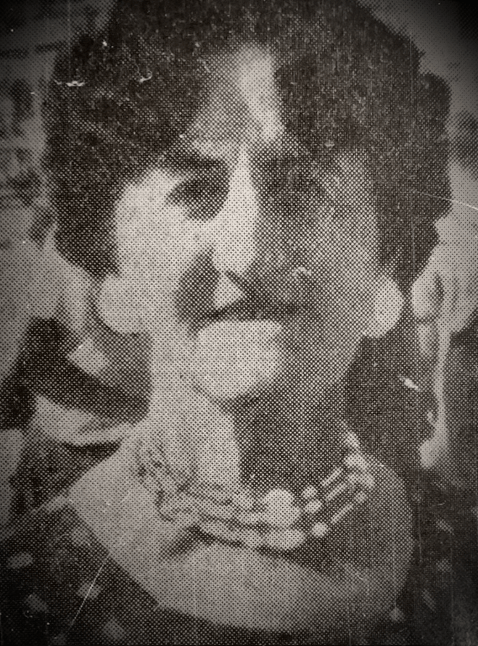
Seventy-year-old Eva Booth lived in the quiet suburb of Hartley, on the outskirts of Plymouth, Devon, England. She had been married to H.E. Booth, Plymouth’s esteemed Housing Estates Manager who retired in 1948 and passed away in 1957. Eva had endured profound loss over the years: the couple’s only son was killed in an air accident in India during World War II. Left alone in their chalet-style home at Venn Way—a narrow turning off Venn Grove—she filled her days with social outings and trips to the city center.
Described by those who knew her as a “glamorous socialite,” Eva favored heavy makeup, elaborate jewelry, and often left her doors unlocked, a habit that reflected her trusting nature but would prove fateful. Following a recent robbery in the neighborhood, she had even advertised for a lodger to provide companionship and security. Her lodger at the time, Mrs. Henrietta Morley-Pearce, later recalled Eva’s quirks: sitting in the dark to save electricity, propping doors open with weights, and her penchant for hearty meals. Little did anyone know, these details would become crucial in unraveling the mystery.
On Monday, January 25th, 1960, alarm bells rang when neighbors—an elderly couple—noticed uncollected newspapers and milk bottles piling up outside Eva’s front door. With no sign of her for several days, they enlisted their grandchildren to peer through windows before dialing 999. Plymouth police, arriving swiftly, found the front door unlocked—a chilling echo of Eva’s habits. Ascending the stairs, they pushed open the door to a small upstairs box room (variously described as an airing cupboard or bedroom closet) and discovered her body slumped inside.
Eva had suffered multiple blows to her face and head, leaving a small pool of blood on the floor but no signs of a frenzied struggle elsewhere in the house. A post-mortem, conducted by Dr. A.C. Hunt of Bristol University the next day, confirmed death by these injuries. Crucially, there was no skull fracture, no evidence of sexual assault, and no forced entry. Valuable jewelry, later found hidden under floorboards, suggested robbery wasn’t the motive—or that the killer overlooked the spoils. The cupboard door, shut and locked from the outside, ruled out an accidental fall; someone had deliberately concealed her there.
Initial estimates pegged the time of death to Friday, January 22nd, but forensic refinements narrowed it to between lunchtime and midnight on Saturday, January 23rd—after Eva had been spotted shopping in Plymouth city center around three p.m. that day. Chief Constable J.F. Skittery called it a “most mysterious case,” with no apparent motive and baffling forensic puzzles, like the warm cupboard potentially skewing body temperature readings used to estimate time of death.
Plymouth CID, under Detective Superintendent Ronald Stewart and Detective Inspector Emlyn Williams, wasted no time. Within twenty-four hours, they called in Scotland Yard’s elite Murder Squad, led by Detective Superintendent Dennis Hawkins and Detective Sergeant Percy Browne. The investigation ballooned: nearly 500 people interviewed, over 100 public tips chased down, fingerprints dusted from every surface, and organs rushed to Bristol for toxicological analysis.
Appeals flooded the media. Police sought three “youths” (aged in their early twenties, medium build, average height) seen coatless in pouring rain near Venn Grove on January 22nd, dressed oddly in charcoal-grey suits, narrow-bottomed trousers, and feathered grey trilby hats. Six Indian hawkers peddling ties and scarves were questioned, as was a young woman who claimed to spot Eva on a bus the next afternoon—though no matching clothes turned up at the home. Cinema audiences were shown slides of Eva for witness prompts, shopkeepers grilled about sightings, and even funeral wreaths at her February 12th burial at Efford Cemetery were scrutinized for clues.
The inquest, opened February 4th at Plymouth’s Greenbank Police Station, adjourned for six weeks before a jury delivered a murder verdict. Eva’s funeral at Emmanuel Church drew about 100 mourners, including officers, but no family—her niece in Southampton, brothers-in-law in Sealand and Liverpool, and distant relatives in South Africa were too far or uninformed. The lodger, Mrs. Morley-Pearce, emerged as a key ally, spending sixteen hours reconstructing her January 22nd visit: arriving by taxi after work, finding lights and radio on but Eva absent, leaving a farewell note, and departing puzzled.
Forensic deep dives at the South-Western Forensic Science Laboratory compared head wounds to household items, but yielded no weapon. Tests with specialist thermometers in the cupboard proved inconclusive, hampered by its insulating warmth—Eva might have lingered, injured but alive, for hours.
By mid-February, leads had dried up, and the case risked going cold. Then, in May 1960, a bombshell: seventeen-year-old shipwright apprentice William Lawrence Ross, of no fixed abode but staying with grandparents in Devonport, was remanded at Exeter Prison for an unrelated offense. There, amid the grim banter of inmates, Ross confessed to fellow prisoners—not once, but repeatedly—detailing how he killed Eva. The specifics matched police intel too closely to ignore: breaking into the house on January 22nd, encountering her at the stairs, striking her with a fistful of keys, dragging her upstairs, and slamming her into the cupboard.
Divers from the Royal Naval Barracks scoured waters off Mount Wise for keys and evidence Ross claimed to have discarded. Charged with murder on July 6th, Ross faced court in July, where witnesses recounted his prison boasts—though some dismissed them as inmate “jokes.” His alibi crumbled: a probation meeting ended at seven-thirty p.m., followed by time at Ham House until nine forty-five p.m., leaving a window for the crime. Mrs. Morley-Pearce testified on Eva’s routines, bolstering the timeline.
Ross initially denied it, then admitted interrupting a burglary but claimed foggy recall—blaming darkness and conflated break-ins. Superintendent Hawkins tested his account on June 13th, but gaps persisted. The trial shifted to Devon Assizes in Exeter, delaying proceedings until November 10th, 1960. There, the judge directed a manslaughter verdict (eschewing capital murder), sentencing the teenager to four years’ imprisonment—eligible for release around October 1964.
Eva Booth’s murder, though swiftly resolved by conviction standards, leaves an asterisk. Ross’s confession, extracted in the pressure-cooker of prison, raises eyebrows—especially given Hawkins’s history. The same detective had secured a false admission in the 1952 Patricia Curran case, where Iain Hay Gordon endured grueling interrogations without counsel; his conviction was quashed in 2000 after forty-eight years. Did similar tactics taint Ross’s account? Some details mismatched evidence, and Ross, young and vulnerable, may have fabricated for leniency or notoriety.
Today, the case file—173 pages of Director of Public Prosecutions papers at The National Archives—remains sealed until January 1st, 2061, under “health and safety” and third-party privacy rules. Misinformation persists: Wikipedia still lists it as unsolved, citing outdated reports, though some uncertainty remains over whether the real killer got away with murder.
 Crime Immemorial