
In the quiet market town of Arundel, West Sussex, England, where the River Arun winds lazily through medieval streets and ancient castles, a shocking discovery shattered the summer calm on August 8th, 1980. The body of twenty-nine-year-old Jonathan Lewis, a charismatic antiques dealer from nearby Brighton, was pulled from the murky waters of the river. What began as a suspected drowning quickly unraveled into a tale of betrayal, conspiracy, and one of Britain’s most enduring unsolved murders.
Jonathan Lewis was described by those who knew him as a “great character” with a flair for the dramatic. He ran a thriving antiques business in Brighton, dealing in rare treasures that drew collectors from across the south coast. Married to Jane Lewis, who worked as a communications assistant, Jonathan lived a seemingly idyllic life in Arundel. But on the evening of August 5th, 1980, tensions simmered beneath the surface.
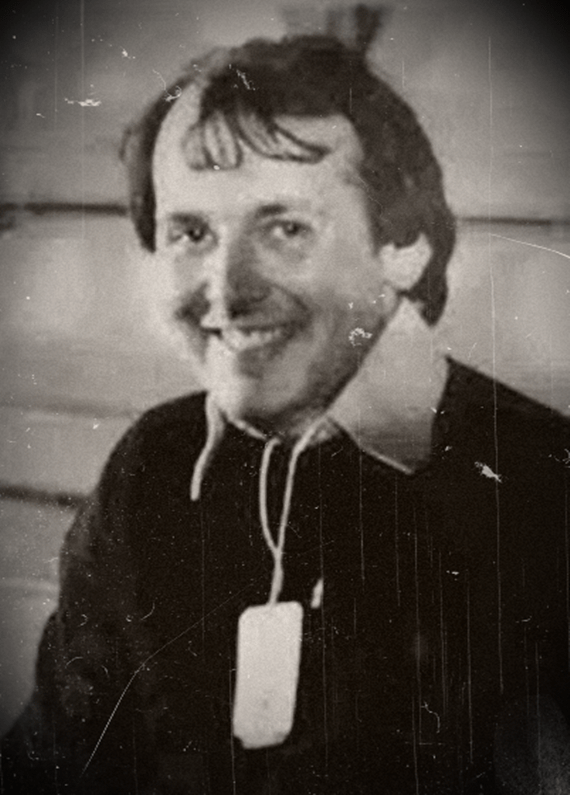
Colin Wallace, a thirty-seven-year-old former British Army intelligence officer turned press officer for Arun District Council, had organized a surprise party for Jane at a local pub. Wallace and Jane shared a close professional—and allegedly romantic—relationship, a detail that would later become central to the prosecution’s narrative. That same night, Wallace admitted to meeting Jonathan at his Arundel home for drinks. According to Wallace, the encounter was amicable; the two men parted ways without incident. Jonathan failed to return home, however, and was reported missing.
Three days later, his battered body surfaced in the River Arun, just yards from a local bridge. An initial post-mortem examination suggested accidental drowning, possibly linked to alcohol consumption. But a second autopsy, prompted by suspicious circumstances, uncovered fractures to the skull and other injuries consistent with a violent assault—perhaps a blow to the head, carried out by someone with knowledge of martial arts. The coroner ruled it a homicide, thrusting Arundel into the spotlight of a murder investigation.
Sussex Police zeroed in on Wallace almost immediately. As Jonathan’s friend and Jane’s colleague, he had opportunity and, prosecutors argued, motive: jealousy over his alleged affair with Jane. Wallace’s initial statement to detectives compounded suspicions; he lied about the August 5th meeting, claiming ignorance of Jonathan’s whereabouts to spare Jane embarrassment. This “spiral of deception,” as later described by the Court of Appeal, painted him as evasive.
The prosecution’s case at Lewes Crown Court in March 1981 hinged on circumstantial threads: traces of blood in the trunk of Wallace’s car (later questioned as inconclusive), his brief absence from the surprise party, and eyewitness accounts placing him near the river. They alleged Wallace had rendered Jonathan unconscious at home—possibly with a “karate blow” learned during his SAS training—stuffed him in the car, and dumped him in the Arun to drown. The judge directed the jury away from murder toward manslaughter, citing lack of premeditation evidence. Wallace was convicted and sentenced to ten years, serving nearly six before release on parole.
The trial was marred by irregularities. Witnesses claimed police pressured them with false stories of Wallace’s “paramilitary” past, including unverified tales of him kidnapping a child. Forensic details, like diatom analysis suggesting Jonathan died elsewhere than Wallace’s alleged dump site, were overlooked. And Chief Constable Sir George Terry, who oversaw the probe, had his own controversial ties to Northern Ireland intelligence matters.
Wallace’s appeals dragged on for years. Petitions to the Home Office from 1983 onward highlighted suppressed evidence, including a riding instructor’s sighting of Jonathan alive in a pub at a time he was supposedly unconscious in Wallace’s car. In 1996, under Home Secretary Michael Howard’s referral, the Court of Appeal—led by Lord Chief Justice Lord Bingham—quashed the conviction as “unsafe.”
Fresh pathological reports dismantled the prosecution’s timeline. Experts testified that Jonathan’s injuries—lacking nasal fractures or bruising from a hand-heel strike—pointed to an assault on the riverbank, not in Wallace’s home or car. The blood evidence was deemed irrelevant, and Wallace’s lies were attributed to protecting his relationship with Jane, not concealing a crime. Though a retrial was considered, the Crown Prosecution Service deemed it not in the public interest, and Sussex Police closed the file.
Wallace, now exonerated, turned the spotlight on deeper shadows. A veteran of British Army psychological operations in Northern Ireland during the Troubles, he had blown the whistle on child abuse at Belfast’s Kincora boys’ home in the 1970s—a scandal allegedly ignored by authorities to protect intelligence assets. Investigative journalist Paul Foot’s 1989 book Who Framed Colin Wallace? argued the conviction was a frame-up to silence him, linking it to plots against Prime Minister Harold Wilson and the 1979 assassination of MP Airey Neave. Wallace alleged Jonathan was killed by Brighton-based criminal antique dealers, a theory police dismissed but never fully pursued.
Parliamentary debates in 1989 amplified these claims. Labour MP Ken Livingstone accused security services of perverting justice, citing Wallace’s suppressed letters from Neave and forensic discrepancies. The government rebuffed calls for inquiry, but the Kincora scandal lingered. In 2015, Wallace, then seventy-two, told The Argus that the ongoing Historical Institutional Abuse Inquiry might unearth “rigged evidence” tying the cases together.
Freedom of Information requests as recent as 2020 confirm the file remains shut, with no re-opening or interviews of alternative suspects. Wallace, now in his eighties and still living near Arundel, has “parked” the trauma but insists justice eludes Jonathan’s family. Theories persist: Was it a lovers’ quarrel gone wrong, a mob hit over a shady deal, or a state-orchestrated smear? One local chronicler called it “one of the most significant unsolved crimes in West Sussex.”
As of this writing in October 2025, the identity of the person or persons who killed Jonathan Lewis remains unknown.
 Crime Immemorial