
Born on July 17th, 1921, in Barnsley, Yorkshire, England, Joan Woodhouse was the only child of John and Nellie Woodhouse. Doted on by her parents and adoring aunts Annie Blades and Ida Sheriff, she grew up in a close-knit, working-class family. Educated at Barnsley Girls’ High School from 1933 to 1939, Joan developed a passion for literature during the early years of World War II, working in local libraries before her National Service as a draftswoman in Sheffield. There, she formed a lifelong friendship with Lena Bamber, who would later become a fierce advocate for justice in her name.
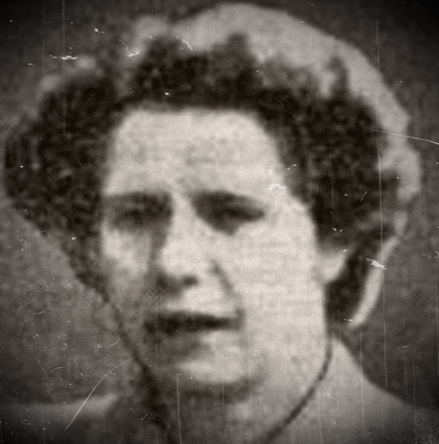
Post-war, Joan pursued librarianship studies at the University of London, landing a coveted role in the antique books department of the British Museum. She lived a structured, pious life as an active member of the Anglican Church, adhering to strict moral codes that left little room for frivolity. Yet, shadows loomed: a recent breakup with fellow librarian Ted Roberts left her emotionally fragile. In March 1948, amid a bout of nervous debility, she attempted suicide with aspirin, resigned from her job, and retreated to her aunts’ home in Bridlington for recovery. By May, she had returned to work and relocated to a YWCA hostel in Blackheath, London, sharing a room with Frenchwoman Nicole Ashby.
Joan was remembered by those who knew her as demure and deeply religious, a far cry from the sensationalized portrait that would later emerge in the press.
On Saturday, July 31st, 1948, the first day of the Bank Holiday weekend, the then twenty-seven-year-old Joan bid farewell to her roommate, claiming she was heading north by train to Barnsley for a family visit. Instead, she boarded a train from Victoria Station to Worthing, stowing her blue weekend case in left luggage before catching a bus to Arundel, a picturesque market town in West Sussex dominated by the medieval silhouette of Arundel Castle, seat of the Duke of Norfolk.
Eyewitnesses spotted her that afternoon in the town, dressed in a striking multi-colored paisley frock, blue lace gloves, a coat, mackintosh, and blue sandals. She purchased a bottle of lemon barley drink from local chemist Mr. Bowles and was seen chatting amiably with Miss Dibley, a shopkeeper. Joan ventured into Arundel Park, a sprawling estate of ancient oaks and hidden glades, perhaps drawn by its serene beauty or a momentary escape from her troubles. It is still unknown why she deviated from her stated plans, and whether she had specifically gone to Arundel to meet someone secretly.
Joan never returned to the YWCA hostel. By Wednesday, her absence from the British Museum raised alarms; a telegram from her father arrived unanswered on Thursday. The warden notified police, who contacted the family. Joan’s father and aunt Ida traveled to London that weekend, collecting her belongings amid fears of suicide, given her recent history.
On Tuesday, August 10th, 1948, around five twenty p.m., local laborer Thomas Stillwell stumbled upon a grim scene in Box Copse, a dense thicket near Swanbourne Lake in Arundel Park, just yards from the castle grounds. There lay Joan’s partially clothed body, her outer garments neatly folded nearby, her handbag and lemon barley bottle a short distance away. She wore only her undergarments: a bra, underwear, suspender belt, stockings, and sandals. Scuff marks on nearby trees hinted at a brief struggle, but the scene suggested no prolonged fight.
Pathologist Dr. Keith Simpson, famed for his work on high-profile cases, determined Joan had been manually strangled and raped, with bruising on her thighs indicating a violent sexual assault. Her nose and mouth had been covered during the attack. The body had lain undiscovered for eight to ten days, placing the time of death around July 31st, the very day she arrived in Arundel. A railway left-luggage ticket in her possession led police to retrieve her suitcase from Worthing Station, untouched.
New Scotland Yard’s squad, led by Detective Superintendent Fred Narborough, descended on Arundel. The investigation was exhaustive: door-to-door canvassing in Worthing and Arundel, interviews with every accommodation provider, and scrutiny of rail and bus staff, taxi drivers, and every unattached male over fifteen in the area. Over a hundred tourists and locals were questioned.
Initial focus fell on a small address book in Joan’s handbag, listing around a hundred men’s names—fellow members of a librarians’ society for whom she served as secretary. Narborough speculated it pointed to a secret rendezvous, painting Joan as a “good-time girl” in the press, a narrative her outraged family vehemently denied. This six-week detour delayed progress, as police chased dead-end leads on the men, all of whom had solid alibis, including her ex, Ted Roberts.
Attention soon shifted to Thomas Stillwell, the twenty-four-year-old painter and decorator who found the body. Living in isolation at Foxes Oven on the Duke’s estate with his family, he had a notorious reputation as a “Peeping Tom” and flasher, known for trailing women in the park and exposing himself, though he had no prior convictions. Witnesses placed him in the park that weekend. A dart near the body matched those he carried to The Black Rabbit pub, though he claimed it fell from his pocket upon discovery (though it was inexplicably dry and unrusted). His clothes had been freshly laundered post-murder, and under interrogation without caution he admitted following a woman matching Joan’s description, attempting to speak to her, and vaguely conceding, “It must have been me,” before recanting. Narborough was convinced of Stillwell’s guilt but lacked forensic links or precise timing to tie him to the crime.
Joan’s devastated family refused to let the case fade. Hiring ex-policeman Thomas Jacks as a private investigator, they amassed “pub talk” rumors fingering Stillwell and secured a barrister’s opinion favoring prosecution. In 1950, a reinvestigation by Inspector Reginald Spooner led to Stillwell’s arrest on August 30th and a committal hearing at Arundel Town Hall. Magistrates, however, found insufficient evidence and discharged him on September 22nd. A private prosecution by the family forced Crown involvement, but legal technicalities, including Narborough’s failure to caution Stillwell, rendering key statements inadmissible, doomed it to failure. One judge reportedly confided he was “99 percent sure” of Stillwell’s guilt, yet the verdict stood as “not proven.”
Stillwell, who died in 2008 without charges, maintained his innocence to the end.
In 2016, author Martin Knight reignited the case with Justice for Joan: The Arundel Murder, a forensic six-year dissection claiming an establishment whitewash. Knight argues all roads lead to Stillwell, but police bungling and influence from the Duke of Norfolk, rumored to be the suspect’s illegitimate father, shielded him. Local lore held that Stillwell’s mother worked in the Duke’s household, with a striking facial resemblance and land transfers bolstering the tale. The Duke, a powerful Catholic aristocrat, allegedly funded Stillwell’s solicitor, Vincent Jackson, to silence him. Knight unearthed suppressed files via Freedom of Information requests, decrying “cover-ups, cock-ups, and conspiracy theories” that buried the truth. Some files remain sealed until 2030, citing privacy concerns.
As of this writing in late October 2025, the rape and murder of Joan Woodhouse is still unresolved.
 Crime Immemorial