
Twenty-one-year-old Joanna Ramsden, affectionately called Jo, lived a structured life in Bridport, Dorset, England with her parents, Richard and Angela. Born with Down’s syndrome, which left her with a mental age equivalent to that of a ten-year-old, Jo approached the world with unbridled enthusiasm and trust. Her days revolved around familiar routines: helping at home, attending a local leisure center, and her cherished work experience at a gift shop on South Street.
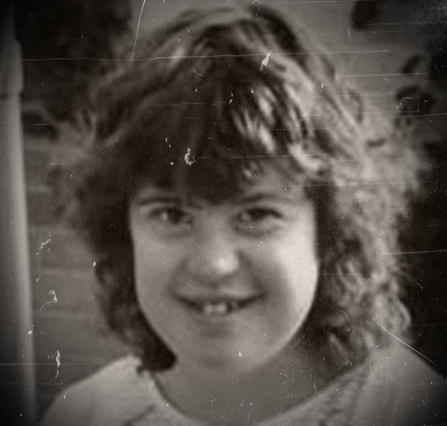
Richard, a devoted father who ran a local business, later recalled the quiet alarm that set in when the clock ticked past four p.m. on Tuesday April 9th, 1991 with no sign of his daughter coming home from work. Jo was never late; her world was confined to just four known spots in Bridport, all easily reachable on foot. When she didn’t return from the shop, Richard’s worry escalated into a frantic search of those locations, but he found nothing.
Eyewitness accounts painted a picture of Jo’s final hours. She was last seen in the company of an unidentified man, dubbed “Mr. Zig Zag” by the press for the distinctive zigzag-patterned sweater he wore. Some reports suggest she had been at the leisure center earlier that day before heading to work, but the exact sequence blurred in the chaos of the initial investigation. Jo had vanished without a trace.
For eleven months, the Ramsden family clung to hope amid a torrent of media appeals and police door-to-door inquiries. Dorset Police launched a massive search, treating Jo’s case as a missing person with growing fears of foul play. The coastal town’s narrow lanes and wooded outskirts were combed, but leads dried up quickly. Jo’s disability made her disappearance all the more alarming; she was not the type to wander far or seek adventure alone.
That fragile hope shattered on March 12th, 1992, when two forestry workers stumbled upon a grim scene in dense woodland near the A35 road, on the Dorset-Devon border close to Lyme Regis, about twelve miles from Bridport. There lay Jo’s body, clad in the same outfit she had worn on the day she vanished. The remote spot, shrouded in undergrowth and accessible only via unmarked tracks, suggested to investigators that her killer possessed intimate local knowledge.
Pathologists were unable to determine a precise cause of death, a frustrating ambiguity that has plagued the case ever since. No signs of sexual assault were confirmed, but the isolated location of the remains pointed to murder.
As news of the body spread, eyes turned to a chilling suspect: Michael Fox, a fifty-year-old former psychiatric nurse from nearby Charminster. Fox, who had retired on medical grounds from Herrison House Hospital near Dorchester, had a dark history of preying on vulnerable women, specifically those with intellectual disabilities. Between June 1988 and December 1991, he admitted to kidnapping, raping, and attempting to rape at least six such victims in the Dorset area, including assaults in Weymouth and at the hospital itself.
Fox’s modus operandi was eerily aligned with Jo’s case: he targeted isolated, trusting individuals, luring them with false promises of kindness before striking. No weapons or overt sadism; just calculated exploitation, rooted in his own traumatic childhood abuse, as psychiatric reports later revealed. In February 1994, at the Old Bailey, Mr. Justice Ognall sentenced Fox to nine concurrent life terms, branding his actions as “repulsive” and recommending at least twelve years before any parole consideration. Three additional kidnaps, three attempted kidnaps, two indecent assaults, and another attempted rape were taken into account.
Fox was charged with Jo’s kidnapping, but the case collapsed at a pre-trial hearing due to insufficient evidence. Undeterred, police questioned him again post-sentencing about her murder, probing links to the disposal site. Though never formally charged with her killing, Fox’s shadow loomed large. In 2003, his transfer from high-security Broadmoor Hospital to the lower-security Chadwick Lodge in Milton Keynes ignited public fury. Victims’ groups decried the move as a betrayal, arguing that a predator of Fox’s caliber posed an ongoing threat, especially to the disabled community Jo represented. Broadmoor officials defended it as standard procedure for patients no longer needing maximum security, but for the Ramsdens, it reopened old wounds.
Dorset Police have kept Jo’s file active, vowing to pursue new leads as forensic technology advances. In 2021, her murder was spotlighted among ten unsolved Dorset homicides, with detectives reaffirming their commitment to the families.
Recent years have seen renewed interest, fueled by true crime podcasts like They Walk Among Us, which devoted a 2024 episode to Jo’s story, interviewing family and revisiting the timeline. Yet “Mr. Zig Zag” remains a ghost, and Fox, now in his 80s, has never confessed to Jo’s death, leaving her murder officially unsolved.
 Crime Immemorial