
On a seemingly ordinary day in April 1992, fifty-three-year-old Michael Schallamach, a businessman from the Bitterne area of Southampton, Hampshire, England, vanished without a trace. What began as a missing persons inquiry quickly evolved into one of Britain’s most mysterious cold cases, with police later concluding that Schallamach was the victim of murder. Despite strong suspicions pointing to two notorious convicted killers, no body has ever been found, no charges have been filed in connection with his death, and the case remains officially unsolved more than three decades later.
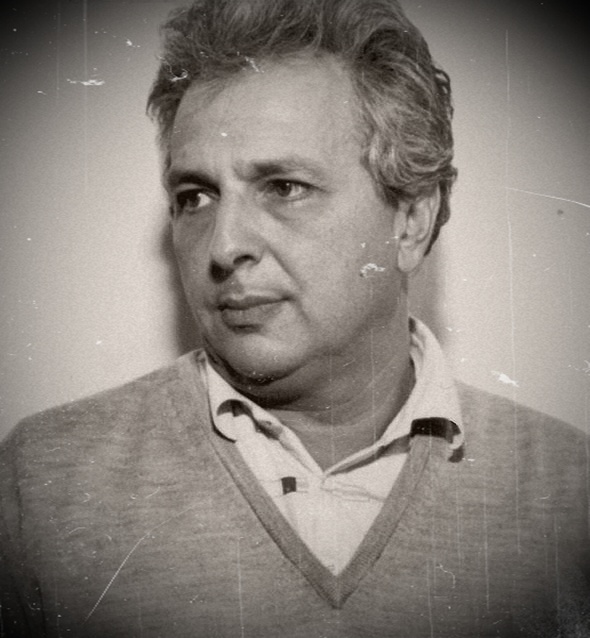
Michael Schallamach lived with his wife, Yvonne, in Sunningdale Gardens, Bitterne. Described by family and police as a loving father and grandfather, he was involved in various business dealings, some of which appeared legitimate on the surface but may have skirted the edges of legality. In the days leading up to his disappearance, Michael was reportedly excited about a potential business opportunity.
He was last seen alive in April 1992, with the last confirmed sighting linked to one of the future suspects. Michael failed to attend a scheduled business meeting in the Netherlands, raising immediate alarms. His car was later found abandoned, but there were no signs of struggle or foul play at his home.
In the weeks following his disappearance, Yvonne Schallamach received a handwritten letter, purportedly from France, signed by someone claiming to be “Helen.” The letter suggested that Michael had left voluntarily to start a new life abroad, possibly in Europe or even Nigeria, with another woman. At the time, this narrative was circulated by some of Michael’s business associates, leading initial investigations to explore the possibility of him absconding. However, family members and later police reviews dismissed this as a deliberate fabrication to mislead the inquiry.
For years, the case languished as a missing persons mystery. But accumulating evidence—details of which have not been fully disclosed publicly—convinced Hampshire Constabulary that Michael Schallamach had been murdered. His lifestyle and associations placed him in circles involving serious criminal elements, including drug importation and financial schemes.
The major development came in 2016, when detectives from Hampshire’s Major Investigation Team publicly named two men as prime suspects: Kenneth Regan and William Horncy. These individuals were already serving whole-life sentences for one of the UK’s most infamous multiple murders: the 2003 killings of the Chohan family (Amarjit Chohan, his wife Nancy, their two young sons, and Nancy’s mother), committed in a bid to seize control of a lucrative business empire.
Police stated that Regan, described as the last person to admit seeing Michael alive, and Horncy were “directly involved” in his death. Investigators believed the motive stemmed from a soured business deal, with Michael potentially caught up in Regan and Horncy’s criminal operations a full decade before the Chohan atrocities. The duo’s modus operandi in later crimes—luring victims, killing them, and disposing of bodies in remote or inaccessible locations (such as at sea)—fueled speculation that Michael Schallamach met a similar fate.
In a renewed appeal featured on BBC’s Crimewatch Roadshow in 2016, police highlighted the suspicious letter to Yvonne as a key piece of evidence, urging anyone with information about Regan or Horncy’s activities in the early 1990s to come forward. Detective Chief Superintendent Ben Snuggs emphasized the family’s torment after nearly a quarter-century of uncertainty, describing Michael as a devoted family man whose disappearance shattered their lives.
Despite the 2016 naming of suspects, the case has not progressed to charges. Regan and Horncy, both in their seventies as of 2025 and imprisoned for life with no prospect of release, have denied any involvement in Michael Schallamach’s disappearance. Without a body or definitive forensic evidence linking them directly, prosecutors have been unable to build a case strong enough for court. The passage of time, potential destruction of evidence, and the suspects’ existing convictions have complicated matters further.
As of November 2025, there have been no significant public updates since the 2016 appeals, and the investigation remains open but inactive in terms of new leads. Hampshire Police continue to classify it as an unsolved murder.
 Crime Immemorial