
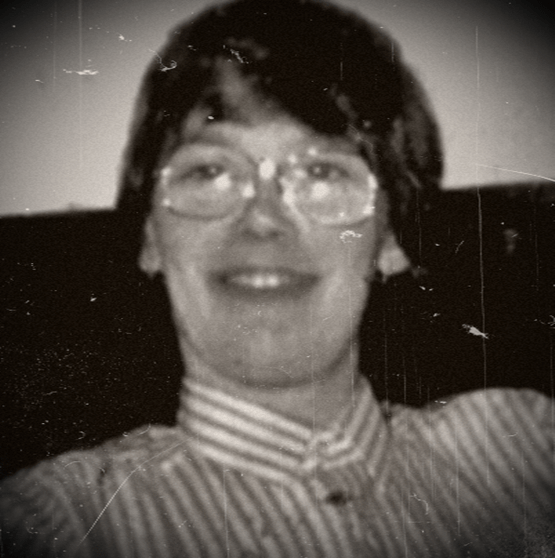
Diane McInally grew up in the Gorbals, one of Glasgow’s toughest neighborhoods, where poverty and addiction cast long shadows. By her early 20s, she was making her living as a sex worker along Cadogan Street, the heart of the city’s red-light district in the early 1990s. Battling drug addiction, Diane’s choices were born of desperation, not destiny. She was a mother to six-year-old Craig Nixon, a boy she adored fiercely despite the chaos of her circumstances.
On the evening of October 15th, 1991, then-twenty-three-year-old Diane was last seen alive climbing into a car with two men on Cadogan Street. Witnesses later described the scene as unremarkable; a routine pickup in a neighborhood where danger lurked in every shadowed corner. But those who knew her suspected that Diane went willingly, perhaps recognizing a familiar face inside the vehicle. What happened next would unravel in the quiet seclusion of Pollok Park, a sprawling green oasis turned crime scene.
The following morning, October 16th, park visitors unearthed the horror. Diane’s body was concealed under foliage, her face and body marred by savage blows. Pathologists determined she had been killed elsewhere, likely in a vehicle or safe house, before being dumped in the park to delay discovery. The ferocity of the attack suggested rage or retribution, fueling early theories of a dispute over drugs or unpaid debts.
Strathclyde Police launched a massive investigation, interviewing over 500 men. Tips poured in from the underworld, but concrete evidence proved elusive. In March 1992, two suspects emerged: Gary Moore, a notorious gangland enforcer, and Dale “Dagga” Clark, a drug dealer. They were charged with murder, but the case collapsed due to insufficient evidence. Clark died a few years later, while Moore was convicted in 1994 for the killing of Jimmy Boyle’s son and sentenced to eight years. He passed away in 2010 from liver failure, leaving behind a deathbed admission: he had been with Diane mere hours before her death, and they had argued, but he insisted he wasn’t the killer.
As the years ticked by, the official narrative of a drug-fueled fallout began to fray. In 2017, Craig Nixon–adopted by his grandparents as a child and now a grown man–alleged that Diane’s death was no random act but a calculated hit ordered by a shadowy “Mr. Big” in Glasgow’s underworld. According to Craig, his mother had damning knowledge of another murder implicating this figure and was set to testify in an upcoming trial. “They didn’t want her to go to the police so they shut her up,” he said.
Craig believes Moore and Clark were mere “dogsbodies,” i.e. low-level operatives fed to police to protect the real orchestrators. He claims new evidence, including the identity of the “Mr. Big,” could reopen the case, and he has vowed to hand it over to authorities.
Diane’s killing was the harbinger of worse to come. Between 1991 and 1998, six women–all sex workers, many addicted to drugs–were murdered in Glasgow, sparking fears of a serial predator. While some cases saw belated justice, like Tracey Wylde’s in 2019 via DNA evidence, Diane’s remains stubbornly unsolved, alongside others like Karen McGregor’s 1993 strangulation. The era’s investigations were marred by biases: sex workers were often dismissed as “disposable,” their testimonies doubted, and evidence mishandled.
The 2024 conviction of Iain Packer, who was jailed for a minimum of thirty-six years for raping and murdering Emma Caldwell, ignited a reckoning. Police Scotland, admitting past failings, announced reviews of these cold cases, including Diane’s.
Thirty-four years after that fateful night in Cadogan Street, however, Diane McInally’s murder is still unresolved.
 Crime Immemorial
2 thoughts on “Diane McInally”