
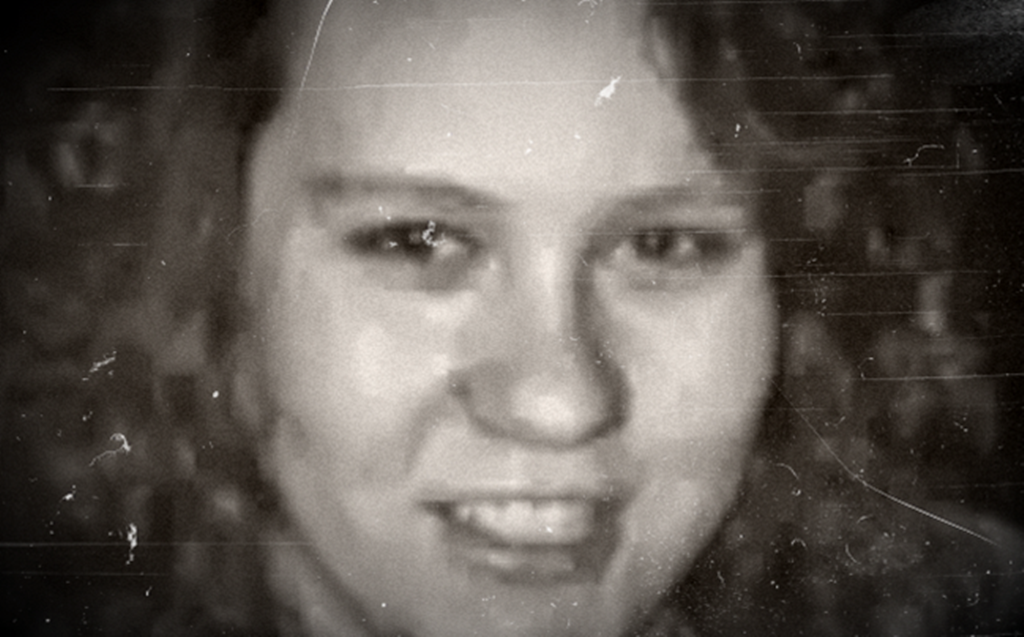
Eighteen-year-old Nicola Payne lived in Henley Green, an area of Coventry, England. Her son, Owen, born in June 1991, was the center of her world. Described by family as “bubbly” and “full of life,” Nicola lived with her partner, Jason Cooke, in a modest home on Winston Road. The couple’s relationship was typical for the era: passionate but strained by the demands of parenthood and limited finances. On December 13th, 1991, the day before her disappearance, Nicola had spoken to her father, John, on the phone around seven p.m., sounding cheerful and relaxed.
The following evening, around seven thirty p.m., with fog blanketing the area, Nicola kissed Owen goodbye and left the Cooke home to fetch clean baby clothes from her parents. The patch of scrubland known locally as the Black Pad—a desolate, overgrown shortcut between housing estates—was a route she knew well, despite its reputation as a dimly lit, eerie expanse. Witnesses later reported hearing screams that night, and anonymous tips described a man with a mustache carrying a “drunk” woman in a big coat; details that chilled investigators but led nowhere.
When Nicola didn’t arrive home by eight p.m., alarm bells rang. Her parents, John and Marilyn Payne, frantically searched the neighborhood. Police were called, and by morning, a full-scale operation was underway: helicopters buzzed overhead, sniffer dogs scoured the scrubland, and over a hundred officers combed Coventry’s canals and parks. Nothing was found, and the years began to roll by. In 1996, police excavated a garden on Woodway Lane, but came up empty. Divers dredged the Oxford Canal near Ansty in 2001, but again, nothing surfaced.
From the outset, police treated the case as a likely abduction and murder, though without a body, it teetered on the edge of “missing person.” The Paynes, a tight-knit family, refused to accept defeat. In 1998, they launched a public appeal, with Marilyn voicing her gut-wrenching doubt that Nicola was alive. By 2003, West Midlands Police vowed the file would stay open indefinitely.
Creative pleas followed: in 2005, ads emblazoned on trucks crisscrossed the Midlands, and the TV show The Missing featured Nicola’s story. Her son Owen, then sixteen, made a poignant appeal in 2007, his voice cracking as he begged for answers about the mother he barely remembered. That same year, a thirty-seven-year-old man from Derbyshire was arrested on suspicion of abduction and murder but released without charge after four months.
2008 brought another fruitless search of a Winston Avenue property. The twentieth anniversary in 2011 sparked fresh appeals, yielding anonymous tips about two men seen near the Black Pad.
In 2012, new intelligence prompted a parkland search off Purcell Road, where a safe was unearthed but revealed nothing. Two men—a seventy-four-year-old and a forty-five-year-old—were briefly detained for conspiracy to conceal a body. By 2013, forensic re-testing of old evidence and twenty-five new leads from appeals led to three arrests. Searches expanded to Binley nature reserve in 2014 and Coombe Country Park in 2018, where private investigators using sonar and ground-penetrating radar scoured woods and pools. A 2019 canal dive between Coventry and Rugby was equally unproductive.
Theories swirled in online forums and cold case discussions. Some linked Nicola to the October 1991 disappearance of local sex worker Barbara Finn, both dark-haired and attractive, hinting at a serial predator. Whispers pointed to Peter Tobin, the convicted killer with Midlands ties who preyed on similar victims, or the shadowy “Midlands Ripper.” Yet, no concrete ties emerged.
The closest brush with justice came in January 2015, when brothers-in-law Nigel Barwell and Thomas O’Reilly, both fifty-one and from Coventry, were charged with Nicola’s abduction and murder. The case hinged on a tent discovered in Barwell’s garden five days after her vanishing. Advanced 2014 forensics linked hairs inside to Nicola and Barwell. Prosecutors painted a picture of opportunity: the men, known locally for petty crime (Barwell had cannabis convictions), allegedly spotted Nicola on the Black Pad, abducted her, and disposed of her body.
At Birmingham Crown Court, the defense dismantled the prosecution. Barwell and O’Reilly claimed an ironclad alibi: a car breakdown stranded them fourteen miles away in Rugby that night. They accused police of intimidation during 2013 questioning. Crucially, the jury questioned the evidence chain of custody, specifically how the tent, stored for twenty-three years, yielded viable DNA. After three days of deliberation, both were acquitted on November 16th, 2015.
Post-trial, leads trickled in. A 2016 witness claimed Nicola was driven to Coombe Abbey on the night she vanished, prompting another family-led dig. Rewards swelled to £120,000 by 2017. But heartbreak mounted: Marilyn Payne, the family’s unyielding matriarch, died in March 2023, her final wish unfulfilled.
In May 2023, journalist and investigator Mark Williams-Thomas reignited hope with a two-part podcast, The Unsolved Murder of Nicola Payne. After four years of digging, he unveiled “significant new evidence,” including an alleged confession from a key suspect. The revelation, while not leading to immediate arrests, underscored the case’s vitality.
In January 2025, on what would have been Nicola’s fifty-second birthday, her family made a poignant pivot. Brother Nigel Payne announced the closure of dedicated social media pages, a tool that had amplified appeals for thirty-three years. “We have to move on for our own sanity,” he said, emphasizing care for “the living” while presuming Nicola gone forever. West Midlands Police echo this sentiment; the case remains open, with a dedicated liaison officer, but no active lines of inquiry.
The body of Nicola Payne has never been found, and her killer or killers are still unknown.
 Crime Immemorial
One thought on “Nicola Payne”