
Derick Kiley was no ordinary forty-seven-year-old. Described by those who knew him as a “lovable ‘Arfur Daley’ character”—a nod to the cheeky, street-smart antique dealer from the 1980s TV series Minder—Derick embodied the hustle of London’s underbelly. A businessman with a knack for deals in antiques and curios, he ran his operations from a modest flat on Harpenden Road in West Norwood, a leafy suburb south of the Thames. He affectionately dubbed his home “the Haven,” a sanctuary where friends gathered for lively evenings of banter and business.
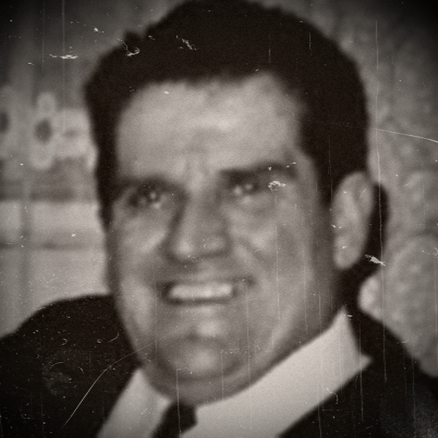
But beneath the affable exterior, Derick’s final months were marked by unease. Friends noticed a shift: the once-social man grew lonely, fearful of solitude, and visibly troubled by an unnamed worry. Whispers among his circle suggested personal entanglements—perhaps a secret affair or a deal gone sour—that left him on edge. Derick was cautious by nature, the type who vetted visitors rigorously, making the events of early January 1994 all the more baffling.
The exact timeline remains murky, with some records pinpointing the attack to the night of January 3rd-4th and others to January 5th-6th. What is clear is that Derick’s body was discovered on Thursday, January 6th, 1994, in his ransacked flat. He had been stabbed repeatedly—contemporary reports claim as many as 56 times—in a savage assault that suggested rage more than calculation.
A neighbor, roused around twelve twenty a.m., heard shouting and a woman’s piercing scream emanating from the direction of Derick’s flat. Startled, she stepped outside to investigate but saw nothing amiss. Hours later, the scene inside told a different story: drawers upended, furniture askew, and Derick’s lifeless form amid the chaos. Missing were an antique jeweled wristwatch and a black bag containing a substantial sum of cash, items that pointed to robbery. Yet, crucially, there was no forced entry. Derick, ever vigilant, had let his killer in.
Deep in the flat lay a hidden safe, stuffed with tens of thousands of pounds in savings: a fortune the intruder overlooked. Detectives puzzled over the motive. Was it a botched theft by a trusted acquaintance? Or something more personal? Just hours before, Derick had chatted with a pie stall vendor on nearby Crystal Palace Parade, confiding vague troubles that now seemed portentous.
Lambeth CID launched a vigorous inquiry, canvassing the neighborhood and appealing for witnesses. The case quickly escalated to national attention, featuring in the April 1994 episode of BBC’s Crimewatch UK.
A key suspect emerged: a regular visitor to Derick’s flat, described as a man in his mid-twenties to mid-thirties, approximately six feet tall with a slim build and olive, Mediterranean-toned skin. He sported slicked-back black hair tied in a ponytail, a distinctive look that police hoped would jog memories. Though not formally charged, he was someone Derick knew well enough to admit unannounced. “We just want to eliminate him from our inquiries,” officers stated, but the man vanished from the radar, leaving the trail cold.
In 1997, three years after Derick’s death, another random stabbing rocked London: sixty-eight-year-old George Dean was killed in a Kilburn laundromat, knifed in front of a mother and child who fled screaming for help. The assailant was described as a slim man, between five foot ten and six feet tall, aged twenty-five to thirty-five, with Mediterranean features and a black ponytail. The parallels prompted amateur detectives to link the cases. Police have not officially connected them, but the coincidence lingers.
Over three decades later, Derick Kiley’s murder remains unsolved. The Metropolitan Police still list it as active, urging anyone with information to come forward via Crimestoppers.
 Crime Immemorial