
Eleven-year-old Nayantara Ali, affectionately known as Nayan, was a bright, obedient child living in a close-knit Pakistani family on Pevensey Road in Forest Gate, East London. Her parents had returned to Pakistan, leaving her in the care of her grandmother, aunt, and uncle Aleem Malik.
On Friday, November 4th, 1994, she woke early in the room she shared with her grandmother, sipping milk as the elderly woman lovingly oiled and braided her long dark hair, a daily ritual in their bustling household.
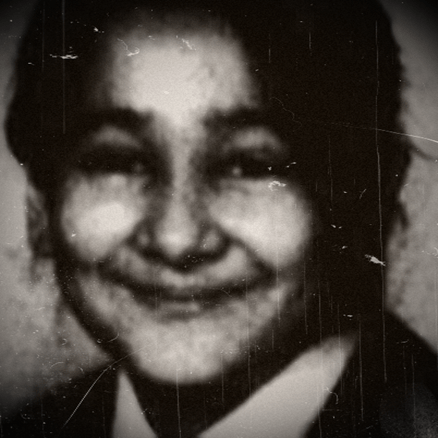
At around eight fifteen a.m., dressed in her school uniform, carrying a PE kit, an umbrella, some change for candy, and her cherished Take That backpack, Nayan stepped out for the fifteen-minute walk to Tom Hood School in Leytonstone.
She was last sighted at a candy store on Odessa Road, one of two possible routes she might have taken—the other skirting Dames Road near Wanstead Flats. A school friend later confirmed spotting her there, buying treats as usual.
But Nayan never arrived at school. By four p.m., her absence began to worry her family. Uncle Aleem called the school, then dialed police twice. Officers didn’t arrive until seven-thirty p.m., a delay the family attributes to cultural biases that plagued the investigation from the outset.
The initial police interaction set a tone of skepticism. Officers reportedly probed whether Nayan was rebelling against her “strict” upbringing—forced to wear traditional Asian clothes, sent to Pakistan unwillingly, or betrothed in an arranged marriage. “They treated it like a family matter, like she’d run away,” Aleem Malik later recounted. Detective Superintendent Douglas Harvey, who led the inquiry, insisted he viewed it as a potential murder from day one but withheld this from the family to spare their distress. He defended the response, noting fifty temporary staff and twelve CID officers mobilized in the first week, alongside interviews with over 300 locals and exhaustive searches of nearby open spaces.
Yet the family’s pleas fell on deaf ears. Over the Bonfire Night weekend, while relatives scoured bushes and shopping centers, police efforts were desultory. A press conference on November 9th drew Nayan’s mother from Pakistan, but media turnout was sparse; overshadowed, some say, by the simultaneous high-profile disappearance of thirteen-year-old Lindsay Rimer in Hebden Bridge, Yorkshire. National papers barely mentioned Nayan, fueling accusations of racial disparity: swift divers and 1,000 interviews for the white Yorkshire girl, versus delayed action for the Asian Londoner. Community leaders, including Chaudhry Anwar of the Race Equality Council, decried the “second-class” treatment of ethnic minorities, a sentiment echoed in Forest Gate’s grieving streets.
On November 29th, nearly a month after Nayan vanished, railway workers unearthed a nightmare in a disused stonemason’s yard beside the tracks, just fifty yards from Nayan’s front door. Wrapped in a pea-green fitted sheet with a valance and encased in a seven-foot circle of thick-pile pink carpet, the girl’s naked body lay buried under rubble. She had been sexually assaulted, her face battered beyond recognition, though her oiled braids confirmed her identity to her devastated mother.
The location suggested the killer had local knowledge: the yard was a stone’s throw from home, already searched by police early in the probe. Her uniform, backpack, umbrella, and PE kit were gone, never recovered. Aleem Malik theorized Nayan was held captive for days, perhaps killed around the following Monday, before her body was dumped, raising chilling questions about her tormentor’s whereabouts during those lost weeks.
The pink carpet and green sheet became the case’s most tantalizing leads. Cut crudely from a larger piece, possibly with a bread knife, the carpet’s “unprofessional” edges suggested a hasty job. Featured on BBC’s Crimewatch in December 1994, the appeal by Detective Superintendent Harvey yielded “a big public response,” including tips on the fabrics’ origins. Yet no breakthroughs followed. A 2020 Freedom of Information request for DNA evidence or updates was rebuffed by the Metropolitan Police, citing ongoing sensitivity.
Nayan’s story unfolded in parallel with Lindsay Rimer’s, whose case exploded into national headlines. Both girls vanished in November 1994; both remain unsolved. But the contrasts are stark: Rimer’s family got rapid resources; Ali’s faced stereotypes of the “rebellious Asian girl.” As Aleem Malik put it, “If Nayan was alive, she would have come home. She hadn’t, so she had to be dead.” The police van vanished after a week; leads dried up.
Today, as the thirtieth anniversary looms without fanfare, Scotland Yard insists the file stays open. Podcasts and YouTube true-crime channels have revived interest, with calls for re-testing the carpet’s fibers amid advancing forensics. Despite their efforts, the rape and murder of Nayantara Ali is still unsolved as of this writing.
 Crime Immemorial