
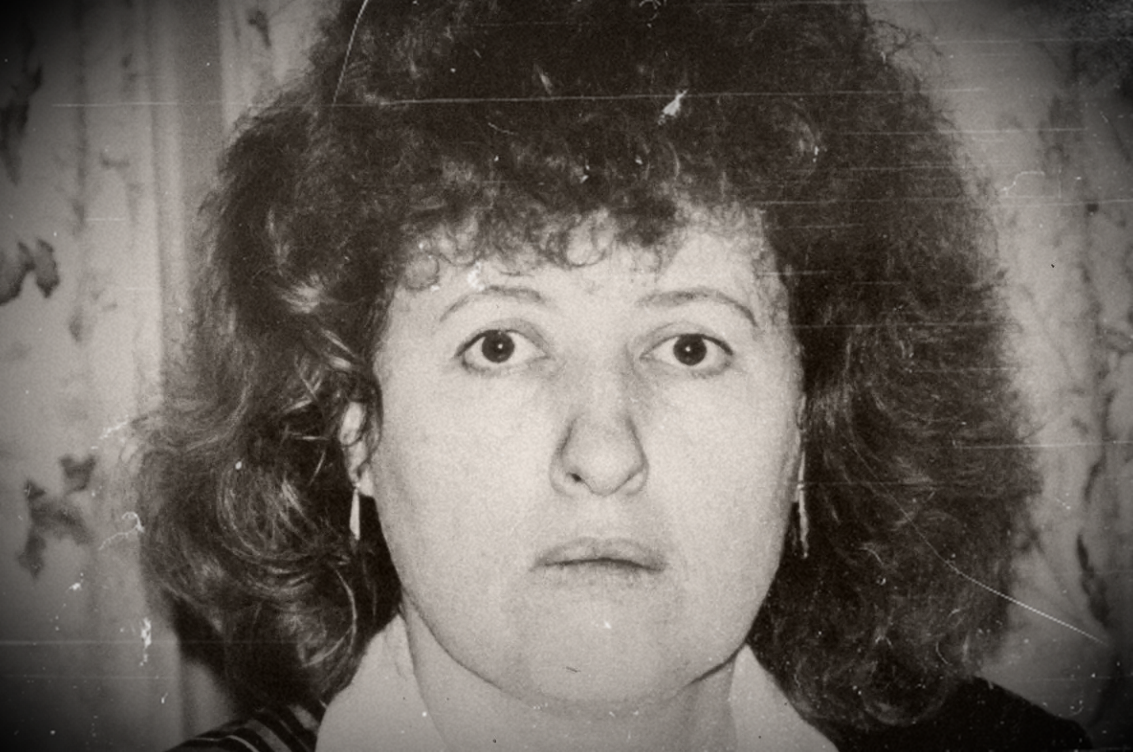
Ann Myring was born in 1952 and grew up in a close-knit family in the Bristol area of England. She met her future husband, Brian Myring, in 1971 at the New Inn pub in Patchway, and the couple married in 1973. Ann’s sister Jayne served as a bridesmaid at their wedding. Early in her career, Ann worked in the criminal records department at Avon and Somerset Police before taking time off to raise their two sons, Stephen (born around 1975) and David (born in 1982). The family was actively involved in community activities, including local cub and scout groups in Filton, where Brian worked as an engineer at Rolls Royce.
Described by those who knew her as warm, intelligent, and caring, Ann enjoyed simple pleasures like solving crosswords, metal detecting, reading Mills & Boon novels, and spending time with her loved ones. She was particularly devoted to her sons, whom she “idolized,” and was a pillar of support for her mother, Gwendoline Brace, who was battling throat cancer. Ann regularly helped with her mother’s care, including assisting with feeding tubes after surgery to remove a tumor. Family members recall her as affectionate and reliable, someone who would never abandon her responsibilities without a word. Her siblings, including sisters Lynn Flatt and Jayne Marszal, and brother Mark Brace, spoke of her as a constant presence in their lives.
However, beneath the surface, there were tensions in her marriage. Brian had begun an affair with Teresa Kempster, a woman he met through the scouts group. The relationship was not entirely secret within their social circle, but it’s unclear how much Ann knew or suspected. Family accounts suggest occasional arguments between Ann and Brian, sometimes conducted during drives away from the children to avoid upsetting them.
On the morning of June 25th, 1997, the then-forty-five-year-old Ann went to work as usual at Hewlett Packard’s offices in Stoke Gifford. Colleagues later noted that she seemed unusually snappy that day, though nothing else appeared out of the ordinary. She left work in the afternoon, driving her Vauxhall Carlton home—a short journey to Chevening Close. Her sons saw her at home that evening, marking the last confirmed sighting of her alive.
The next morning, Brian told the boys that Ann had gone away to a health farm for the weekend to relax. He took her car to work that day, explaining to David not to disturb her if she was resting. However, when Ann failed to return or make contact, Brian later revised his story, claiming she had left him following arguments about money. Ann had booked the following day, June 26th, off work, but she never collected her wages, accessed her bank account, or took most of her personal belongings. Items left behind included all her makeup, jewelry, and curiously, nine single shoes—suggesting she hadn’t packed for a voluntary departure.
Weeks passed before Ann was officially reported missing, as Brian initially believed she had left of her own accord. Her family grew concerned when she didn’t check on her mother’s recent biopsy results or contact anyone. Ann’s mother, Gwendoline, insisted that her daughter would never disappear without ensuring her family’s well-being, fueling suspicions that something sinister had occurred.
Avon and Somerset Police launched an extensive search, both nationally and internationally, coordinating with the Missing Persons Bureau. Family members, including Ann’s sisters, distributed posters and launched public appeals in magazines and local media. Searches focused on rural areas Ann enjoyed, such as Tockington Hill and woodlands near Wick, given her interest in rambling and metal detecting. Despite these efforts, no trace of Ann or her body was found.
In October 1997, police arrested Brian Myring and Teresa Kempster at the family home on suspicion of murder. Teresa, who was also married, was questioned and released without charges. Brian, however, was charged with Ann’s murder. Investigators pointed to circumstantial evidence: Brian’s affair, which prosecutors alleged provided a motive for him to kill Ann and start a new life; possession of her bank card; and the unlikelihood of Ann abandoning her devoted family role, especially with her mother’s health in decline. There were also reports of a heated discussion in the car on the evening of June 25th, though details were disputed.
Forensic examinations of the home and car yielded no direct evidence of violence or a crime scene. Without a body, the case was rare in British legal history, relying heavily on inference rather than physical proof.
Brian’s trial began in November 1999 at Bristol Crown Court and lasted three weeks. Prosecuting barrister Paul Chadd QC argued that Ann’s deep family ties made voluntary disappearance implausible, and that Brian had murdered her to pursue his relationship with Teresa Kempster. The defense, led by Anthony Arlidge QC, emphasized the absence of a body, forensic evidence, or any history of violence in the marriage. Brian denied the charges, maintaining that Ann had left him after siphoning money from their accounts—a claim partially disputed by CCTV footage.
The jury deliberated for less than three hours before acquitting Brian. Lead detective Chief Inspector Geoff Anderson expressed disappointment but reiterated his belief that Ann was dead, appealing for information on her body’s location to provide closure for the family. Community discussions, including on online forums, have since questioned the verdict, noting the challenges of proving murder without concrete evidence.
The case has deeply divided Ann’s family. Brian and sons Stephen and David have consistently maintained that Ann is alive and may have chosen to start anew. In interviews, David described the ongoing trauma, including social isolation as friends and community members distanced themselves post-trial. He expressed hope that Ann might one day return, citing unconfirmed sightings, such as one in Leeds in 2004.
In contrast, Gwendoline Brace and Ann’s siblings are convinced she was murdered. Gwendoline, who passed away without answers, held a memorial service in March 2000 and stated Ann would never abandon her “apple of her eye,” David, or fail to support her during cancer treatment. This rift has led to no contact between the two sides of the family.
As of December 2025, twenty-eight years after Ann’s disappearance, the case remains unsolved. The charity Missing People continues to mark anniversaries and her birthday with public appeals, urging anyone with information to come forward. Podcasts like “The Unseen Podcast” and “Sunday Night Mystery” have revisited the story, with a 2023 update featuring an interview with David Myring providing new timeline insights and highlighting the family’s emotional toll.
Avon and Somerset Police still classify the case as an unresolved homicide. Theories range from foul play linked to the affair to a possible voluntary disappearance or even suicide, but without Ann’s body or new evidence, closure eludes everyone involved.
If alive, Ann would now be in her early seventies, but the more time passes, the less likely it seems that there will be a happy resolution.
 Crime Immemorial