
On the evening of September 29th, 1983, fifty-eight-year-old George Murdoch, a well-liked taxi driver from Aberdeen, Scotland, was brutally murdered in a crime that became known across the UK as the “Cheese Wire Murder” due to the unusual weapon used in the attack.
George Murdoch, often called “Dod” by friends and family, was born in Aberdeen in the mid-1920s and had spent most of his life in the city. Known as a friendly and gentle man who enjoyed boating and keeping pigeons, George had taken up taxi driving after redundancy from factory work in the late 1970s. Despite his wife Jessie’s concerns for his safety on night shifts, George insisted he could handle whatever came his way, even saying he would never fight an assailant but simply hand over any money if threatened.
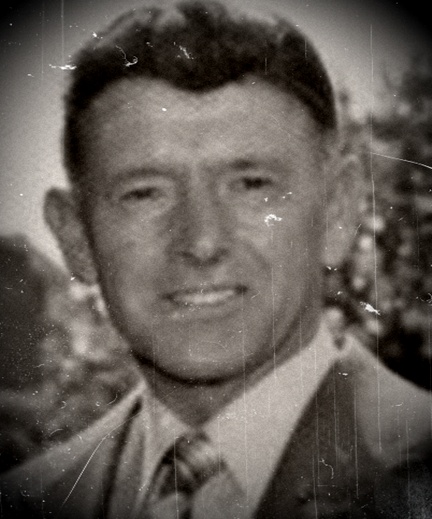
On that fateful Thursday evening in 1983, George was on a night shift. At around eight thirty p.m., he picked up a fare on Queen’s Road in Aberdeen. He informed his taxi control office that he was taking a passenger to Culter, on the western outskirts of the city. After driving nearly two miles, he turned onto Pitfodels Station Road, a quiet stretch on the edge of the city.
It was here that his passenger, later described by witnesses as a man in his twenties to early thirties, attacked George . Using a cheese wire, the assailant strangled George in a brutal assault that spilled out into the road. Two teenage cyclists passing by saw the struggle and hurried to call the police, but George died at the scene before help could arrive. The makeshift garotte was left nearby.
The killer then took George’s wallet and the small amount of fare money he had—between £21 and £35—though it was never clear whether robbery was the true motive.
The murder ignited one of the largest manhunts in north-east Scotland’s history. Police described the suspect as a slim male, five feet tall, clean-shaven, with short dark hair and wearing dark clothing, potentially with blood on it after the attack. Investigators visited 10,000 homes and took over 8,000 statements, and numerous appeals for information were broadcast across the UK.
Several promising leads emerged early on. A witness reported seeing a man with bloodied hands in a local takeaway shortly after the murder, and others recounted sightings of individuals acting suspiciously near the murder scene. Yet, despite exhaustive inquiries, no arrest was ever made, and the case went cold.
Over the years, the case has periodically resurfaced in public appeals and media features. It was discussed on the STV documentary Unsolved in 2004 and has been highlighted on national news programs. Investigators have continued to review the evidence, hoping that advances in forensic science might finally yield a breakthrough.
In more recent years, detectives identified a partial DNA profile from evidence collected at the scene that could belong to the murderer. By 2023, this profile was enhanced to allow familial DNA searching, producing hundreds of potential genetic matches. Police have been visiting individuals with similar DNA profiles across the UK to request voluntary swabs that might lead them closer to identifying the killer.
Authorities have also appealed to trace a man seen in Wilson’s Sports Bar in Aberdeen in 2015: he was wearing an Iron Maiden t-shirt and is thought to potentially hold information relevant to the case.
Police continue to urge anyone with information, no matter how insignificant it once seemed, to come forward. Substantial rewards, including public and family-offered sums totalling up to tens of thousands of pounds, have been offered for information leading to the identification of the killer.
 Crime Immemorial