
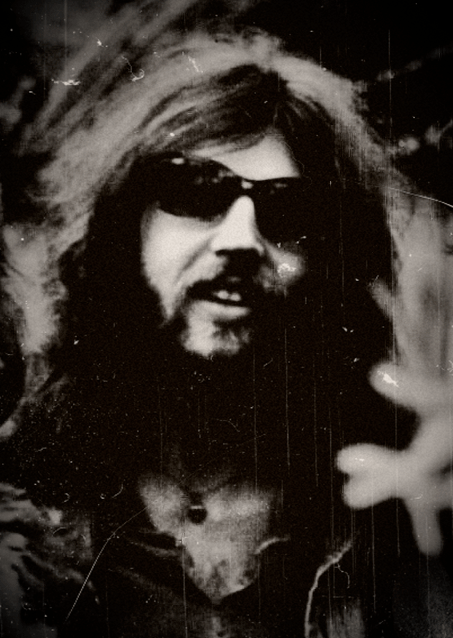
In the early summer of 1982, a quiet suburban home at 173 Parsons Road in Longwood, Florida—a small city in Seminole County near Orlando—became the scene of a shocking triple homicide that claimed the lives of a former rock musician, his young son, and a houseguest. The victims were thirty-six-year-old Russell “Rusty” Day, his eleven-year-old son Russell “Jocko” Davidson Jr., and their friend Garth McRae. The case remains officially unsolved more than four decades later, listed among the Seminole County Sheriff’s Office cold cases.
Rusty Day was born on February 1st, 1946 (though some sources list December 29th, 1945), in the Detroit area of Michigan. He rose to prominence in the late 1960s and early 1970s hard rock and blues-rock scene. Rusty is best remembered as the lead vocalist for the band Cactus, often described as the “American Led Zeppelin” for its heavy, riff-driven sound. Formed in 1969, Cactus featured members from Vanilla Fudge and other acts, and Rusty joined as singer after their initial lineup. He also performed and recorded with Ted Nugent’s Amboy Dukes in the mid-1970s, contributing vocals on tracks during that era. By the early 1980s, Day had relocated to Florida, where he had fronted his own group, Rusty Day & the Midnighters, before stepping away from it shortly before his death.
On June 3rd, 1982, deputies from the Seminole County Sheriff’s Office responded to an anonymous phone call reporting a shooting at the Parsons Road residence. Upon arrival, they discovered the bodies of the three victims, all killed by multiple gunshot wounds. Reports from the era and later accounts indicate the attack involved a high-powered weapon—some sources describe it as a Thompson submachine gun or similar automatic firearm—fired through windows or into the home in a targeted, execution-style assault. The violence was brutal and indiscriminate enough to also fatally wound the family dog.
The investigation quickly pointed to a drug-related motive. Authorities believed the killings stemmed from a soured drug transaction or dispute, and that the perpetrator(s) likely knew the victims. Rusty Day’s lifestyle in Florida had reportedly shifted toward involvement in drug activities, a far cry from his earlier days on the rock stage. Some accounts from former associates and later interviews suggest a specific theory: a fallout with a former bandmate or acquaintance (variously named in rumors as someone like Ron Sanders, though no charges were ever filed and these remain unproven speculation). One narrative describes a heated argument escalating to lethal violence, with the shooter returning armed. However, no arrests were made.
The loss was especially heartbreaking because of the inclusion of Rusty’s young son, Jocko, who was reportedly in the kitchen eating breakfast when the attack occurred. He was shot in the back, fell forward, and tragically succumbed to his injuries. Garth McRae, a thirty-three-year-old friend and guest in the home, was also killed in the barrage.
Over the years, the case has been mentioned in lists of murdered musicians, true crime discussions, YouTube documentaries, and rock history retrospectives. Some former Cactus members have spoken publicly about the tragedy, noting the dangerous path Rusty had taken after leaving the spotlight. Despite occasional tips and renewed interest (including suggestions in the 2010s about possible suspects tied to his music circle), no breakthroughs have occurred.
Today, the Seminole County Sheriff’s Office still lists the June 3rd, 1982, homicides of Russell Davidson Sr., Russell Davidson Jr., and Garth McRae as unsolved.
 Crime Immemorial