
Lenny Breau was one of the most innovative and underappreciated guitarists in jazz history. Born Leonard Harold Breau on August 5th, 1941, in Auburn, Maine, he grew up in a musical family and began performing as a child. By his teens, he had become a prodigy, blending jazz, country, flamenco, classical, and folk influences into a unique fingerstyle technique that allowed him to play bass lines, melodies, and chords simultaneously, often evoking the sound of a piano on guitar. Critics dubbed him a “genius” and compared his harmonic imagination to that of a modern-day classical virtuoso.
Despite his extraordinary talent, Lenny struggled with heroin addiction for much of his career, which hampered his commercial success and led to inconsistent recording and performing opportunities.
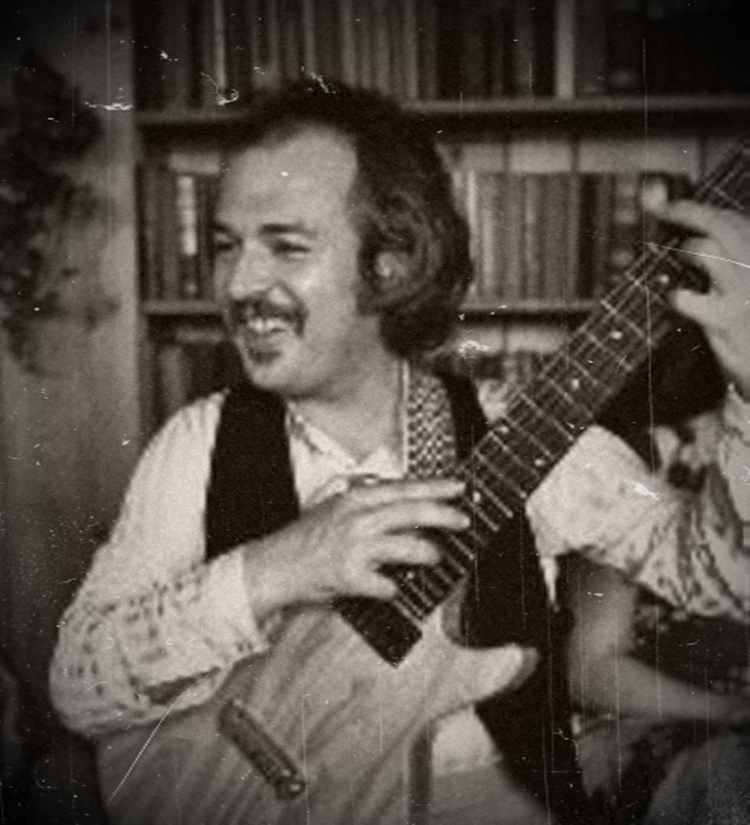
After years of playing in Canada (particularly Winnipeg and Toronto) and later in the United States, Lenny settled in Los Angeles in the early 1980s. He had reportedly overcome his heroin dependency by this point, though he still battled alcohol issues. He gigged sporadically, including a regular weekly spot at a small club in North Hollywood, and continued to inspire a dedicated cult following among guitarists.
On August 12th, 1984—just one week after his forty-third birthday—Lenny Breau’s body was discovered floating in the rooftop swimming pool of his apartment complex in Los Angeles. The initial assumption among responders was that he had drowned, possibly after a night of heavy drinking, which aligned with his known struggles. Friends and acquaintances were devastated but not entirely surprised, given his history of self-destructive behavior.
However, the Los Angeles County coroner’s investigation quickly changed the narrative. An autopsy revealed that Lenny had not drowned; the official cause of death was asphyxiation due to strangulation. Specific injuries to his neck were consistent with manual strangulation, and the ruling was officially changed to homicide. Routine toxicological tests were conducted for drugs and alcohol, though contemporary reports did not emphasize any findings that altered the homicide determination.
The discovery turned a seemingly tragic accident into a chilling murder mystery. Lenny’s wife at the time, Jewel Breau (sometimes referred to in accounts as his common-law or estranged partner), emerged as the primary person of interest and chief suspect in the eyes of investigators. The couple’s relationship had reportedly been turbulent, marked by personal difficulties. Despite this, no charges were ever filed against Jewel or anyone else. Evidence appears to have been insufficient to support prosecution, and the case stalled.
Over four decades later, Lenny Breau’s murder remains unsolved. No arrests have been made, and the Los Angeles Police Department has not publicly released new developments in recent years. The lack of resolution has fueled speculation in jazz circles, online forums, and among Lenny’s family and admirers. His daughter, Emily Hughes (a filmmaker), has explored her father’s life, legacy, and death in projects such as documentaries that touch on the enduring questions surrounding the homicide.
Lenny Breau was laid to rest in an unmarked grave at Forest Lawn Memorial Park Cemetery in Glendale, California—a quiet end for a musician whose innovative playing continues to influence guitarists worldwide through posthumous releases and bootlegs.
 Crime Immemorial