
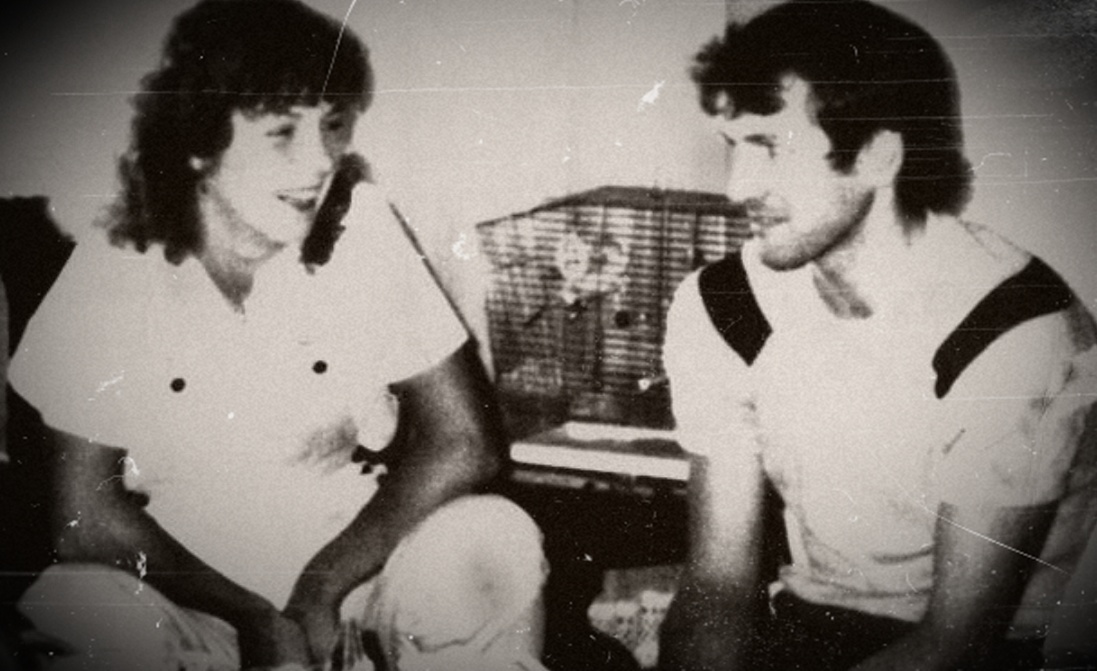
In the fall of 1983, twenty-three-year-old Andrea Scherpf and twenty-seven-year-old Bernd Göricke, a young engaged couple from West Germany, were fulfilling a dream adventure: hitchhiking across western Canada. The pair was exploring the vast landscapes of British Columbia as part of a broader North American trip. They were described as adventurous, friendly, and typical of the many European backpackers who traversed Canada’s highways during that era.
On or about October 3rd, 1983, near the small resource town of Chetwynd in northeastern British Columbia, the couple accepted a ride from an unidentified driver in a 1960s Chevrolet pickup truck. This decision would tragically be their last. They were never seen alive again by witnesses.
Their bodies were discovered on October 6th, 1983, dumped along a trail approximately twenty miles west of Chetwynd, near British Columbia Highway 97 and the Pine River. Both had been shot. The remote, forested location suggested an attempt to conceal the crime in the rugged northern wilderness.
Investigators quickly uncovered chilling evidence pointing to robbery and premeditation. The victims’ belongings, including personal items and identification, were missing.
Additionally, five of Andrea Scherpf’s traveler’s checks were fraudulently cashed between October 4th and 5th, 1983, with forged signatures. The transactions occurred at locations along a southward route from Chetwynd, including Prince George, Quesnel, McLeese Lake, and other stops, indicating the killer(s) traveled after the murders.
A pair of bloody jeans was found in a garbage can about half a mile toward Chetwynd from the body site, with blood matching the victims’.
The case drew immediate attention due to the victims being foreign tourists, prompting cooperation between Canadian authorities and German officials.
Early leads were scarce, but in 1988, a witness came forward with a dramatic claim. A woman named Kelly alleged that Andrew (Andy) Rose, a Chetwynd-area resident, had arrived at her trailer in the early morning hours of October 3rd or 4th, 1983, covered in blood and confessing to shooting two people in the head. Rose had worked at a sod farm near Chetwynd that summer, around the time the publicity about the bodies emerged.
Based largely on this testimony (which was later questioned for reliability and potential motives), Rose was arrested and charged with two counts of murder. In 1991, he was convicted and sentenced to life in prison.
However, the case unraveled over the following years. Rose maintained his innocence throughout. After serving time, DNA evidence exonerated him. Testing excluded Rose (and another suspect who had been named) as the source of key biological material. He was released, and the convictions were quashed. The witness testimony that had been central to the prosecution was discredited in hindsight.
A notable examination of the case came in January 2009, when Canadian investigative program The Fifth Estate aired an episode detailing the investigation, the trials, and the exoneration of Rose, highlighting issues with reliance on single-witness accounts in high-profile cases.
Despite extensive investigation, the murders of Andrea Scherpf and Bernd Göricke are officially unsolved. No one has ever been definitively identified or convicted as the perpetrator(s). The case has drawn comparisons to other violent hitchhiker-related crimes in northern British Columbia around the same period, though authorities have not confirmed any direct links.
Over forty years later, the Royal Canadian Mounted Police (RCMP) in Chetwynd continues to list the double homicide as an open cold case.
 Crime Immemorial