
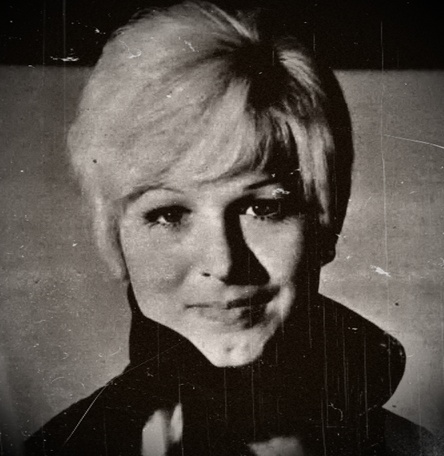
In the mid-1980s, Italy’s music scene still echoed with the voices of its earlier pop and variety stars from the 1960s and 1970s. One such figure was Graziella Franchini, better known by her stage name Lolita. Born on January 5th, 1950, in Castagnaro (in the province of Verona, northern Italy), she rose to modest fame as a petite blonde singer with a distinctive voice, performing romantic ballads and participating in the vibrant festival and television circuits of the era. Though she never achieved the mega-stardom of some contemporaries, Lolita was a recognizable name in Italian light music, remembered for her emotive performances and hopeful participation in events tied to Italy’s Sanremo-adjacent world.
By 1986, however, Lolita had relocated to the south. She lived in Lamezia Terme, a town in the province of Catanzaro, Calabria, a region often associated with economic challenges and, at times, organized crime influence. She was thirty-six years old and reportedly still active, taking engagements at local festivals and events.
On the evening of April 27th, 1986, Lolita was scheduled to perform at a public street party in San Leonardo di Cutro, a nearby town. She never arrived. The following morning, April 28th, her lifeless body was discovered inside her home in the Marinella residential complex in Lamezia Terme.
The scene was horrific and shocking. Lolita was found in the bathroom, partially undressed (wearing only a T-shirt on her upper body), with her legs spread apart. She had been savagely stabbed multiple times. Her face and body were disfigured by the frenzied attack. Most disturbingly, a broken glass bottle—specifically the neck of a large glass container (often described as a “bottiglione”)—had been used to mutilate her genital area in what investigators and journalists interpreted as a deliberate act of symbolic or rage-fueled degradation.
The brutality suggested a deeply personal motive, possibly tied to jealousy, revenge, or a desire to “punish” her. Some contemporary reports and later reconstructions emphasized the sexualized and punitive nature of the post-mortem mutilation, leading to speculation about passion crimes or vendettas.
The investigation quickly focused on two local women: a mother named Caterina Pagliuso and her daughter. They were accused of the murder, reportedly based on circumstantial elements, possible witness statements, and perceived motives linked to personal relationships or local disputes. The women were put on trial amid significant media attention.
However, the case unraveled legally over time. After proceedings that spanned multiple levels of the Italian justice system, the mother and daughter were acquitted. By the early 2000s, they were definitively cleared, meaning under Italian law they are considered innocent and cannot be retried for the crime.
Over the decades, various theories have circulated informally, including the possibility that the murder was a crime of passion possibly linked to romantic entanglements. Connections to local underworld figures or Calabrian organized crime were also explored, as were hypotheses about jealousy or perceived slights in the small-town social fabric where she lived.
None of these have been proven in court. The absence of definitive forensic breakthroughs and the acquittal of the only formal suspects have left the case in limbo.
Forty years later, the murder of Graziella “Lolita” Franchini remains officially unsolved.
 Crime Immemorial