
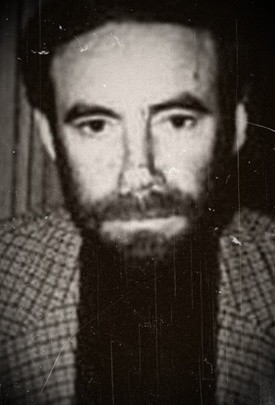
On the morning of June 11th, 2001, Milan Pantić, a forty-six-year-old correspondent for the Belgrade daily newspaper Večernje Novosti, stepped out of his apartment building in Jagodina, central Serbia, to buy milk and a loaf of bread. He never made it back inside safely. As he entered the doorway of his building on Branka Radičevića Street in the Tabane neighborhood, shortly before eight a.m., unknown assailants attacked him from behind. They struck him brutally—reports describe three heavy blows to the head with a blunt object, possibly after breaking his neck—leaving him dead in a pool of blood, the loaf of bread still beside him.
Eyewitnesses reportedly saw two men, aged roughly twenty to thirty, wearing masks and black shirts, fleeing the scene. The attack was swift, professional in its execution, and took place in broad daylight just steps from Milan’s home, where he lived with his family. Local police launched an immediate investigation.
Born on December 18th, 1954, Milan Pantić had a long career in local journalism. He began as a correspondent for a weekly paper in Rekovac before moving to Jagodina and joining Večernje Novosti as its local reporter. Colleagues described him as objective, uncompromising, and dedicated to covering issues that mattered to his community: criminal affairs, local corruption, and the shady dealings of businesses and officials in the Pomoravlje region.
In the turbulent years around the fall of Slobodan Milošević’s regime in October 2000, Milan’s reporting often touched on sensitive topics, including organized crime and what some described as the “plunder” of state assets during the chaotic transition to a new government. His articles were seen as fearless exposés of local power structures that thrived amid political upheaval. Friends and fellow journalists remembered him as a humble, hardworking “torchbearer” for truth in a small town where such reporting carried real risks.
The murder sent shockwaves through Serbia’s journalistic community, especially as it occurred shortly after the democratic changes that were supposed to usher in greater press freedom. Initial reports suggested a professional hit linked to Milan Pantić’s investigative work. Over the following years, seven different working groups within the Serbian Interior Ministry reportedly handled the case, with teams rotating roughly every eighteen months, yet no breakthroughs emerged.
In 2003, two local figures—former police chief Živojin Trifunović and former Jagodina mayor Jovan Stojanović—were briefly arrested in connection with the case, but they were later released without charges. Speculation about motives has long centered on Milan’s reporting on corruption, organized crime, and possibly conflicts involving local businesses or political interests tied to the post-Milošević “wild privatization” era. Some accounts suggest his work threatened powerful figures profiting from the chaos of transition.
Despite periodic announcements of renewed efforts, the case remains one of three unsolved murders of Serbian journalists from that period (alongside Slavko Ćuruvija in 1999 and Dada Vujasinović in 1994). International organizations, including the International Federation of Journalists (IFJ), the Committee to Protect Journalists (CPJ), the OSCE, and Reporters Without Borders, have repeatedly called for justice, highlighting the culture of impunity that persists in Serbia regarding attacks on the media.
In 2023, 2024, and 2025, journalists and unions gathered to demand answers, emphasizing that the killing symbolizes the state’s failure to protect reporters and prosecute those who silence them.
More than twenty-four years later, the murder of Milan Pantić remains unsolved.
 Crime Immemorial