
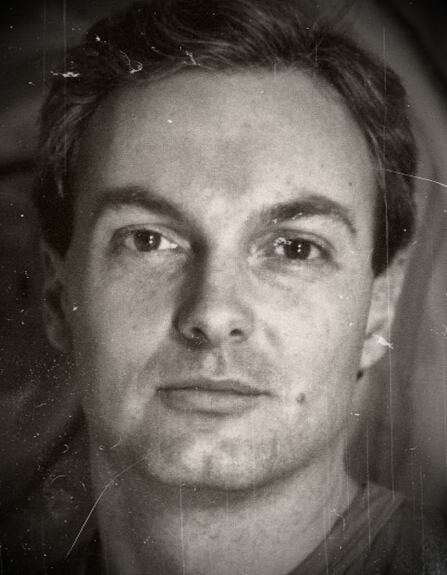
David Buller, a beloved fifty-year-old professor of fine arts and accomplished abstract painter at the University of Toronto, was brutally murdered in his office on January 18th, 2001. The killing, which occurred in broad daylight in a busy academic building, remains one of Toronto’s most perplexing unsolved cases more than twenty-five years later.
Born on August 10th, 1950, in Willowdale, Ontario, David grew up in Toronto’s suburbs during the 1950s and 1960s. From his early teens, he was captivated by drawing and painting, showing little interest in conventional schooling or outdoor activities. He attended the Ontario College of Art from 1969 to 1973, held early group and solo exhibitions in Toronto in the late 1970s and early 1980s, spent time in Paris, and earned an MFA from Concordia University in 1985.
David joined the University of Toronto’s Department of Fine Arts as a full-time instructor in 1985 after part-time teaching stints at institutions including McGill University and the Art Gallery of Ontario. He quickly became known as a charismatic, innovative professor who encouraged students to take creative risks, famously urging them to “use more paint on the canvas.”
He played a key role in developing the university’s interdisciplinary Master’s program in Visual Studies, set to launch in fall 2002. His own art evolved from large, vibrant abstract canvases with overlapping patterns and swirling colors to more layered, multimedia works that sometimes explored themes of gay male sexuality, politics, and visual culture through photo collages and text elements.
Openly gay, David was an active participant in Toronto’s queer community, attending Pride parades and supporting AIDS research and activism. Colleagues and students described him as irreverent, funny, loyal, and profoundly influential: a mentor who listened attentively and provoked curiosity rather than lecturing. His family remembered his wit, his love of a glass of scotch, and his advice to “just do something interesting with your time on earth.”
On the afternoon of January 18th, 2001, David Buller was last seen entering an elevator at the University of Toronto’s Visual Studies department, located at 1 Spadina Crescent. He was scheduled to teach an evening class but never appeared. Students waited, knocked on his sixth-floor office door, and eventually grew concerned when there was no response. His body was discovered the following morning (January 19th) by a caretaker. He had been stabbed repeatedly—reports indicate at least seven times—while at his desk.
The attack occurred in a high-traffic area of the building during a busy time of day; a baby shower was even taking place on a lower floor. Despite the foot traffic, no witnesses came forward with clear information about seeing anyone enter or leave David Buller’s office around the time of the murder. Emergency personnel attempted life-saving measures, but David was pronounced dead at the scene.
A computer printout found at the scene has been referenced in some accounts as potentially significant evidence, though specifics have not been publicly detailed. No DNA or other forensic evidence immediately pointed to a suspect. The murder shocked the university community and Toronto’s art scene, prompting widespread speculation but few concrete leads.
Toronto Police investigated the case through the 52 Division homicide unit, with the file remaining open with the Homicide Cold Case Unit. A reward was offered for information leading to an arrest, and appeals have continued over the years. Family members have expressed the belief that David knew his killer, given the circumstances of the attack in his private office.
Media coverage at the time and in subsequent years sometimes speculated about possible motives linked to David Buller’s openness about his sexuality, raising questions of a potential hate crime or personal dispute. However, police have never confirmed any motive, and no arrests have ever been made.
In the wake of his death, the University of Toronto established the David Buller Memorial Scholarship to support students in the Visual Studies program, honoring his dedication to teaching and artistic innovation. His artwork continues to resonate with family members, who live with his large abstract canvases, and former students who credit him with shaping their creative approaches and worldviews.
 Crime Immemorial