
On May 11th, 2001, sixty-three-year-old Donald “Don” Banfield walked out of his family home at 146 Lockett Road in Harrow, north-west London, and vanished. A retired betting-shop manager who had spent decades working for William Hill, Banfield left behind a wife, six children, and a turbulent marriage. More than twenty-four years later, his body has never been found, no murder weapon or crime scene has ever been identified, and the case remains officially unsolved, yet it is widely regarded by investigators as a probable homicide.
Don was born in Trinidad in 1937 or 1938 and had settled in Britain, where he built a career running bookmakers’ shops. By the time of his disappearance he had recently retired from managing the Hampstead branch of William Hill. His marriage to Shirley Banfield, a retired tax inspector, had been strained for years. Court documents and contemporary reports described Don as a heavy gambler and womanizer; the couple’s relationship was marked by conflict, and he had spoken of wanting to leave and start a new life.
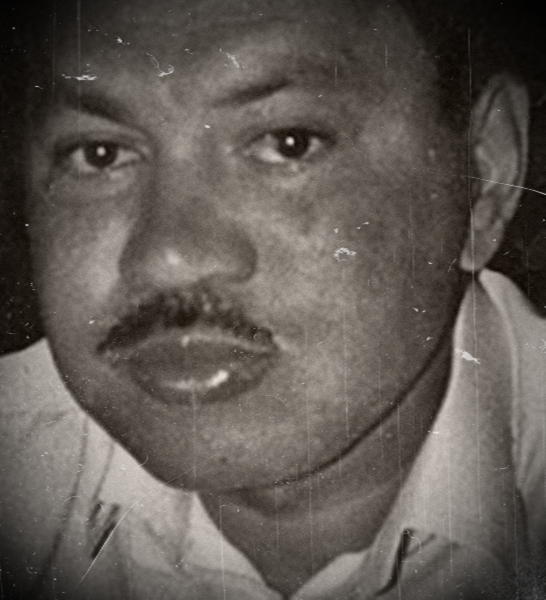
In the weeks before May 11th, 2001, Don had taken a decisive step: he put the family home on the market. The sale was expected to net around £120,000 in profit, money he intended to use to walk away from the marriage. Prosecutors would later argue that this decision “signed his own death warrant.”
Don was not reported missing until May 19th, when a friend, Kevin McIntosh, contacted police after failing to reach him. Officers visited 146 Lockett Road. Shirley Banfield told them her husband had simply left to begin a new life elsewhere and that she did not know his whereabouts. No immediate alarm was raised; the case was logged as a low-priority missing-person inquiry. The family made no public appeals, and for eight years the file gathered dust.
During that time, Shirley and her daughter Lynette (then in her late twenties) sold the Harrow house, moved first to Yorkshire and later to Ashford Road in Canterbury, Kent, and continued to claim Don’s state pension and other benefits. They forged documents bearing his signature and even supplied police with an old photograph showing him with grey hair to support the story that he was alive and well somewhere.
In 2009 the Metropolitan Police’s Homicide and Serious Crime Command reviewed cold missing-person cases across London. When detectives examined Don Banfield’s file, red flags appeared immediately. His former employers at William Hill had grown suspicious that no one had heard from him since retirement. Financial records showed the pension payments had continued uninterrupted, and the rapid sale of the family home looked suspicious.
Shirley Banfield, then sixty-four, and Lynette Banfield, forty, both living in Canterbury, were arrested in 2010. They were charged with murder, conspiracy to pervert the course of justice, and fraud. The prosecution’s case was built entirely on circumstantial evidence: the timing of the house sale, forged signatures, continued benefit claims, the women’s sudden relocation, and the complete absence of any contact from Don Banfield despite his supposedly starting a new life. No body, no blood, no murder weapon, and no eyewitness to the alleged killing.
The trial opened at the Old Bailey in early 2012. It was a rare example of a British murder conviction secured without a corpse. Prosecutors told the jury that between May 11th and 16th, 2001, the two women had killed Don Banfield, disposed of his body, and then spent the next eight years pretending he was alive to pocket his money. The motive, they said, was financial: the £120,000 house-sale profit and the ongoing pension.
After several weeks of evidence, on April 3rd, 2012, both women were convicted of murder. Shirley received a life sentence with a minimum term of eighteen years; Lynette was given sixteen years. The judge described the crime as cold and calculated.
However, just over a year later, on July 31st, 2013, the Court of Appeal overturned both murder convictions. Three judges ruled that the prosecution had failed to prove joint enterprise: that is, that both women were present and acting together when Don Banfield died. The court accepted there were “tenable alternatives” that could explain his death and that the Crown could not establish that the pair must have killed him in concert rather than one acting alone.
Crucially, even Shirley Banfield’s own lawyer, William Clegg KC, acknowledged in open court that it was “likely” one or the other of the two women had killed Don. The appeals succeeded on the narrow legal point of joint enterprise; the murder convictions were quashed and no retrial was ordered. The women remained convicted on the fraud charges to which they had pleaded guilty.
As of 2026, Don Banfield is still listed as missing. His body has never been recovered, and no one has ever been convicted of his murder. The Metropolitan Police case file remains open, and investigators continue to treat the disappearance as suspicious. Police and many who have studied the evidence believe he was murdered, most likely by someone close to him, but the legal threshold for a joint murder conviction was never met.
 Crime Immemorial