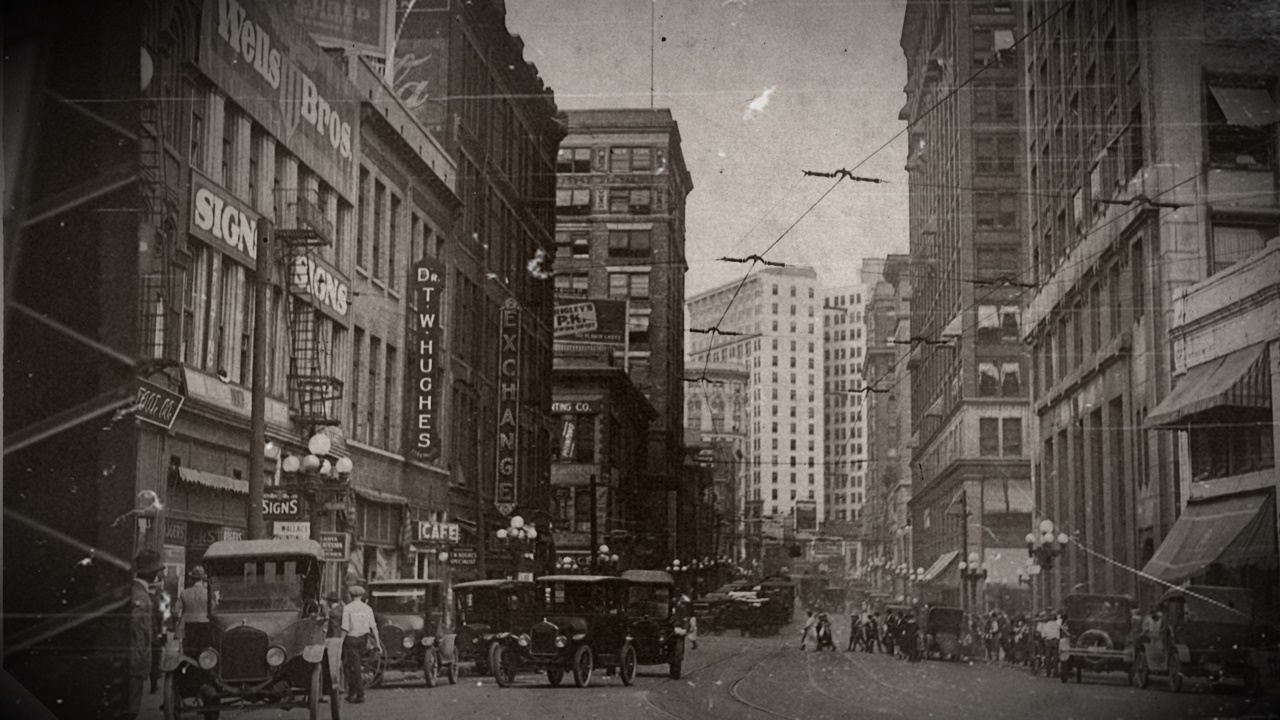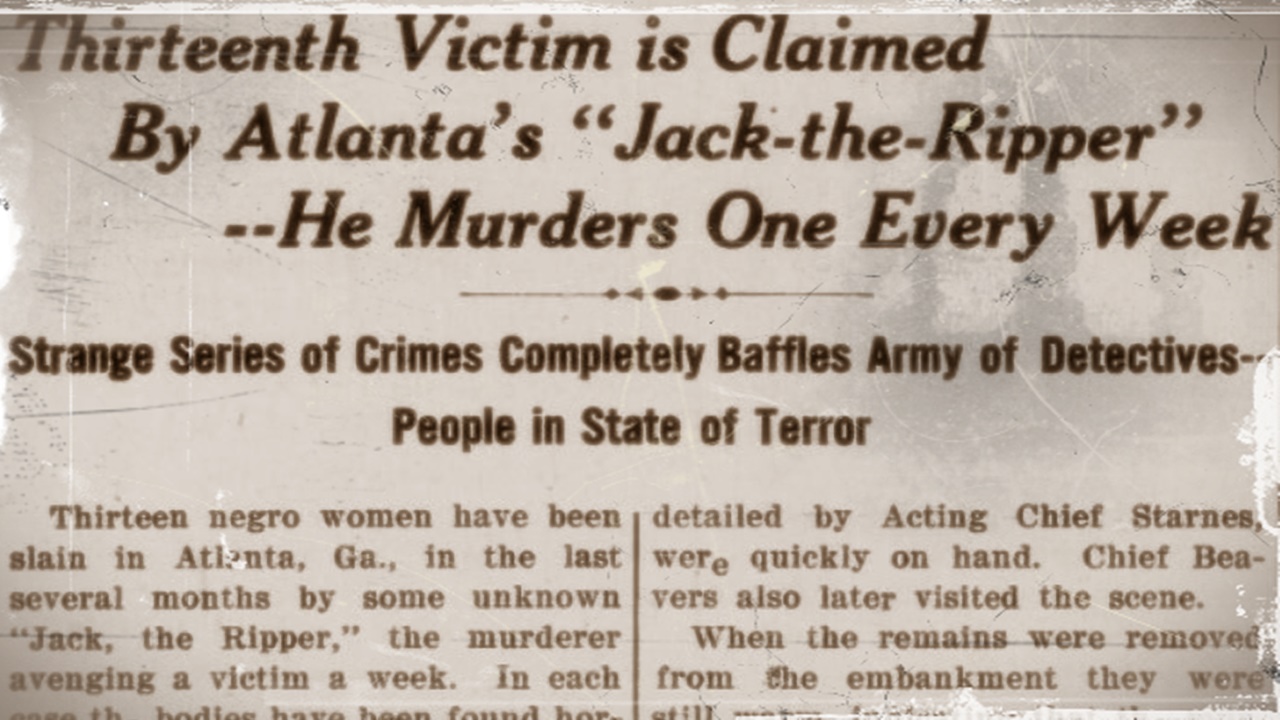
In the early years of the twentieth century, in the racially-charged atmosphere of Atlanta, Georgia, bodies began to stack up in the black community, and though law enforcement and the press were initially slow to embrace the idea that a single perpetrator might be responsible for the majority of the crimes, eventually so many unsolved murders had taken place that they could no longer deny the possibility that there might be a serial killer in their midst.
The string of killings in Atlanta’s black community actually began in 1909, though it is still unknown whether these particular murders were committed by the same person responsible for the signature crimes that would later be attributed to the unidentified serial killer who would come to be known only as the Atlanta Ripper; the name, of course, was a grimly American take on the alias of Jack the Ripper, who had terrorized the streets of Whitechapel only two decades before.
In April of 1909, for example, the body of a woman named Della Reid was discovered dumped in a trash pile. Though details about her cause of death have been lost to time, her killer was never apprehended, though she is not usually listed among the “canonical” victims of the Atlanta Ripper.
Likewise with the unidentified murder victim found in Peachtree Creek on September 7th of 1909. The woman was found stabbed, and had her throat slashed. Again, the assailant was never discovered.
The run of murders continued into 1910, beginning with Estella Baldwin, whose body was found on March 5th. She had been bludgeoned to death. Six more victims followed: Georgia Brown on April 5th; Mattie Smith on April 6th; Luvinia Ostin on May 6th; Sarah Dukes on May 23rd; Francis Lampkin on some unspecified date over the summer; and Eliza Griggs on September 4th. All of these victims were shot. Because of the method of murder, these women were generally not considered among the Atlanta Ripper’s tally, and may have simply been the unfortunate victims of domestic violence, racially motivated attacks, or random robberies.
Of course, there remains the possibility that these victims had in fact been killed by the Ripper, but that the perpetrator later changed his modus operandi.
Some of the uncertainty surrounding the eventual number of victims stems from the degree of institutionalized racism existing at the time. The Atlanta of the early twentieth century, despite its veneer of tolerance and progress, still retained the odious Jim Crow laws, still disenfranchised black voters through regressive means such as the poll tax, and still gave short shrift to police investigations involving black victims. The year of 1906, in fact, only a handful of years before the murders began, had seen a series of infamous race riots in the city, in which at least twenty-five and possibly as many as forty African American men were killed by white mobs following a series of incendiary (and false) accusations that they were raping white women en masse.
But in the autumn of 1910, it began to become clear that a single murderous individual was likely preying on the community, for the murders began to take on the definite hallmarks of a woman-hating psychopath in the vein of Jack the Ripper. On the morning of October 3rd, the body of twenty-three-year-old cook Maggie Brooks was discovered with her head bashed in with a rock or brick, an injury that would serve as something of a partial trademark for the murders still to come.
And in early 1911, the killer’s proclivities seemed to come into full flower. On January 22nd, thirty-five-year-old Rosa Trice had her skull caved in, her jaw punctured, and her throat slashed. Her body was found less than a hundred yards from her home, and it was clear that she had been dragged there from a short distance away. Although her husband John was initially arrested for the crime, he was released a day later due to lack of evidence.
Rosa Trice’s murder, in fact, would serve as something of a template for many of the subsequent Ripper slayings. It was believed that the perpetrator would approach a woman in the street, bash in her head, drag her to a more secluded location, and then stab and mutilate her, generally by slashing her throat or puncturing her neck. Another peculiar calling card of the Ripper crimes was the tendency for him to occasionally cut the women’s shoes off their feet and take them along with him.
In early February, the gruesome straight-razor slaying of Lucinda McNeal made it seem as though the Ripper had struck again after less than two weeks, but according to several witnesses who had seen the murder and had followed the perpetrator, Lucinda had actually been nearly decapitated by her husband in a drunken rage, and indeed, Charles McNeal was later convicted for the crime and sentenced to life in prison. The existence of these other, seemingly unrelated, murders are yet another reason that it took so long for the serial killer theory to gain any ground in Atlanta.
On February 18th, though, another potential Ripper victim was discovered just past the Atlanta city limits. The woman was approximately twenty-five years old, and was never able to be identified. Though newspaper reports did not mention her throat being slashed, she did have her skull smashed in much like Maggie Brooks’s had been. Her body was found surrounded by empty beer bottles.
On May 8th, 1911, a woman named Rosa Rivers was found dead on Randolph Street. Although her killer was never found, she was, like the women murdered in 1910, not considered to be a victim of the Ripper, since she had also been killed by a gunshot wound.
But the Ripper would definitely strike again before the month was out. Mary “Belle” Walker had been walking home from her job as a cook at a private home on Cooper Street on the night of Saturday, May 27th when she was attacked. She was found dead Sunday morning with her throat raggedly cut.
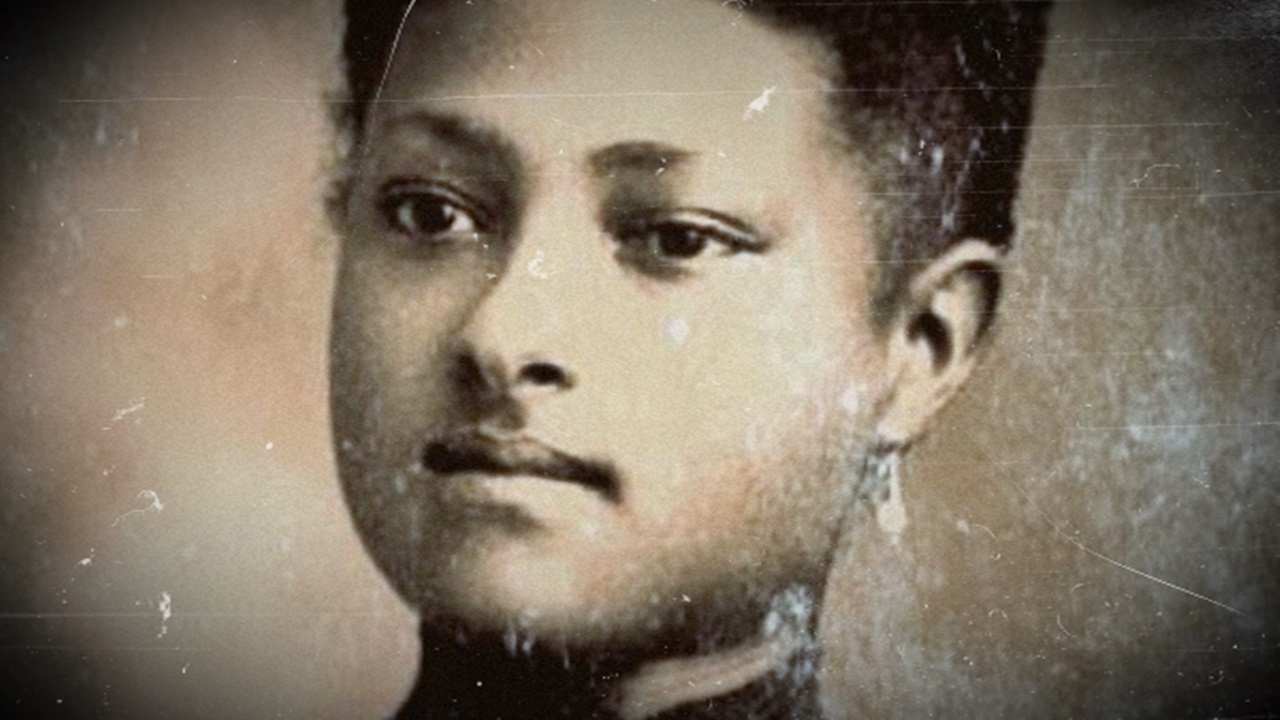
June 15th saw the killing of Addie Watts, whose head had been smashed with a brick and who had then been dragged into some nearby shrubbery where her head was caved in further by a train coupling pin before her throat was slashed open.
June 24th produced another, almost identical crime; the victim was a woman named Lizzie Watts (no relation), and she likewise had her throat cut and was dragged and concealed in some bushes close to where she had been murdered.
It was around this time that newspapers and law enforcement finally began to entertain the hypothesis that a serial killer might be on the loose. It should be noted that prior to the killings of Mary Walker, Addie Watts, and Lizzie Watts, the murders of these women had been relegated to the back pages of the newspaper, with most editors and readers assuming that the killings were simply a product of the “degeneracy” present in the black community of Atlanta, and further believing that all the crimes had been committed by different people. While this was certainly plausible in the case of the women murdered in 1909 and 1910, particularly those who had died as a result of gun violence, once the grisly signature of the slashed throats and bashed-in skulls began to manifest, it would seem that the likelihood of a lone offender became harder and harder to ignore.
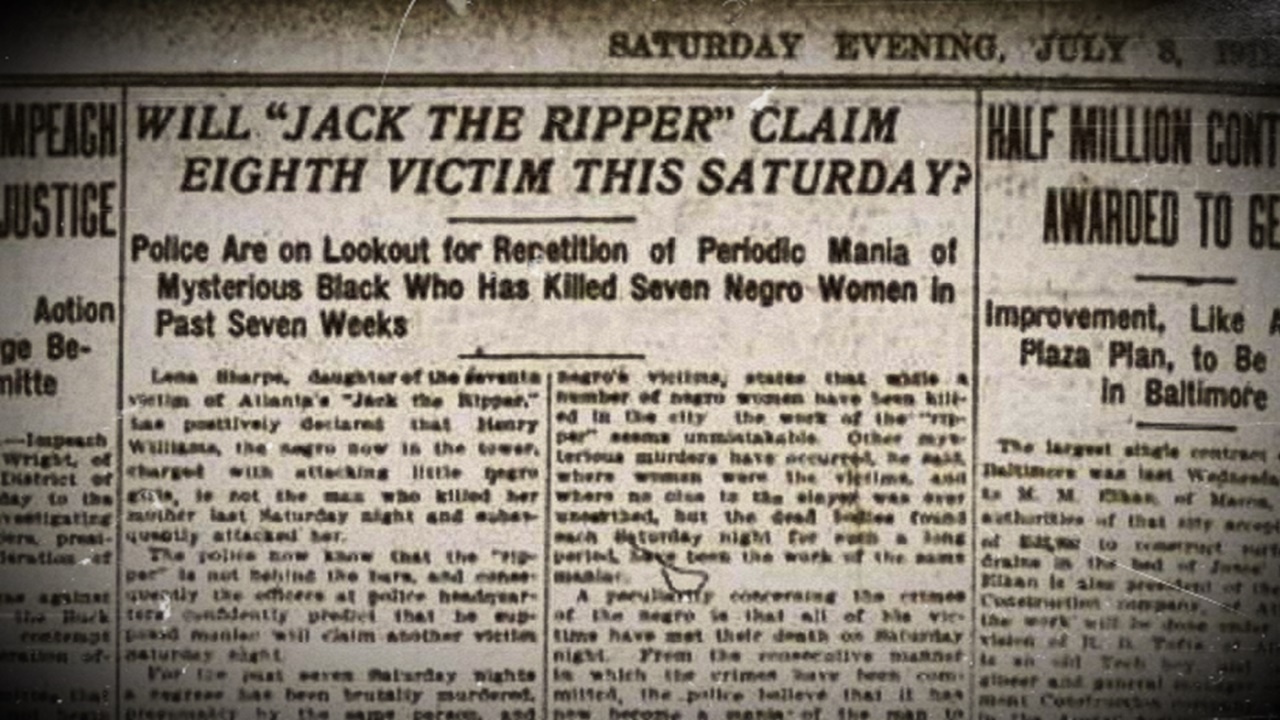
But even after more murders took place, some high-level officials still held to the view that every single one of the approximately twenty women who died during this particular crime spree were killed by different perpetrators, and some even went so far as to claim that the Ripper story was a convenient and fictional scapegoat for men to use when they wanted to murder their wives and blame it on some random boogeyman.
On July 1st, though, there was something of a break in the case. Though two competing city newspapers—the Atlanta Constitution and the Atlanta Journal—presented different variations of the events, the broad outlines and ghastly results of the crime were the same.
In the Constitution story, twenty-year-old Emma Lou Sharpe had been sitting at home that Saturday evening, waiting for her forty-year-old mother Lena to return from the grocery store. After an hour had passed, she began to grow worried, especially considering the horrific crimes that had been taking place in the area, so Emma Lou started to walk to the market to see what was keeping her mother so long.
On her way to the grocery store, she was approached in the street by a tall, broad-shouldered black man wearing a wide-brimmed hat. He asked her how she was feeling this evening. She answered that she was fine, but then tried to walk around him, because he was understandably making her nervous.
And it turned out that her apprehension was wholly justified, for as soon as she tried to pass, the man allegedly said, “Don’t be afraid. I never hurt girls like you.” He then proceeded to stab her in the back, laughing maniacally while fleeing the scene. Emma Lou Sharpe screamed and took off running, trailing blood behind her. Several neighbors came to her aid, and the mysterious man in the wide-brimmed hat seemingly melted back into the shadows.
In the Journal version, both Emma Lou and her mother Lena were both walking to the market together when they were set upon by an assailant of the same description, who jumped at them out of hiding. In this telling, the man didn’t speak at all, but merely hit Lena over the head with a brick, then began stabbing at Emma Lou as Lena collapsed to the ground. Emma Lou screamed and ran away, but didn’t get very far before she fainted from blood loss. The killer then apparently slashed Lena’s throat, and Emma Lou regained consciousness long enough to see him standing over her mother’s prone body. It was then reported that Emma Lou’s screams had drawn several neighbors to the scene to help, at which point the mysterious Ripper vanished into the surrounding streets.
Though Emma Lou survived her injuries, her mother was unfortunately not so lucky.
A potential victim who was unquestionably very lucky, however, was a twenty-two-year-old cook named Mary Yeldell. She worked for a man named William Selcer, and had left the house at the end of the day on Saturday, July 8th to walk back to her own home. Only half a block from her employer’s residence, though, she heard a whistle, and turned to see a large, very dark-skinned black man approaching her with what the newspapers termed “a catlike tread.” He began chasing her and slashing at her clothes, but she was able to get back to the Selcer house in time to escape any injury. Selcer came to her aid, pointing a revolver at the culprit, but he was unable to get a shot off before the assailant quickly fled from the alley behind the house
Two days later, on July 10th, workmen on Atlanta Avenue noticed a trail of blood leading into a small gully. Following this trail led the men to come upon the body of Sadie Holley. Her head had been bashed in with a two-pound rock, which was found nearby covered in blood. Her throat had also been slashed, and her shoes had been cut off her and removed. There were some footprints left in the soft soil, but detectives were only able to follow them for a short distance.
The following day, a laborer named Henry Huff was arrested for Sadie’s murder. A cab driver named Will Williams claimed that he had seen Henry Huff and Sadie Holley together in his taxi on the night of the murder, that they had been arguing, and that they had gotten out not far from where Sadie’s body was eventually discovered. Further, Henry was supposedly found with some blood and dirt on his pants. Though Henry Huff was held on suspicion and was eventually indicted for the murder of Sadie Holley only, it seems clear that no one much believed that he was responsible for all of the Ripper murders, and police seemingly didn’t really think he had killed Sadie Holley, either.
Another man who had allegedly been seen with Sadie before her death, Todd Henderson, was also arrested, and some sources claim that Emma Lou Sharpe identified him as the man who had approached her and stabbed her in the back. However, other contemporary sources claim that she had not been certain if Henderson was the culprit. A third suspect, John Daniel, was also indicted alongside Henry Huff, but as with the other two suspects, the press and public did not seem confident that Atlanta police had captured the Ripper.
And on August 31st, it appeared as though this lack of confidence was warranted, for another murder occurred while the three suspects were still under investigation. This time the victim was twenty-year-old Mary Ann Duncan, who was found lying on the railroad tracks west of Atlanta with her throat slashed and her shoes removed.
Some time after this, another cook, Ellen Maddox, was walking home from work when a man ran up behind her and smashed her head and face in with a rock. Despite her horrific injuries, she did live long enough to briefly speak to authorities, though she sadly passed away before she could impart any further information.
The crimes continued throughout the fall. On October 21st, Eva Florence was found stabbed through the throat with her head smashed in. Later investigation would unearth the fact that a firearm had been discharged in the area at around midnight on the night Eva was slain.
Nearly three weeks later, on November 10th, Minnie Wise was hit in the head with a rock and then dragged to a trash heap where two prior victims had also been dumped. Her throat was cut, and her right index finger was sliced off at the joint. At the time, it was suspected that her jealous husband Bud Wise may have killed her and made it look like a Ripper-style murder, but this was never definitively proven.
On the morning of November 21st, the body of Mary Putnam was found, still warm, lying in a ditch and buried under a bit of loose dirt. Her skull had been crushed, her throat had been slashed, and she also bore the most grisly mutilation of any of the victims: her breast was slashed open and her heart was torn from her ribcage and left sitting beside her.
The killer’s footprints could be clearly seen in the dirt around the body, and bloodhounds were brought to the site to follow the trail of the Ripper, but the scent petered out only about 200 yards from the scene of the crime. Just as in the Eva Florence case, it was discovered that witnesses had heard a gunshot at around the midnight on the night Mary Putnam was slaughtered.
In early December, another young woman named Zeela Favors was slain as she stood on her front porch. She had her skull caved in and suffered multiple stab wounds. Witnesses reportedly saw her talking to a man near her home about an hour before she was attacked, and one of these witnesses further stated that he had heard the suspect say, “Jack the Ripper ain’t dead yet.”
Whether the preceding crimes were the work of a single serial killer is still unknown, though the savage murder of Mary Putnam is the final definitive Ripper murder to have taken place in 1911. The first few months of 1912 saw several more killings of women in Atlanta, though it is uncertain how many of these could be attributed to the Ripper.
Ida Ferguson, for example, was found stabbed to death on January 12th, 1912, but her boyfriend Lucky Elliott was later convicted for the crime, and sentenced to life in prison. He was reported to have been an exceedingly jealous man, and a bloody knife belonging to him was found at the scene. He appealed to the Supreme Court of Georgia for a new trial, but was denied.
Likewise, Pearl Williams, who was found with her throat slashed on Saturday, January 20th, might have been the victim of a domestic crime perpetrated by suspect Frank Harvey, who had allegedly informed her that if he could not marry her, then no one else would either. At his arrest, he was found to be in possession of a long, sharp knife, and had spots of blood on his clothing. A seventeen-year-old named Edgar Evans was also arrested in connection with the murder of Pearl Williams, though the details of his involvement are sketchy.
Alice Owens, who turned up dead on February 15th, was also not definitively tallied as a Ripper victim, since her husband Charles was later convicted of killing her. The evidence against him, however, was circumstantial.
In March, the Fulton County grand jury, after what was termed “a close study of the cases,” came to the decision that the Atlanta Ripper was a myth, and that each of the crimes so far had been perpetrated by a different killer. At that point, according to newspaper reports, there had been sixteen possible Ripper murders in the previous year.
On April 7th, two men on their way to Easter services at their church discovered the body of a nineteen-year-old “octoroon” woman named Mary Kate Sledge. Just like many of the previous Ripper victims, Mary Kate’s head had been bashed in, she had been stabbed in the neck, and then dragged into a patch of nearby shrubbery. Police saw obvious signs of a struggle at the scene.
April and May of 1912 saw two more victims, neither of which was identified. The body found on April 15th was that of a fifteen-year-old girl. Her throat had been cut, and she had been thrown into the Chattahoochee River. The woman found on May 11th had been stabbed in the throat twice and dragged into some nearby shrubbery. Also around this time period, a victim variously known as Marietta Logan or Mary South was found with her throat cut near Atlanta Avenue and Fraser Street, though further details were not reported.
Interestingly, August of 1912 would see a very similar crime take place in Marietta, Georgia, about twenty miles from Atlanta. In this case, the victim was never identified, but was said to be what the press dubbed a “dark mulatto” of about twenty-five years old. She had been bashed in the head and slashed multiple times in the torso. Her body was found beside the Seaboard railroad tracks, about two-and-a-half miles west of the Chattahoochee River.
That same month, Atlanta police announced to the press that they believed they had the Ripper in custody. His name was Lawton Brown, and he initially confessed to the slaying of Eva Florence from November of 1911, though authorities believed he was something of a “Modern Bluebeard” who had actually married twelve separate women and ended up eventually murdering them all. This hypothesis was later found to have been suggested by a woman who had been in a relationship with Brown and believed he was the killer, but just because it was probably not the case that Brown had had prior knowledge of all his victims didn’t mean there wasn’t other compelling evidence that made him a likely suspect.
Though Brown never confessed to any of the killings save for that of Eva Florence, investigators found it very suspicious that he was clearly mentally unstable, and was intensely interested in the Atlanta Ripper crimes, rattling off specific details about them right off the top of his head. He also told police that he had actually witnessed two of the slayings, and described them in great detail, but claimed he had been too afraid to help the victims at the time.
While in custody, Brown showed detectives his knife, which had been discovered stuck into the ground at the site of Eva Florence’s murder. Police were uncertain how Brown had gotten the knife back.
One of Brown’s girlfriends also stated to authorities that Brown would often come home with blood on his shirt on Saturday nights, and indeed, most of the Ripper murders were committed on Saturdays, with the bodies usually being found on Sunday mornings.
Lawton Brown was placed on trial for the murders in October of 1912, but the jury failed to convict him, convinced by defense testimony that Brown was suffering from some type of mania, was often prone to hallucinations, and was known to brag baselessly about things he hadn’t done in order to get attention.
In early 1913, three more similar murders allegedly took place around Atlanta, though few details survive about the first two of these. The third, though, which occurred in the spring, was of Laura Smith, a “mulatto” whose mutilated body was found in an alley, her throat slashed. Laura had worked for a family on Ponce de Leon Avenue, and had evidently been killed while walking to work.
In August, a one-time maid named Martha Ruffian was found murdered in similar circumstances to the other Ripper victims, though this time there was a new wrinkle: Martha’s throat had been cut while she was inside her home, then her body had been dragged outside for a distance of about fifty feet and left in a clump of bushes. Police were unsure if this was another casualty to lay at the feet of the Atlanta Ripper, or whether Martha had perhaps been slain by a former boyfriend named Alex Smith, who was the main person of interest in the crime.
Though the killings seemed to have tapered off by the time 1914 dawned, the case, it seemed, was still not at an end. In March of that year, someone began pulling alarms at fireboxes throughout the city. Though these three fire alarms were found to be false, firefighters discovered something chilling at the third site: a card bearing a message from someone who signed himself “Jack the Ripper.” The note stated that any “Negro” woman on the streets after a certain time of night would have their throat slashed, and that Atlanta pawnbrokers and homeless people were also in the crosshairs. It was believed that there had actually been similar notes left at the sites of the first two false fire alarms, but that perhaps the wind had blown them away. It was never established whether these messages were left by the actual killer, or by someone perpetrating a sick prank.
Two more comparable murders took place in July of 1914. On the 19th, a woman was found in the woods with her throat slashed and her breast sliced, and only a few days later, another dead woman was discovered in a stream in the woods near Hill Street. Unlike the other victims, she had been shot in the head, and her body was found after police received an anonymous phone tip giving them directions to the site.
As 1914 waned, it seemed that the serial killer’s reign of terror had come to an end, if indeed one man had been responsible for all of the unsolved killings over the span of time in question. Due to the large volume of crimes taking place in the black community during the period, and further due to the lackluster investigative efforts that categorized the possible early crimes in the series, it will probably never be certain if a Jack the Ripper-style slasher was indeed targeting black women in Atlanta during the early years of the twentieth century.
In any case, the Atlanta Ripper remains a tragic, fascinating, and largely forgotten chapter in the history of crime in the American South.