
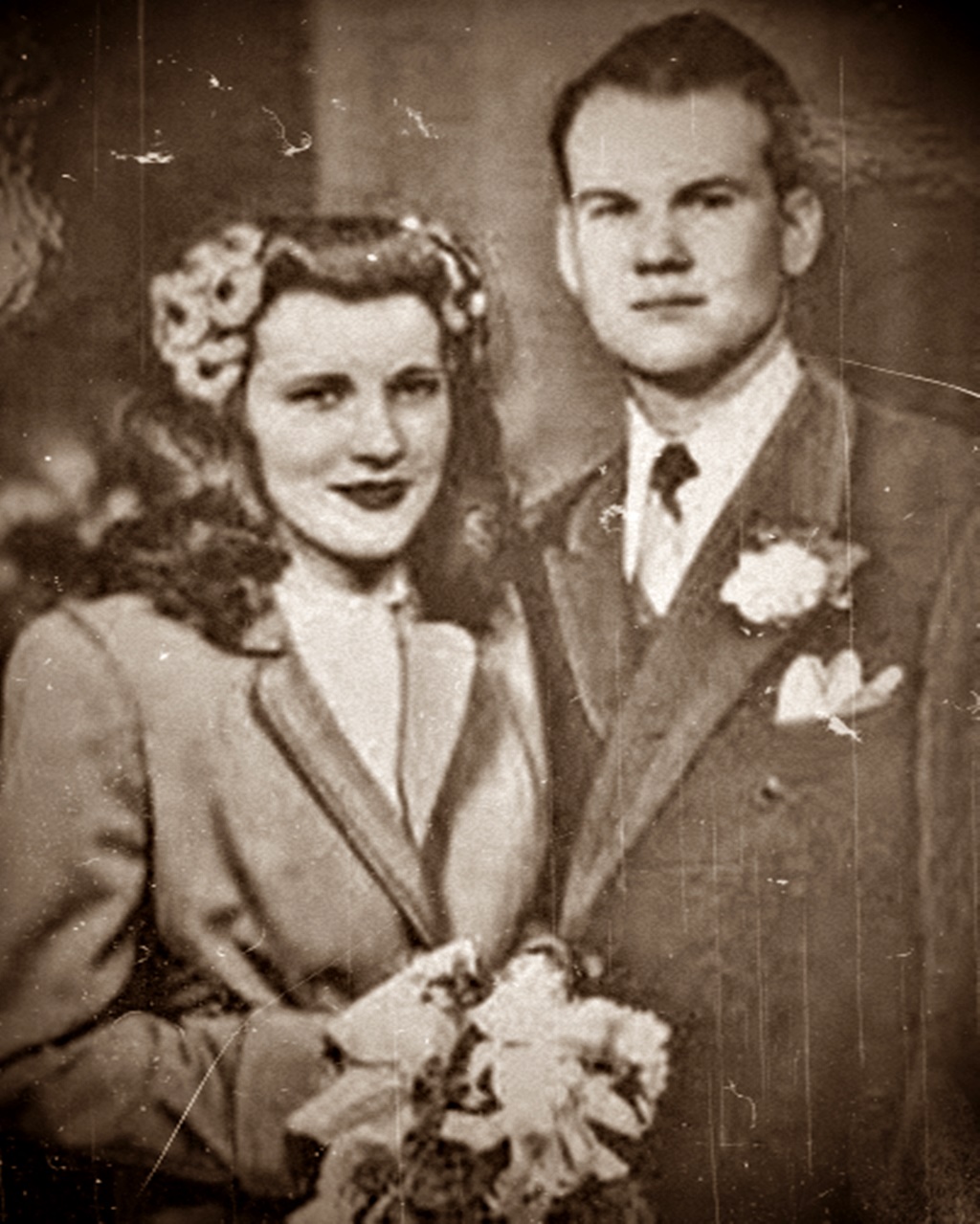
Mid-summer of 1954 would be marked by the brutal murder of a pregnant woman and an ensuing trial that rivaled the media circus surrounding the arrest of Lizzie Borden in the previous century, and the crimes of the Manson Family at the end of the following decade.
It was the evening of July 3rd, the day before Independence Day. Neurosurgeon Sam Sheppard and his wife, Marilyn Reese-Sheppard, were hosting a small get-together at their Ohio home, situated on the shores of Lake Erie.
Before their guests left, Sam Sheppard dozed off on the daybed in the living room as they were all watching a movie, and shortly afterward, Marilyn bid their friends a good night and went up to bed herself. A few hours later, she would be dead.
Dr. Sheppard reportedly heard his wife screaming his name from the bedroom, and ran up to see what was wrong. At first, he claimed, he had thought she was just having a nightmare, or was having convulsions like the ones she had apparently had early on in her pregnancy.
But the moment he entered the bedroom, he said, he was struck from behind and knocked unconscious. When he came to, he checked on his wife and realized that she was dead. He then went down the hall and checked on the couple’s son Sam Jr.—called Chip—who was thankfully fine, and in fact had not even awakened despite all the supposed screaming.
Dr. Sheppard then claimed that he heard a noise coming from downstairs, and when he went to investigate, he saw what he termed a “bushy-haired intruder.“ He proceeded to chase this individual out of the house and down to the beach, where there was a struggle, during which the doctor was evidently hit again, and woke up a while later lying half in and half out of the water.
At around five-forty a.m., a neighbor received a phone call from Dr. Sheppard, who sounded disoriented and hysterical. The neighbor came over at once, accompanied by his wife, and found a shocked Dr. Sheppard sitting in his home with no shirt, and wet trousers with a prominent bloodstain on one knee. The neighbors called the police.
Investigators found an extremely bloody crime scene; not only were the bedroom walls splattered with gore, but there was blood trailed all over the house as well. Police quickly determined that Marilyn had been bludgeoned to death with some unknown instrument. A few of the doctor’s belongings, such as his fraternity ring and an expensive wristwatch, were missing from the scene, though these items were later discovered in a canvas sack in the bushes behind the house.
Almost immediately, Sam Sheppard was suspected of murdering his wife, and the press were not shy in encouraging authorities to charge him, running multiple stories during the month of July asking why he hadn’t been arrested yet. At last, on July 30th, Sam Sheppard was taken into custody.
It certainly appeared as though the doctor was the most likely culprit. It seemed strange, for example, that the couple’s son had not awakened during his mother’s murder, and it was further pointed out that the family dog had reportedly not barked, which would have been expected if an intruder had broken into the home. It was also later discovered that Dr. Sheppard had been having an affair with a nurse at the hospital where he worked, and that this relationship had been going on for three years, which might have given him a motive to eliminate his wife.
Additionally, the intruder story seemed just a tad farfetched, and authorities found it suspicious that the doctor claimed he had not got a very good look at the assailant, even though they had allegedly fought out on the beach. Besides that, the discovery of the bag of “stolen” items behind the house suggested that the attack might have been staged as a robbery gone wrong.
However, there were arguments against his involvement as well. At his trial, the defense made much of the fact that even though the crime scene was awash in gore, the only blood found on Dr. Sheppard’s person was the small stain on the knee of his pants.
The prosecution countered that the doctor had perhaps been wearing a shirt during the crime which had been covered in blood and subsequently hidden or disposed of; after all, they argued, Dr. Sheppard had been shirtless when police arrived, and the t-shirt he had supposedly been wearing was never found.
The defense then brought forth two witnesses who claimed to have seen a bushy-haired man lurking around the property around the time of the murder, and also presented a doctor who testified to the extensive injuries that Dr. Sheppard himself had sustained, presumably during the scuffle with the alleged intruder. Some later sources also claimed that Marilyn had been raped, and that this evidence was downplayed at the original trial.
Whatever the truth of the matter, Sam Sheppard was eventually convicted of the murder of his wife Marilyn, and sentenced to life in prison. However, more than a decade later, his conviction was overturned by the U.S. Supreme Court, who ruled that because of the “carnival atmosphere” surrounding his initial trial, and the fact that the jury at the time had not been sequestered, he had not been given a fair hearing. Upon retrial in 1966, Sam Sheppard was acquitted, and later went on to an odd career as a wrestler, performing under the name “Killer” Sam Sheppard and trading on his notoriety as part of his appeal. He died in 1970, at the age of forty-six.
Though many of those who investigated the case still believe that Sam Sheppard murdered his wife, the couple’s son has spent years trying to clear his father’s name, and more recent developments in forensic science have tended to support his assertions. DNA tests on the blood found around the Sheppard home on that night, for instance, suggest that a third person was likely present at the scene.
According to Terry Gilbert, the attorney for the plaintiff at the civil trial that Sam Sheppard Jr. brought against the state of Ohio for his father’s “wrongful imprisonment,” the most likely person to have left this blood was Richard Eberling, who had occasionally worked as a handyman for the Sheppards. Eberling was suspected of several burglaries in the area, and two of Marilyn’s rings were found among his stash of ill-gotten loot. He was also eventually convicted in 1984 of murdering an elderly woman.
Though it remains possible that Eberling’s blood was present at the scene of the Marilyn Reese-Sheppard murder, tests are somewhat inconclusive, and some detractors argue that the crime scene was compromised at the time, making any blood evidence inadmissible. Eberling himself has denied killing Marilyn Sheppard, saying that if his blood was present in the house, it was only because he had cut his finger there while working on a window.
Marilyn Sheppard’s high-profile murder remains officially unsolved, and her husband’s conviction and subsequent release has gone down in cultural history in the form of numerous novels, films, and as the possible inspiration for the iconic television series The Fugitive.

