
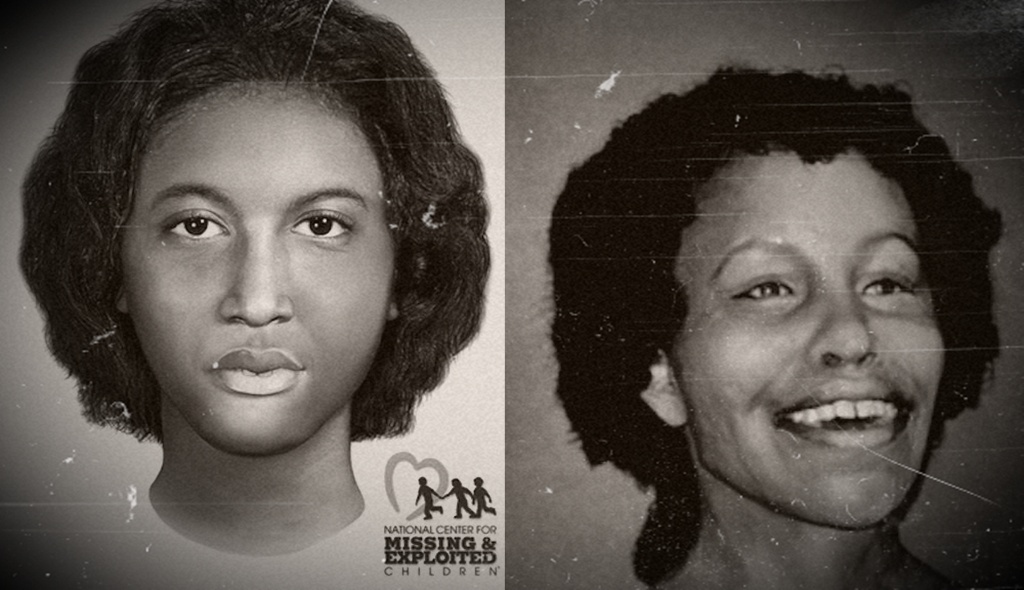
On a warm Sunday afternoon in August 2001, a seemingly ordinary traffic stop along Interstate 85 in Jefferson, Georgia, turned into the discovery of a homicide. At approximately noon on August 19th, an officer with the Jackson County Sheriff’s Office pulled over a vehicle near mile marker 134. The driver asked to step into the wooded area beside the highway to relieve himself. When the officer accompanied him and looked over the guardrail, he spotted partial human remains lying down the embankment in a heavily wooded spot. What authorities recovered was the body of a young Black female—now known only as Jackson County Jane Doe—whose identity, and the full circumstances of her death, remain a mystery more than twenty-four years later.
The location was remote and not easily visible from the busy interstate, suggesting the victim’s body had been deliberately placed or dumped there. No identification, purse, or other personal belongings were found with her. Investigators immediately treated the case as a homicide.
Forensic examination estimated the victim to be between fifteen and twenty-three years old. She was a Black female, standing roughly five foot one to five foot six, with analysts leaning toward about five foot three. A tuft of approximately six-inch-long black, coarse, slightly wavy hair was recovered with the remains. Her teeth showed multiple dental fillings, and her two front teeth protruded slightly with a small gap between them. Eye color could not be determined.
She was found partially clothed in items that suggested a youthful, everyday style common in the early 2000s, including a blue, white, and green striped halter top from the brand No Boundaries (a Walmart label popular with teens and young women); size three dark blue or black denim jeans, also No Boundaries; size six black bikini-style panties, No Boundaries; and a single white athletic sock featuring the FUBU logo. Her toenails were painted blue. No jewelry, wallet, or other identifiers were present.
The remains were in an advanced state of decomposition, with soft tissue still visible, indicating she had been deceased for roughly three to ten days before discovery. Due to this condition, the exact cause of death could not be definitively determined. The manner of death is classified as homicide, consistent with the isolated disposal site and the circumstances of the case. Some secondary reports have referenced possible sexual assault and strangulation, but official public records list the cause as undetermined pending further analysis.
Investigators were able to collect dental records, fingerprints (where possible), and DNA profiles. These remain on file in national databases.
The Jackson County Sheriff’s Office, assisted by the Georgia Bureau of Investigation (GBI), led the inquiry. Despite extensive efforts—including circulation of the case through the National Center for Missing & Exploited Children (NCMEC) and public appeals—no one has come forward with a definitive identification.
Two possible matches have been formally excluded: Portesha Jonice Tesha Morris, missing from Monticello, Florida, since April 16th, 2001; and Tonetta Yvette Carlisle, missing from Chattanooga, Tennessee, since March 16th, 1989.
The proximity to a major interstate has led investigators to consider whether she was a traveler, runaway, or someone transported from out of state. No suspects have ever been publicly named, and no clear motive or prior connection has surfaced.
As of 2026, Jackson County Jane Doe remains unidentified, and her murder unsolved. Her DNA, dental records, and fingerprints are entered into national databases and could lead to a breakthrough with advancing genetic genealogy techniques or a tip from the public.

