
On the evening of September 28th, 2001, in the town of Lurgan, County Armagh, Northern Ireland, veteran journalist Martin O’Hagan was gunned down in a targeted killing that shocked the region even after the Good Friday Agreement had brought a fragile peace. Walking home from a weekly drink with his wife Marie just yards from their house in Westfield Gardens (also referred to as Westland Gardens), Martin was shot multiple times from a passing car. He pushed his wife to safety, asked her to call an ambulance, and died at the scene. He was fifty-one years old.
The murder was claimed the next day by the Red Hand Defenders, a cover name often used by the Loyalist Volunteer Force (LVF). Police investigations quickly focused on the LVF, a dissident loyalist group. To this day, no one has been convicted of the killing.
Owen Martin O’Hagan was born on June 23rd, 1950, in Lurgan to a Catholic family with strong republican ties. His uncle J.B. O’Hagan was a prominent republican activist, and his cousin Dara O’Hagan later became a Sinn Féin politician. Part of his childhood was spent in British Army bases in West Germany, where his father worked as a TV repairman, but the family returned to Lurgan.
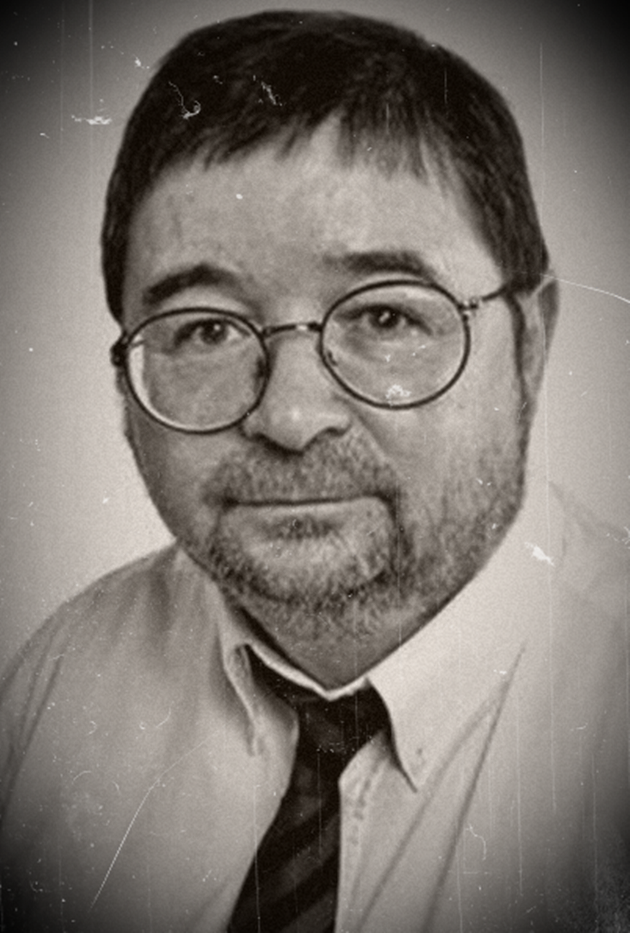
As a young man during the early Troubles, Martin joined the Official IRA (the Marxist-leaning faction that split from the Provisional IRA). He was interned in 1971 and later sentenced to seven years for firearms offences after an incident involving weapons transport. He was released in 1978. While in prison, he began studying sociology through the Open University and distanced himself from paramilitarism.
Upon release, Martin reinvented himself as a journalist. He started with the left-leaning magazine Fortnight and joined the Sunday World in the late 1980s, becoming one of its most prominent investigative reporters in Northern Ireland. Known for his gritty, tabloid-style exposés, he targeted drug dealing, extortion, racketeering, and other criminal activities by paramilitaries on both sides, but particularly loyalist groups.
Martin earned a reputation for fearlessness. He reported extensively on the UVF’s Mid-Ulster Brigade and its leader Billy Wright, whom he famously nicknamed “King Rat.” He exposed collusion allegations between security forces and loyalists, notably contributing to the 1991 Channel 4 Dispatches documentary The Committee, which alleged a “Glenanne gang” of loyalists and security personnel involved in sectarian killings. He survived an abduction and interrogation by the Provisional IRA in 1989 and faced repeated death threats, including from Wright himself after the UVF bombed the Sunday World offices in Belfast.
He married a Protestant woman, Marie Dukes, and they had three daughters. Despite his republican past, Martin O’Hagan was committed to exposing crime and hypocrisy across sectarian lines and served as a National Union of Journalists (NUJ) representative.
On the night of the murder, Martin and his wife had been at Fa’ Joe’s (the Central Bar or Carnegie Inn) on Market Street, a mixed pub in Lurgan. A stranger was reportedly watching them. As they walked home around ten thirty p.m., a car pulled alongside on the Tandragee Road near the loyalist Mourneview estate. Gunfire erupted; at least seven shots were fired. A burnt-out silver Ford Orion was later found nearby.
The LVF was widely blamed. Colleagues alleged the killing was linked to Martin’s reporting on loyalist drug operations and possible information-sharing with rival groups. Some reports suggested internal loyalist feuds or efforts to silence him as he investigated ongoing crimes post-peace process.
Police (then the RUC, soon transitioning to the PSNI) focused on LVF members. In 2008, four men were charged with the murder. However, the case collapsed in 2010 when a key “supergrass” witness, Neil Hyde (who had admitted possessing the murder weapon on the night of the killing), was deemed unreliable. Hyde received a separate sentence for related offences but the murder charges against the group were dropped.
Later developments included allegations that police received tip-offs with names shortly after the murder but failed to act decisively. Accusations of collusion or protection of informants within loyalist groups have persisted, with journalists and the NUJ calling for independent inquiries. As recently as 2025, Amnesty International and the NUJ renewed calls for a fresh investigation, noting the case as emblematic of impunity for journalists targeted during and after the Troubles.
Martin O’Hagan was one of the few journalists specifically assassinated for their work during the Troubles (another being Phillip Geddes in 1983). He was the last journalist killed in the UK until Lyra McKee in 2019.
Martin O’Hagan’s death highlighted the dangers faced by reporters exposing paramilitary involvement in crime long after the official ceasefires. His colleagues at the Sunday World continued his work, facing threats themselves. Plaques and tributes remember him as a committed socialist, trade unionist, and dogged investigator who sought to hold power to account regardless of side.
More than two decades later, his murder remains unsolved. Campaigns by his family, the NUJ, and press freedom organizations continue.

