
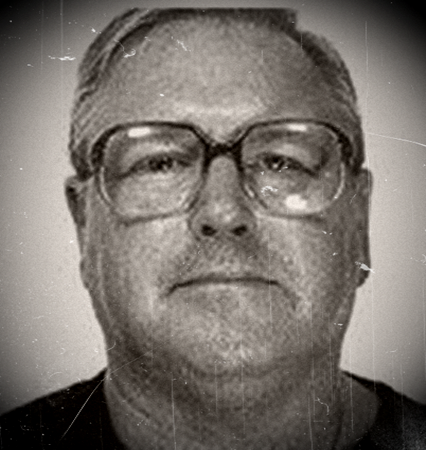
On the evening of Monday, April 9th, 2001, fifty-five-year-old David George Roads was shot twice in the head at close range in a lit alleyway off Cowper Road in Kingston, southwest London. The killing bore the hallmarks of a carefully planned professional hit, with both bullets fired before he hit the ground and no signs of a struggle.
David was an inmate at the nearby Latchmere House prison, an open facility, and was subject to a ten p.m. curfew. He had been working as part of a reintegration program for a glazing firm in London since the previous October. On the night of his death, he had been seen earlier with his wife in Bromley, south London. He last spoke to his son on the phone around nine fifty-one p.m. while parked in his black Renault in Park Road, Richmond. He was found shortly after ten twenty p.m. by a woman parking her car, about two hundred yards from the prison.
David Roads was a married father of two with a long history as a career criminal. Police described him as someone who “knew lots of people” in south London. His most notable brush with the law came in 1997, when he was tried at the Old Bailey alongside Martin (or Michael) Boyle, a Dubliner.
David was convicted of possessing industrial semtex, firearms, and ecstasy, and received a ten-year sentence. He was acquitted of more serious charges, including conspiracy to commit murder. Boyle, however, was convicted of attempted murder and other offenses and sentenced to life imprisonment.
The case centered on an alleged plot to arm Boyle for a “hit” on Anthony Brindle, a member of a south London family well-known to police. The attack was reportedly linked to gangland feuding in the late 1980s and early 1990s, which had claimed multiple lives. Boyle was said to have been acting on behalf of Dublin heroin dealer George “The Penguin” Mitchell, who had a dispute with Brindle. David Roads was accused of acting as a “quartermaster,” supplying weapons, though he was cleared of direct involvement in the attempted murder.
At the time of his death, David was four years into his sentence and appeared to be transitioning back into society under the prison’s day-release arrangements.
Metropolitan Police detectives, led by figures including Detective Chief Inspector Paul McAleenan and Detective Superintendent Adrian Maybanks of the Serious Crime Group South, launched a murder inquiry. They kept an “completely open mind” on the motive, examining David Roads’ extensive criminal history, but found no direct links to paramilitary organizations like the IRA, despite the associations in his trial.
The execution-style nature of the shooting suggested a bold, professional operation. Some contemporary reports speculated it could have been a revenge or contract killing tied to his past associations in London’s underworld.
No arrests were ever publicly reported in connection with the shooting. More than two decades later, the murder of David George Roads remains unsolved.

