
In the early hours of May 27th, 2003, a Bank Holiday weekend, residents of a squat in Northbrook Road, Lewisham (in the Lee area of south-east London), were jolted awake by thick smoke. What they discovered inside one of the bedrooms was a scene of calculated brutality: thirty-year-old Brett David Youngs lay dead in his bed, his body and bedding doused in gasoline and set alight. He had been beaten savagely about the head with a blunt instrument, almost certainly a baseball or rounders bat. The fire was an apparent attempt to destroy evidence and conceal the crime.
Brett Youngs was a computer programmer, web designer, and part-time DJ who played at rave parties in London’s vibrant underground scene. He suffered from eczema, a condition aggravated by alcohol and drugs, and had deliberately stayed in London that Bank Holiday weekend while many of his housemates attended a rave in Hertfordshire, choosing to avoid the temptations that could worsen his health.
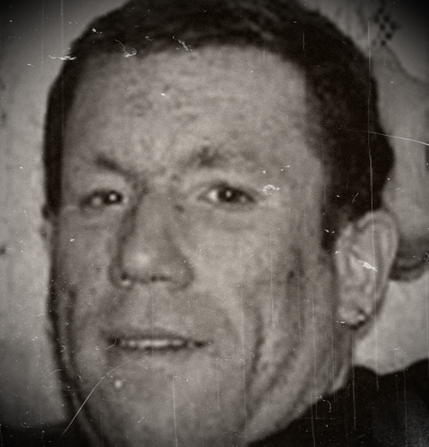
Like many young people in London at the time, Brett lived in informal, low-rent shared housing. These arrangements were common in areas like Lewisham and Lee, offering cheap accommodation amid the city’s housing pressures and creative subcultures.
The attack occurred around four thirty a.m. on May 27th. Prosecutors later alleged that after a confrontation or argument, the killer entered Brett’s bedroom and struck him repeatedly and with significant force to the head, causing a depressed skull fracture and fatal brain injuries. Post-mortem evidence established that Brett was already dead when the fire was started.
Gasoline or another accelerant was poured over the bed and body. The fire took hold quickly. A charred baseball bat, believed to be the murder weapon, was later recovered from the scene. The blaze spread enough to fill the property with smoke, endangering other residents who had returned from the Hertfordshire rave. They escaped after being alerted by the smell and raised the alarm. The killer fled without warning the others, leaving them to discover the fire themselves.
Fire crews and police arrived. The intensity of the burning meant Brett’s body could only be formally identified through dental records.
The Metropolitan Police launched a murder investigation. In July 2003, officers from the Met and British Transport Police conducted a public appeal at Waterloo station, targeting rail commuters and passengers in an effort to jog memories or identify potential witnesses who might have seen something in the Lewisham area or on transport routes that night. Despite these efforts, the case did not yield an immediate breakthrough.
Attention eventually focused on Michael Rogers-Wilson, a fellow resident and flatmate in the squat, then aged around twenty-eight. He and Brett Youngs had lived under the same roof for some time but had a strained relationship. Reports from the trial indicated Rogers-Wilson disapproved of aspects of the “dark scene” and parties associated with Brett’s lifestyle and music tastes. Tension had reportedly built over a couple of years.
Key elements of the prosecution case included Rogers-Wilson’s absence from the property when the fire was discovered, and evidence that he made a short 999 call to the fire brigade from some distance away. He had also subsequently travelled by train to his parents’ farm in Surrey the following morning, and witness accounts described what was possibly a muffled argument or shouting involving Brett Youngs, and the presence of Rogers-Wilson’s pet Doberman.
Rogers-Wilson denied murder and arson. He claimed he had been woken (possibly by his dog or the fire), made the emergency call out of conscience, and left because the blaze was too intense. He maintained his innocence throughout all proceedings.
Michael Rogers-Wilson was charged and stood trial at the Old Bailey. The prosecution presented the case that he had lost his temper after a confrontation, beaten Brett to death, and then set the fire to hide the evidence, callously endangering other residents in the process.
The first jury failed to reach a verdict. A retrial was ordered. The second jury also could not agree. On June 8th, 2006, following the second hung jury, the judge discharged the jury and formally acquitted Rogers-Wilson. He walked free from court.
No further charges were brought against him or anyone else. Because Rogers-Wilson was ultimately acquitted, the murder of Brett David Youngs is officially unsolved. No other suspect has ever been identified or charged.

