
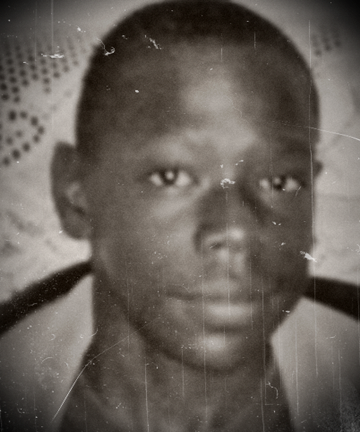
Fifteen-year-old Jessie Marvyn James was described by those who knew him as a friendly, outgoing teenager who enjoyed spending time with friends and had ambitions for the future. A pupil at Manchester Academy, he was regarded by teachers as hardworking and well-liked.
His mother, Barbara Reid, remembered him as a boy who was kind to everyone, regardless of their background. Friends recalled that he often helped neighbors with odd jobs and was known throughout the community for his cheerful personality. Police later stressed that they had no intelligence whatsoever linking Jessie to gangs or criminal activity.
Between one and two a.m. on September 9th, 2006, Jessie was riding his BMX bicycle through Broadfield Park near Raby Street in Moss Side, Manchester, England, after leaving a party.
As he passed through the park, a gunman who had apparently been lying in wait in nearby bushes opened fire with a semi-automatic pistol. Jessie was struck multiple times and collapsed beside his bicycle. Despite emergency medical efforts, he died at the scene from his injuries.
The murder occurred in an area already plagued by retaliatory shootings connected to long-running gang rivalries, making detectives initially consider whether Jessie had been deliberately targeted.
Greater Manchester Police launched one of the city’s largest murder investigations. Detective Superintendent Tony Cook quickly addressed speculation surrounding the case. He stated there was “not one shred of intelligence” suggesting Jessie had any gang affiliations. Instead, investigators increasingly believed the teenager had simply encountered the killer at the wrong moment.
Police suggested two principal possibilities: that Jessie had been mistaken for someone else connected to local gang disputes; or that the gunman had been waiting for another target and shot Jessie after confusing his identity.
One of the greatest obstacles facing detectives was the near-total absence of witness cooperation. Although the shooting occurred in a neighborhood where investigators believed many people knew what had happened, residents were reluctant to speak. Police repeatedly stated that fear of reprisals from violent gangs had created a “wall of silence.”
An inquest into Jessie’s death heard evidence under extraordinary security measures. Several witnesses testified anonymously from behind screens with electronically distorted voices because of fears for their safety. During the proceedings, Jessie’s mother expressed her belief that her son had previously resisted attempts by local gang members to recruit him, although investigators never established this as the definitive motive for the murder.
Numerous appeals were made over the following years, and substantial rewards were offered for information leading to a conviction, but the crucial evidence needed to prosecute those responsible never emerged.
Jessie’s funeral became one of Manchester’s largest public memorials for a young murder victim. Around 2,000 mourners attended a celebration of his life held in a specially erected marquee near the park where he had been killed. Friends arrived in school uniform, many wearing shirts bearing his name, while a horse-drawn carriage carried his coffin to Southern Cemetery.
Nearly twenty years after Jessie James was shot while cycling home through Broadfield Park, no one has been convicted of his murder. Investigators continue to believe he was an innocent teenager who became the victim of mistaken identity during a period of violent gang conflict in Moss Side.

