
Dipo Seweje was twenty years old and lived on Orb Street in Walworth, southeast London. Contemporary reporting described him as Nigerian-born and as an asylum seeker living in Britain. Some accounts also identified him as a student, although relatively little has been published about his studies, employment, family or everyday life.
At approximately four p.m. on Boxing Day, December 26, 2007, Dipo and a friend were inside or entering Chartridge House, a residential block on the Aylesbury Estate near Westmoreland Road. In a stairwell, they encountered a man wearing a hooded top.
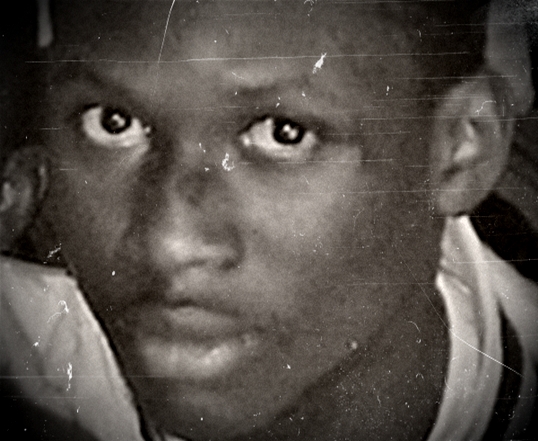
The precise sequence of events has never been made public. It is unclear whether Dipo and his friend had arranged to meet someone in the building, whether the gunman had followed them there or whether the encounter was unexpected. What is known is that the hooded man opened fire.
Dipo and his friend ran from the block. In the confusion, they became separated. The friend made it home, but Dipo apparently fled into or toward the communal grounds surrounding Chartridge House. There, in a garden partly screened from public view, he collapsed after suffering a gunshot wound to the head.
The gunman disappeared. No reliable public description beyond the hooded clothing appears to have been released.
After escaping the estate, Dipo’s friend did not immediately contact the authorities. In the early hours of December 27th, he told police that the pair had been shot at and that he had not seen Dipo since they became separated.
Officers began investigating the reported shooting. Yet Dipo Seweje’s body was not found until later that day in the communal garden near Chartridge House. Some accounts place the discovery at approximately six ten p.m. The interval between the shooting and the discovery was generally reported as approximately twenty six hours.
The delay caused concern among some residents. A contemporary BBC report noted disappointment within the community that a mortally wounded man could remain undiscovered for so long while police were already investigating a shooting in the immediate area. The layout of the Aylesbury Estate—with large blocks, elevated walkways, stairwells and communal spaces that were not always easily visible—may have complicated the search, but the publicly available record does not provide a detailed explanation of where officers looked or how the body was eventually located.
The case was assigned to Operation Trident, the Metropolitan Police unit then responsible for investigating shootings that particularly affected London’s Black communities. Detective Inspector Andy Barton led the inquiry.
Police initially appealed for anyone who had seen Dipo before the shooting, witnessed the pursuit or noticed suspicious activity around Chartridge House to come forward. Investigators needed to reconstruct not only the attack but the victim’s movements and associations before he entered the building.
An eighteen-year-old man was arrested at his home in Walworth shortly after the killing and released on police bail. Contemporary homicide-tracking records indicate that two other people were also arrested during the investigation. None of those arrests resulted in a successful prosecution, and no publicly identified suspect has been convicted of participating in the shooting.
The public record does not reveal what evidence led police to make the arrests. Nor does it explain whether investigators believed Dipo was deliberately targeted, mistaken for someone else or caught in a dispute involving his companion or other people associated with Chartridge House.
The investigation produced one particularly significant piece of evidence. At the inquest in February 2009, Detective Inspector Barton disclosed that ballistic testing had connected the murder weapon to the killing of former heavyweight boxer James Oyebola.
The gun was a Baikal 9mm pistol, described in reports about the Oyebola case as a converted replica automatic weapon. It had been used five months before Dipo Seweje’s murder inside the Chateau 6 nightclub in Fulham.
Oyebola, a former British heavyweight champion and Commonwealth Games medallist, was at the club during the early hours of July 23rd, 2007. He confronted several men who were smoking indoors, only weeks after England’s prohibition on smoking in enclosed public places had taken effect. During the confrontation, Kanyanta Mulenga pulled out the converted Baikal and fired several shots. Oyebola was struck in the neck and leg and died four days later.
Mulenga was convicted of Oyebola’s murder in October 2008 and sentenced to life imprisonment with a minimum term of twenty eight years.
The ballistic connection was potentially important, but it did not solve Dipo Seweje’s murder. There is no publicly reported evidence that Mulenga shot Dipo or was present on the Aylesbury Estate that Boxing Day. The finding established that the same weapon had been used in both crimes, not necessarily that the same person had fired it.
The five-month interval also indicated that the pistol had remained in circulation after Oyebola’s murder. It may have been passed, sold, loaned or hidden among people connected to London’s criminal networks. Without reliable evidence establishing who possessed it on December 26th, the weapon’s history led investigators only part of the way toward identifying Dipo’s killer.
At the time of the murder, the Aylesbury Estate was one of Britain’s largest public-housing developments. It had increasingly been portrayed in newspapers as a symbol of deprivation, poor maintenance and urban violence. Dipo Seweje’s death, along with several other serious crimes in the area, was later cited in coverage presenting the estate as one of London’s most troubled neighborhoods.
Residents and housing campaigners objected to that portrayal. They argued that journalists and public officials reduced a large community to a collection of crimes and social problems while ignoring its families, long-term residents and community networks. Academic research on the estate later used the reporting of Dipo Seweje’s murder as an example of how individual tragedies could be incorporated into a broader narrative that stigmatized an entire neighborhood.
A Metropolitan Police dataset released several years after the shooting continued to classify Dipo Seweje’s murder as unresolved, and it remains so as of August 2026.

