
By February 2007, sixty-year-old Ken Gorman had spent more than a decade making himself impossible to ignore.
He had smoked marijuana openly on the steps of the Colorado State Capitol, organized rallies before 4/20 celebrations became mainstream commercial events, run for governor under the irreverent nickname “Governor Pothead,” gone to prison on a marijuana conviction, and later become one of the pioneers of Colorado’s fledgling medical-marijuana caregiver system.
Ken believed visibility was a weapon: if marijuana users stopped hiding, he reasoned, eventually the law would have to change.
That philosophy also made his home—where he grew marijuana, met patients, and conducted much of his business—extraordinarily visible. By early 2007, it had reportedly been burglarized repeatedly. Ken knew the danger; he had recently bought a shotgun and told people close to him that next time someone tried to rob him, he intended to be ready.
Sadly, he never got the chance to use it.
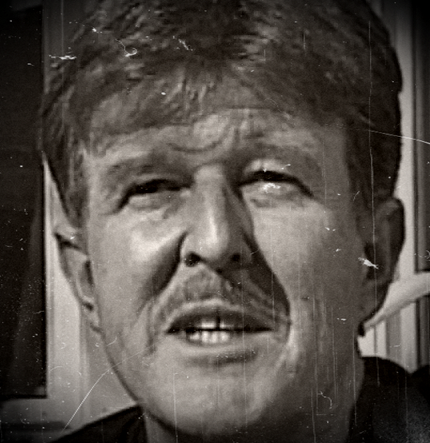
On the night of February 17th, 2007, intruders entered Ken Gorman’s duplex in Denver’s Athmar Park neighborhood. Ken moved toward them, apparently attempting to reach his new shotgun. He was shot once in the chest. Witnesses reportedly saw two men fleeing the house. And in one of the details that has made the case so enduringly strange, the killers apparently left behind exactly what robbers might have been expected to take: marijuana and money.
Nearly two decades later, nobody has been arrested for killing him.
Kenneth Calvin Gorman was born on July 12th, 1946, one of six children in a military family. He spent part of his childhood moving from place to place with his family, including time in Japan, before eventually settling in Denver. He graduated from Abraham Lincoln High School in 1964 and followed his father into the U.S. Air Force, where he trained as an air traffic controller. He later joined the Federal Aviation Administration.
Ken was not always a marijuana crusader. According to his former wife, Jan Kennedy, she introduced him to marijuana after the two met in Colorado in 1969. The experience became a turning point. The couple married soon afterward, had a daughter, Valency, in 1972, and eventually lived in places including Samoa and Hawaii while Ken continued his aviation career.
His life changed dramatically during the 1981 air traffic controllers’ strike. Although Ken was reportedly working in management at the time, he sided with striking members of the Professional Air Traffic Controllers Organization. President Ronald Reagan ordered striking controllers back to work and fired those who refused. Ken lost his job.
The experience appears to have hardened an already strong libertarian streak. Ken subsequently spent time overseas, including in Papua New Guinea, where Westword later reported that he became involved in local political activism and was eventually deported. By 1992, he was back in Colorado.
Then marijuana became his cause. Ken threw himself into Colorado’s marijuana-legalization movement during the early 1990s, when advocating openly for cannabis remained far more politically risky than it would become a generation later.
He organized public “smoke-ins” at the Colorado State Capitol, sometimes attracting hundreds or even more than a thousand participants. Ken deliberately staged the gatherings in broad daylight, often at noon, where legislators, police and television cameras could see exactly what was happening. He handed out joints and paraphernalia and treated arrests almost as publicity opportunities.
His tactics were confrontational, theatrical and frequently vulgar. Ken operated a telephone recording he called “Asshole of the Week,” using it to attack politicians and anti-drug activists. He understood that outrage generated coverage, and coverage generated discussion.
In 1994 he turned that talent for publicity into a quixotic run for governor, adopting the nickname “Governor Pothead.” Winning was hardly the point. The campaign gave him another platform from which to attack marijuana prohibition and made him one of the most recognizable cannabis activists in Colorado.
Ken also helped establish what eventually became Denver’s enormous 4/20 tradition. Westword credits him with pioneering the rally that developed into the modern Denver 420 Rally, and later organizers continued to acknowledge him as its founding figure.
His approach divided even people sympathetic to legalization. Some advocates believed that Ken Gorman’s belligerent public persona made their cause harder to sell to ordinary voters. Others regarded him as indispensable: the man willing to be arrested, mocked and condemned while more conventional activists worked through political channels.
Then, in 1995, the law caught up with him. Police used a teenage informant in an undercover operation that resulted in Ken being charged with felony distribution of marijuana to a minor. He ultimately represented himself at trial and was sentenced in November 1996 to six years in prison. He spent nearly two years behind bars before serving the remainder of his sentence through less restrictive supervision.
By the time he returned to marijuana activism, however, Colorado had changed. In November 2000, Colorado voters approved Amendment 20, creating a constitutional medical-marijuana program for qualifying patients and their caregivers. It was not full legalization, but to Ken it represented an enormous opening.
He became heavily involved in helping patients obtain marijuana and in developing the caregiver networks that would precede Colorado’s later dispensary system. In 2004, Ken Gorman and fellow activist Thomas Lawrence established the Colorado Compassion Club. After the two parted ways, Ken operated another organization, the 420 Compassion Club, largely from his home.
The arrangement was worlds away from today’s highly regulated cannabis stores. Colorado’s medical-marijuana system was still immature, federal law continued to prohibit marijuana, and the boundaries surrounding caregivers, patients and suppliers could be murky.
Ken nevertheless behaved as though public exposure offered protection. He met patients openly. He advertised. He discussed marijuana online. He grew plants inside his South Decatur Street home and reportedly served a large number of patients. According to friends interviewed after his death, he sometimes left his door unlocked. A security camera obtained for the house was displayed but apparently never connected.
There was a major problem with that openness. People knew marijuana was inside. And they knew there was likely cash as well.
Ken Gorman’s home was burglarized repeatedly in the period before his death. Later accounts differ on the exact number, with some describing more than a dozen robberies and Westword reporting that he had been robbed dozens of times. What is clear is that the problem was chronic enough that Ken understood his home had become a target.
Just days before he died, he publicly acknowledged the risk. A contemporaneous CBS report later quoted Ken saying that during an earlier robbery he had endured having a gun held to his head.
Instead of retreating from public view, however, Ken continued doing what he had always done. On February 11th, 2007, CBS4 broadcast a report involving Ken Gorman and Colorado’s medical-marijuana system. He showed his marijuana plants to the television crew and allowed patients to be interviewed.
Six days later, he was dead.
The Saturday of February 17th appears to have been a busy one at Ken’s South Decatur Street duplex. A later Playboy investigation reported that a large quantity of marijuana was delivered that morning and that patients came and went through the house during the day. By evening, the activity had subsided.
Sometime later that night, intruders entered. According to the reconstruction later published by Westword, Ken heard them coming through the front of the house and moved down the hallway toward the disturbance. He had recently obtained a shotgun for protection, but the weapon was not immediately within reach.
The intruders fired first. One bullet struck Ken in the chest and penetrated his heart.
The Colorado Bureau of Investigation’s cold-case summary states that Denver police were dispatched to the 1000 block of South Decatur Street following a report of a home-invasion robbery in which someone had been shot. Officers found Ken Gorman inside suffering from a gunshot wound. He was transported to a hospital, where he died.
Contemporary local reporting placed the incident shortly before eleven p.m. Witnesses reportedly saw two men running from the house, but they disappeared into the Denver night.
The obvious explanation was that Ken Gorman had been killed during yet another attempt to rob his marijuana operation. Denver police initially classified the incident as a home-invasion robbery, and Ken’s long history of burglaries made the scenario entirely plausible.
But investigators faced an obvious question. Why was so much of the apparent target still there? According to later reporting, the intruders left behind both marijuana and money.
There are innocent explanations for that. Perhaps the gunshot caused the attackers to panic. Perhaps they believed police were coming. Perhaps they grabbed something that was never publicly identified. Or perhaps robbery had never been the primary motive. That uncertainty lies at the heart of the Ken Gorman case.
His unusual life had produced an equally unusual list of possibilities. He had dealt with marijuana suppliers, patients, activists, criminals, young gang members and political opponents. He had publicly provoked law enforcement and prohibition advocates. He had conducted a lucrative marijuana operation from a house whose location was widely known. And he had accumulated personal disputes along the way. Ken Gorman’s willingness to associate with people from the fringes of society was both one of his defining characteristics and, according to people close to him, one of the things that worried them.
Friends and relatives later described a constantly changing circle of younger men around him, some with gang connections or criminal histories. Ken reportedly enjoyed acting as a mentor to troubled young people and sometimes allowed them deeply into his personal and business life. His daughter Valency told Westword that she did not always feel safe visiting his home.
One friend told Westword that shortly before the murder, Ken had accused one young associate of stealing marijuana and thrown him out of the group. She knew the man only by a nickname and later told police about her suspicions. No public evidence has established that this person had anything to do with the killing.
Another name that became associated with public speculation was Thomas Lawrence, Ken Gorman’s former partner in the Colorado Compassion Club.
A 2008 Playboy story discussed tensions between the two men, and police subsequently looked into Lawrence. But no charges resulted. When Westword located Lawrence in 2010, he emphatically denied having anything to do with Ken’s death and said that despite their differences, he had cared about him. Lawrence has never been charged in connection with the murder.
One of the stranger potential leads emerged several years after the slaying. Charles Alvis, an activist who established a Ken Gorman memorial website, said in 2010 that someone had contacted him with information suggesting that a relative had heard a man boasting in jail that he had killed Ken.
Alvis arranged to meet the source during Denver’s 4/20 rally, but the man never appeared. Whether the alleged confession contained genuine information, jailhouse bravado, or nothing at all was never established publicly.
By 2010, lead investigators were still declining to discuss details because the investigation remained open. Ken’s daughter said at the time that police had told her they had a suspect who might already have been incarcerated, but authorities never publicly confirmed an arrest or identified such a person.
Years passed. In 2024, on the seventeenth anniversary of the killing, Westword again asked the Denver Police Department about the case. Ken’s former associate Miguel Lopez said he had been told there was no significant change. Police disputed the suggestion that nothing was being done, saying that investigators continued working the homicide but could release little because it remained open.
As of this writing in August 2026, no one has been publicly charged with Ken Gorman’s murder.

