
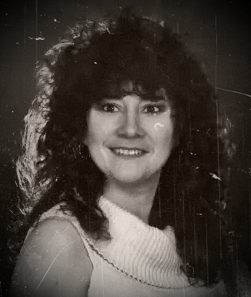
Linda Louise Malcom was born January 21st, 1961, in Springfield, Illinois, to James and Donna Mae Nesbitt Malcom. She grew up as one of nine children, with five sisters and three brothers.
In 1984, at age twenty-three, Linda joined the United States Navy. According to her family, she had initially considered enlisting alongside a friend. When the friend changed her mind, Linda went ahead anyway.
Her military career eventually brought her to Washington State. Linda served for nine years before receiving an honorable discharge in 1993, after which she decided to remain in the Port Orchard area rather than return to Illinois. She had grown attached to the Pacific Northwest and built a community of friends there.
Linda subsequently entered the legal profession, working as a legal assistant and paralegal. Her employers over the years included the Kitsap County Prosecutor’s Office as well as private law practices in the area. Her work meant that a number of local police officers, attorneys, and courthouse employees knew her personally.
Away from work, Linda enjoyed cooking, fishing and entertaining friends. She was also remembered for singing karaoke at local establishments, including the Golden Grill on the Bay in Port Orchard. Family members described her as hardworking and generous, someone who did not have much money herself but would nevertheless help a friend who needed it.
Linda never married and had no children. By April 2008 she was living alone in a two-bedroom rental house on Sidney Avenue, where she had lived for approximately eleven years.
Her life had not been entirely easy in the period leading up to her death. She had left one legal job, and her family had worried about some of the people she had begun meeting socially. But immediately before her murder, circumstances appeared to be improving.
Most importantly, she had secured a new job in Bremerton, and she intended to move. On April 29th, the day before her body was found, the then-forty-seven-year-old emailed her sisters about those plans. Her sister Cynthia Booker later told the Kitsap Sun that Linda sounded happier than she had in some time.
That email would become one of the final glimpses her family had of Linda alive.
Sometime between the evening of April 29th and the early morning hours of April 30th, 2008, someone entered Linda’s home and attacked her with a knife. She fought back, suffering defensive wounds, but was stabbed repeatedly. After she was dead, her killer set the house on fire.
Shortly before four a.m. on April 30th, police officers and firefighters were dispatched to 1147 Sidney Avenue. By the time emergency personnel arrived, the residence was engulfed in flames. When firefighters brought the blaze under control, Linda’s body was discovered inside a bedroom.
Reconstructing Linda’s movements on April 29th has become an important part of the modern cold-case investigation. A timeline compiled from the case records places Linda at the Golden Grill around twelve thirty p.m. Later that afternoon, at approximately two thirteen, she made a purchase at a Safeway grocery store. At about five p.m., she spoke by telephone with a friend.
At approximately six p.m., Linda had a conversation with a neighbor. That interaction is considered her last firmly established proof of life.
What happened afterward remains the central mystery. At some point during the ensuing hours, an assailant attacked Linda inside her home.
The evidence revealed a violent struggle. Later cold-case reviews of the autopsy records reported that Linda had been stabbed twenty-four times, with wounds to both the front and back of her torso. Four of those wounds were individually capable of causing her death.
She also suffered blunt-force trauma to the right side of her head and had numerous injuries to her hands and arms consistent with attempting to defend herself.
Her body was found nude, but investigators reported no evidence that she had been sexually assaulted. The autopsy also found no alcohol or drugs in Linda’s system.
After Linda died, someone deliberately set fire to the Sidney Avenue residence. The timing of the blaze has been narrowed considerably. Cold-case researchers later noted that a newspaper carrier reportedly delivered a paper to the house at approximately three forty five a.m. without seeing a fire. Roughly fifteen minutes later, neighbors were reporting that the home was burning.
At three fifty eight a.m., Port Orchard police officers and South Kitsap Fire and Rescue were officially dispatched.
When emergency personnel arrived, the house was heavily ablaze. Flames were visible through the windows, and neighbors quickly realized that Linda might still be inside.
One neighbor, Gabriel Stewart, later recalled trying to reach her. He kicked in a back door and attempted to crawl into the smoke-filled house but was unable to proceed because of the conditions.
Once firefighters extinguished the blaze, they discovered Linda’s body on the floor of her bedroom, near her waterbed.
Linda’s house became the focus of an extensive investigation involving more than the small Port Orchard Police Department.
Local investigators were assisted by other agencies, including forensic personnel, and a trained accelerant-detection dog was brought to the scene as investigators attempted to determine how and where the fire had started.
Investigators developed numerous leads and examined several persons of interest over the years. According to the Port Orchard Police Department’s current cold-case listing, however, none produced sufficient evidence for an arrest.
There was also no publicly established motive. Robbery was not apparent from the scene, although investigators have never entirely ruled it out. There was no confirmed sexual assault, and police did not publicly identify evidence indicating that Linda had been targeted because of her employment.
From relatively early in the investigation, authorities did appear to suspect that the murder was personal rather than random.
By the first anniversary of Linda’s death, Port Orchard Police Chief Al Townsend publicly acknowledged that investigators were concentrating on a person of interest. Townsend said police were comfortable that their attention was directed at the right individual but did not yet possess enough evidence to support a successful prosecution. He also stated that investigators did not believe Linda’s death had resulted from a random act of violence.
Over time, the case passed between detectives, as cold cases inevitably can when officers retire, transfer or take new assignments. Detective Marvin McKinney spent extensive time on the investigation before it was later reassigned. Despite periodic reviews and appeals for information, the identity of Linda’s killer remained unresolved.
For years, Linda’s case received comparatively little public attention outside Kitsap County. That changed significantly in 2022. Jennifer Bucholtz, a former U.S. Army counterintelligence agent and professor of forensic science at American Military University, became involved after Linda’s nephew, Mike Booker, submitted his aunt’s case to the university’s volunteer Cold Case Investigative Team.
Bucholtz and investigative journalist George Jared began rebuilding Linda’s story from the ground up: examining reports, interviewing people who had known her, studying her habits and relationships, visiting Port Orchard and scrutinizing the physical evidence and fire investigation.
The team also brought outside specialists into the inquiry. Experts examined the possible characteristics of the knife used in the attack and the unusual combination of a chaotic stabbing followed by what appeared to be a more deliberate attempt to burn the house. A particularly intriguing question emerged: did the same person commit both acts?
Cold-case investigators have emphasized that this remains a theory rather than an established fact. But they noted the behavioral contrast between the frenzied violence of the stabbing and the calculated actions required to set the fire.
It raised the possibility that more than one person could have been involved, or that a single offender behaved very differently during the killing and the subsequent attempt at concealment.
Investigators even conducted a controlled recreation of aspects of the fire in a structurally similar house in Arkansas. Fire-science specialists reproduced features of Linda’s bedroom, including a waterbed, in an effort to better understand fire behavior and the original scene.
The tests could not recreate the crime itself, but they offered investigators another way to examine questions the destruction of Linda’s home had left unanswered.
The most promising modern development has involved DNA. In 2024, Port Orchard Detective Andee Walton confirmed that DNA recovered from the crime scene was being examined as part of the renewed investigation. The possibility arose that investigative genetic genealogy—the technique famously used in identifying the Golden State Killer—could potentially help determine who left the unknown genetic material.
Importantly, the existence of unidentified DNA does not by itself mean that the sample belongs to Linda’s murderer. Determining when and how genetic material arrived at a scene is critical, particularly in a home where friends, acquaintances, workers and other visitors may have been present over time. Nevertheless, investigators believed the sample was significant enough to pursue.
The renewed work also received assistance connected to the Washington Attorney General’s Office, giving local investigators additional resources to review leads and forensic evidence.
By 2025, the case was still receiving outside examination. Cold-case investigators Bucholtz and arson specialist Alan Haskins participated in an extensive three-part analysis with The Consult, a program featuring retired FBI profilers, while additional behavioral analyses of Linda’s murder were published later that year.
As of August 2026, however, the City of Port Orchard continues to list Linda Malcom’s death among its unsolved homicides. A private reward of up to $7,500 has also been offered through the Break the Case effort for information leading to the arrest and conviction of Linda’s killer.

