
On the morning of September 22nd, 2009, a woman arrived at a house on Hilary Drive in Tiburon, California, expecting an ordinary visit. Instead, she encountered a scene that would become one of the most baffling murder cases in Marin County history.
Near the front door of the home, inside an enclosed patio area, lay seventy-five-year-old Joan Rosenthal. She had been shot once in the head.
Joan Rosenthal was born Joan Davis on October 14th, 1933, in Duluth, Minnesota, the youngest of six children. She attended the University of Minnesota, earning a degree in speech pathology before moving to the San Francisco Bay Area. She initially worked for the Palo Alto School District.
In 1960, she married attorney Kenneth Rosenthal. The couple would remain married for nearly half a century and raise two sons. By the time of Joan’s death, she was also the grandmother of five.
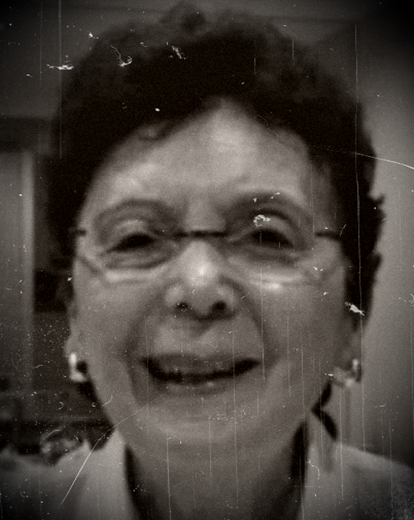
Her professional interests eventually shifted toward counseling. In 1985, at approximately fifty-one years old, Joan earned a master’s degree in counseling psychology from Dominican University. She subsequently operated a private career-counseling service and led career-planning seminars at the College of Marin.
After retirement, she remained active in her community. Joan was particularly associated with the Belvedere-Tiburon Library. An enthusiastic reader, she served on the library board and co-led a contemporary book group. Friends and acquaintances remembered her as thoughtful, intelligent and generous.
The year 2009 had already brought Joan a profound personal loss. Her husband Kenneth had been seriously ill and died in January. Joan was suddenly living alone in the Hilary Drive home where the couple had spent many years together. According to the FBI, she did not travel extensively and maintained a relatively small social circle. She was, in the words of Tiburon Police Chief Michael Cronin a year after her death, “one of the most unlikely of victims.”
That made what happened on September 21st, 2009 all the more difficult to explain. Tiburon sits on a peninsula projecting into San Francisco Bay, roughly twenty miles north of San Francisco. It is an affluent community of winding residential streets, hillside homes and spectacular views across the water.
Violent crime was extraordinarily rare there. At the time of Joan’s death, officials said hers was only the fourth homicide in Tiburon in approximately four decades. The town had recorded only a handful of violent crimes during 2009. Theft and burglary occurred, but murder was so unusual that longtime residents had little reason to imagine a killer might be moving through their neighborhood.
Joan lived at 647 Hilary Drive in Tiburon’s Del Mar neighborhood. Her house stood on a leafy, curving street overlooking Richardson Bay.
Sometime during the evening of Monday, September 21st, something happened near her front door. Early statements from investigators gave a broad possible window for the killing, from approximately six p.m. Monday until the following morning. Later forensic findings narrowed Joan’s estimated time of death to approximately nine p.m. on September 21st.
A social gathering was being held at a neighboring home that evening. Detectives would later interview people who attended the party, hoping someone might have seen an unfamiliar person or vehicle or heard something unusual. The inquiry produced no apparent breakthrough.
Nor did the gunshot necessarily attract attention. Joan’s close friend Sally Shepard later observed that in a neighborhood where gunfire was almost unheard of, anyone hearing a sudden bang might have assumed it was a firecracker or a car backfiring rather than a gunshot.
At about nine p.m., according to the FBI’s eventual reconstruction, Joan Rosenthal was shot once in the head. Town officials said the weapon had been fired at close range. She was only a few steps from her own front door.
At approximately nine forty the following morning, September 22nd, a woman who regularly came to Joan’s house discovered her body in the enclosed patio near the entrance. Contemporary news reports variously described the woman as a friend, housecleaner, or cleaning lady; the FBI’s present account identifies her as Joan Rosenthal’s housecleaner. What is consistent across the reports is that Joan was discovered outside the main interior portion of the house, within the enclosed area by the front door. Emergency personnel were summoned, but Joan was already dead.
Police quickly sealed the area while investigators searched Joan’s home and the surrounding property. The Marin County Sheriff’s Department became deeply involved in the inquiry, providing investigators and resources that a small municipal police department would rarely need.
Almost immediately, detectives encountered a problem that would remain at the heart of the case: there was no obvious reason for anyone to have killed Joan Rosenthal. Nothing initially suggested a burglary gone wrong. Police found no obvious signs of forced entry and no indication that anything significant had been stolen. That was especially significant because Joan’s body was inside an enclosed area protected by a gate.
Investigators considered several possibilities. Joan might have opened the gate and voluntarily admitted whoever killed her. The killer might have possessed a key. Or Joan could have left the enclosed area briefly and been followed back inside by her attacker.
Authorities reportedly found Joan’s keys near her body, another detail that encouraged consideration of whether the killer might have been someone she recognized. But recognition did not necessarily mean intimacy. A neighbor, delivery person, service worker or casual acquaintance could conceivably have been admitted through a gate without causing alarm.
Police therefore began reconstructing Joan Rosenthal’s life. They examined her finances; they spoke with relatives, friends, neighbors and acquaintances; they looked into people associated with her late husband Kenneth Rosenthal and into the couple’s wider personal connections; they searched for hostility, disputes, money problems, grudges or secrets. Nothing provided the simple explanation investigators were looking for.
A year into the investigation, Police Chief Michael Cronin acknowledged the central difficulty. There was no clear motive. Murders arising from jealousy, financial gain, domestic conflict or another readily identifiable cause often give detectives a starting point. Joan’s death did not. She was an elderly widow who lived quietly and appeared to have few enemies, if any.
By September 2010, investigators had reportedly devoted nearly 4,000 hours to the murder investigation and interviewed more than a hundred people. Detectives traveled as far as New York City and Honduras to speak with people connected in some fashion to Kenneth Rosenthal’s family. Authorities also sought assistance from FBI profilers and made use of polygraph examinations.
The travel to Honduras and New York demonstrated how widely investigators were willing to cast their net. It did not mean that police had identified Kenneth Rosenthal’s relatives or associates as suspects; rather, detectives were systematically examining possible personal connections in an attempt to discover a motive that was not obvious locally.
The party near Joan’s house on the night of the murder received similar scrutiny. Guests were extensively interviewed, but no useful lead emerged.
Search teams and dogs were brought into the neighborhood during the early investigation to examine areas around the Rosenthal property and potential paths someone might have used to approach or leave the house. Still, the killer seemed to have disappeared without leaving investigators an obvious trail.
The murder had consequences beyond the investigation itself. Because Tiburon sits on a peninsula, there are relatively few routes by which a motorist can enter or leave town. Police Chief Cronin had previously advocated placing cameras capable of recording license plates on the main access roads. Joan Rosenthal’s murder dramatically strengthened his argument.
Had such cameras been operating on September 21st, investigators potentially could have reviewed every vehicle entering or leaving Tiburon during the relevant period. They might have been able to isolate cars connected to people with violent criminal histories or identify a vehicle that did not ordinarily belong in the area.
The proposal inevitably raised privacy questions, but Joan’s murder gave the debate a frightening immediacy. In November 2009, the Tiburon Town Council approved the installation of license-plate surveillance cameras at entrances to the community.
In the first weeks after the homicide, investigators examined at least one individual with possible connections to unrelated burglaries in nearby Belvedere. That person was ultimately eliminated after investigators established an alibi for the time of Joan’s killing.
It was an early example of a pattern that would repeat: something would appear potentially promising, only for the trail to lead nowhere. By November 2009, almost two months after the murder, police still had neither a suspect nor a motive.
On September 21st, 2010, exactly one year after investigators believe Joan Rosenthal was murdered, authorities announced a $25,000 reward for information leading to the arrest and conviction of her killer. The money was supplied by an anonymous donor or donors through Tiburon attorney Thomas Bertrand.
Nearly five years after Joan’s murder, her case became associated with a name already notorious in Marin County: Max Wade.
Wade became nationally known for an audacious 2011 burglary in which celebrity chef Guy Fieri’s yellow Lamborghini was stolen from a San Francisco dealership. The thief had rappelled down the side of the building and entered through a window. Wade was only sixteen years old at the time.
His criminal behavior later escalated dramatically. In April 2012, Wade fired into a pickup truck occupied by two teenagers in Mill Valley. Both survived. The investigation into that shooting ultimately led authorities to a storage facility containing Fieri’s stolen Lamborghini, weapons and other evidence. Wade was convicted of attempted murder and automobile theft and received a lengthy prison sentence.
Then, in January 2014, authorities confirmed that investigators had also looked at him in connection with Joan Rosenthal’s murder. Marin County District Attorney Ed Berberian was careful about how he described Wade’s status, clarifying that he was “one of many possible people” investigators were examining.
The interest reportedly arose in part because investigators examining Wade’s computer activity found that he had conducted dozens of Internet searches concerning Joan Rosenthal’s murder. Reports put the number at approximately fifty-four. He had also conducted hundreds of searches relating to crimes that authorities knew he had committed.
The discovery was certainly intriguing. Wade lived in Marin County. He had demonstrated familiarity with firearms and had committed an extraordinarily sophisticated burglary while still a teenager. He was also young enough in 2009 that any theory involving him would have required investigators to contemplate a remarkably precocious violent offender.
No charge was ever filed against him in connection with Joan Rosenthal’s death, however.
In January 2021, the FBI’s Violent Criminal Apprehension Program issued an alert concerning Joan Rosenthal’s unsolved homicide. ViCAP exists in part to help law-enforcement agencies identify connections among violent crimes committed in different jurisdictions. By putting Joan’s case into the national system and circulating its details to homicide investigators and crime analysts, authorities could compare the circumstances of her death with other killings around the country.
In 2026, though, nearly seventeen years after her death, law enforcement still does not have an answer to who murdered Joan Rosenthal, or why.

