
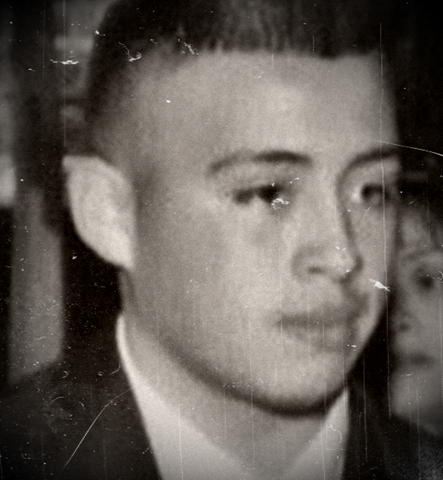
Sixteen-year-old Antonio Nuñez Jr., known as “Chato,” a nickname he had carried since childhood, grew up in a large family in Oakland, California. He was the fourth of five children—four boys and a girl—and was remembered by his older brother, Mario Hernandez, as unusually optimistic and mature for his age. Antonio was close to his siblings and particularly devoted to his mother, whom he hoped one day to support and care for as she grew older.
Soccer was one of his passions. Antonio and his brothers played on an Oakland team called the Tigers, and family memories described him as fiercely competitive even when he faced bigger or faster opponents. He was also outgoing and popular at school, with a wide circle of friends.
Antonio was already thinking seriously about his future. According to Mario, he talked about going to college, following older members of his family into the United States Marine Corps and eventually becoming a doctor.
Mario, himself a Marine, later remembered conversations in which the brothers talked about the lives they hoped to build. Mario imagined eventually becoming a lawyer; Antonio would become the doctor.
Neither could have known how little time remained.
Thanksgiving 2009 became one of Mario’s final memories of his younger brother. The family had gathered together, and Mario recorded parts of the celebration on a video camera. At one point, he captured Antonio looking toward the camera and smiling.
Nine days later, Antonio was dead.
Friday, December 4th began without anything to suggest the violence that would occur later that night. Antonio, his mother, and his younger brother attended a seven p.m. Mass at an East Oakland church. Afterward, the brothers drove in a pickup truck to their father’s home, located a few miles away, where they did some laundry.
At approximately ten thirty-six p.m., according to accounts given to the press by Oakland police, they left their father’s house and headed back toward the home they shared with their mother in the 9400 block of Sunnyside Street. The drive took about ten minutes.
At approximately ten forty-six p.m., Antonio pulled up outside 9432 Sunnyside Street. Their uncle, their mother’s brother, was visiting and was outside the house. Contemporary reports differ slightly over whether the teenagers had already begun talking with him outside the vehicle or were still primarily inside the truck, but the essential sequence is clear.
They had barely arrived when the attack began. Police said more than one gunman emerged from a van near the house. The men walked toward the pickup.
There was apparently no confrontation, argument, or warning. They simply began shooting.
The gunmen fired pistols repeatedly into the vehicle. Antonio and his younger brother were both struck. Their uncle, standing nearby, was also hit. The attackers then returned to the van and fled.
Antonio’s brother had been shot in the hip. His uncle was wounded as well. Both survived and were transported to Highland Hospital, where they were reported in stable condition.
Antonio had suffered multiple gunshot wounds. Early news coverage stated that he was pronounced dead at the scene. His family later remembered the aftermath in more painful detail. Mario Hernandez has said Antonio remained alive for approximately twenty-six minutes after being shot, with his mother holding him as he struggled to survive. The accounts are not necessarily contradictory: he could have remained alive for a period after the shooting before being pronounced dead at the house.
Oakland Police Sgt. Jim Rullamas told reporters there was nothing investigators had discovered indicating the teenagers had provoked the shooting.
The circumstances of Antonio’s murder strongly suggested a deliberate attack. This was not described as a stray bullet fired from blocks away or a robbery that unexpectedly escalated. Multiple gunmen reportedly got out of a van, approached the truck and fired directly at the people around it before escaping.
Yet investigators publicly offered little explanation for why Antonio, his brother, and their uncle had been targeted. A later Oakland Tribune report discussing youth violence in the city stated that police believed the shooting had likely been carried out by gang members. Antonio had been invited to participate in a youth program called Raza Club, which brought teenagers from neighborhoods divided by rival gang affiliations together for discussions, service projects, and activities. But publicly available reporting has never established that Antonio himself belonged to a gang, nor have police ever publicly announced a proven gang motive for his killing.
Whether the gunmen were targeting Antonio, his brother, his uncle, the vehicle, or someone they mistakenly believed to be present has never been publicly resolved.
Mistaken identity remains one conceivable explanation for such an attack, as do retaliation, neighborhood conflicts, and gang-related violence, but without evidence identifying the shooters or establishing their motive, those possibilities remain speculation.
Oakland homicide detectives interviewed people and pursued leads regarding possible suspects, but the investigation failed to produce an arrest. Years passed.
More than sixteen years after the murder, Antonio’s case received significant new attention. On December 22nd, 2025, Governor Gavin Newsom announced a $50,000 state reward for information leading to an arrest and conviction in Antonio’s killing.
The announcement explicitly stated that Oakland police had interviewed witnesses, investigated possible suspects, and exhausted available leads without identifying the assailants. Oakland Interim Police Chief James Beere expressed hope that bringing renewed attention to the case would persuade someone with information to speak.
The reward was again included when Newsom reissued rewards for a series of California cold cases on April 24th, 2026.
But as of this writing in September 2026, no arrest has been publicly announced, and the murder of Antonio “Chato” Nuñez Jr. remains unsolved.

