
John Parsons Wheeler III, better known as Jack, was born on December 14th, 1944, into a family with a strong military tradition. His father had attended West Point and served during World War II, and Jack followed the same path, graduating from the United States Military Academy in 1966.
Academically, he excelled. West Point records describe him as having graduated among the strongest students in his class. He subsequently earned a graduate business degree from Harvard in 1969 and a law degree from Yale in 1975.
Jack served in the Army during the Vietnam era, including service in Vietnam as a staff officer. The war would remain one of the defining subjects of his life.
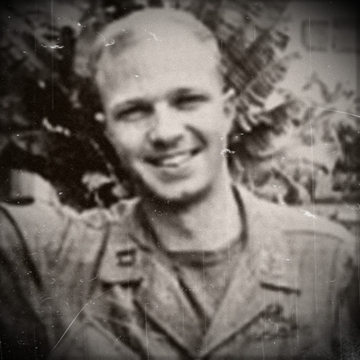
During the late 1970s, Jack became involved with Vietnam veteran Jan Scruggs and others in the effort to create a national memorial to Americans who had served and died in Vietnam. Jack brought organizational ability, political connections, and fundraising expertise to what initially seemed like a difficult proposition: constructing a privately funded memorial on the National Mall for a war that remained extraordinarily divisive.
The Vietnam Veterans Memorial Fund credits Jack as one of the early figures recruited to help transform the proposal into reality. The resulting memorial, designed by Maya Lin and dedicated in 1982, became one of the most recognizable monuments in the United States.
Jack Wheeler’s career afterward moved repeatedly between government, nonprofit work, consulting, and national-security affairs. He held positions at the Securities and Exchange Commission, was involved with veterans’ programs, led Mothers Against Drunk Driving for a period, and from 2005 to 2008 served as a special assistant to the secretary of the Air Force. Near the end of his life, he worked as a consultant for the MITRE Corporation, where his interests included cybersecurity and national defense.
It was an extraordinary résumé. That made the circumstances of his death all the more incomprehensible.
Jack divided his time between several locations, including a home in New Castle, Delaware, and a residence in New York shared with his wife, Katherine Klyce.
On Christmas Day 2010, Jack was in New York. Three days later, on Tuesday, December 28th, he traveled to Washington, D.C., apparently for work or personal business. He subsequently returned to Delaware by train that evening. From that point forward, Jack’s behavior became increasingly difficult to reconstruct, and increasingly unusual.
There was already one significant source of tension waiting for him in New Castle. Across the street from the Wheeler home, another couple was constructing a large house near Battery Park. Jack strongly opposed the project. He believed the building violated rules governing construction in New Castle’s historic district and had become involved in legal efforts to prevent or modify the construction. A court had recently rejected a request connected to Jack’s efforts to stop the project.
Then, on the night of December 28th, someone entered or approached the unfinished house and tossed smoke-producing devices inside. The devices caused relatively minor damage.
A witness later described seeing a man at the property. Jack Wheeler became a focus of suspicion regarding the incident, although he was never charged with setting the devices and the matter was never proven in court. Police investigating his later murder regarded the property dispute as one element worth examining, but authorities never established that the dispute caused Jack’s death or that the owners of the neighboring property were involved in his murder.
The episode nevertheless added another strange element to what was already becoming a confusing sequence of events.
By Wednesday, December 29th, Jack was behaving in a way witnesses found noticeably abnormal. At approximately six p.m., he appeared at a Happy Harry’s pharmacy in New Castle, not far from his home. Jack knew the pharmacist, Murali Gouro, and asked him for a ride to Wilmington. Gouro could not drive him but offered to call a taxi. Jack declined.
Approximately forty minutes later, surveillance cameras recorded Jack inside a parking garage near the New Castle County Courthouse in downtown Wilmington.
The footage became one of the defining images of the case. Normally known as a carefully dressed professional, Jack appeared disheveled. He wore a dark suit but had no overcoat despite the December cold. At times he seemed unsteady. He was carrying one shoe instead of wearing it.
He spoke with parking attendants and explained that his briefcase had been stolen. He also seemed to be searching for his automobile.
The problem was that Jack’s car was not in that garage. Investigators later found it parked near Wilmington’s Amtrak station, where it had apparently been for some time.
Jack repeatedly said that someone had stolen his briefcase, and apparently believed other possessions were missing as well. The claim could have been entirely accurate; someone may have robbed him before the parking-garage footage was recorded.
Alternatively, his belief that he had been robbed may have been connected to the confused state in which witnesses encountered him. Investigators never publicly provided enough information to settle the issue.
The question matters because, if Jack Wheeler actually had been robbed or attacked before the evening of December 29th, it could mean that whatever ultimately led to his death had already begun.
His strange behavior was not simply the result of intoxication, according to people close to him. His family said Jack did not drink. Toxicology findings were not publicly released while the investigation remained active.
Jack did, however, have a history of bipolar disorder, something his family discussed publicly in later years. His wife eventually said she believed he may have been experiencing an episode during his final days. That possibility potentially explains some of his disorganization and unusual decisions. It does not explain the homicide.
Around the same period, another mystery was developing inside Jack Wheeler’s New Castle residence. A neighbor who entered the property after noticing unusual circumstances found the interior in disorder. Objects were scattered. A chair had been overturned. Kitchen items were disturbed. Powdered cleaning material had reportedly been spread across part of the floor, and Jack’s West Point sword was out of its scabbard.
At first glance, the scene suggested the possibility of a burglary. But obvious valuables remained. Exactly what had happened inside the house, and who had caused the disorder, was never publicly established.
Jack himself reportedly told people that his home had been burglarized. Whether an intruder had actually entered, Jack had disturbed the house himself while experiencing some form of crisis, or something else had happened remains uncertain.
Investigators eventually searched the residence as part of the homicide inquiry. Even several weeks after Jack’s death, crime-scene investigators returned to the house and removed items for examination. Police did not publicly disclose what they collected.
Jack’s movements during much of Thursday, December 30th, remain obscure. During the afternoon, he appeared at the Nemours Building at 10th and Orange Streets in downtown Wilmington. The building contained law offices and other businesses. Jack visited a law firm and apparently asked to speak with someone there, but left before a meaningful meeting could take place.
At approximately three-thirty p.m., police could place him in the vicinity of 10th and Orange. The Newark Police Department issued a public appeal seeking anyone who had encountered Jack afterward.
Later that evening he appeared again on security cameras inside or around the Nemours Building. People noticed that something seemed wrong. Several reportedly offered him assistance, but Jack declined.
By now, his clothing had changed. Instead of the business jacket seen earlier, he was wearing dark trousers and a dark blue hooded sweatshirt.
At approximately eight forty-two p.m., surveillance footage captured Wheeler leaving the Nemours Building through its 11th Street side. He walked southeast along 11th Street. He passed through the Hotel du Pont valet area. He crossed Market Street. Then the camera lost him. No verified public sighting ever placed Jack Wheeler alive again.
The period between approximately eight forty-two p.m. on December 30th and the early morning hours of December 31st represents the heart of the mystery. Somewhere during that period, Jack encountered the person or people responsible for the assault that killed him.
But where? Police could not establish that he died in Wilmington. Nor could they establish that he died in Newark. They could not determine how he traveled the roughly twelve to fifteen miles separating his last known location from the area where his body was eventually found.
He may have accepted a ride, he may have taken a taxi, he may have traveled with the person who ultimately killed him, or he may have reached Newark by some other means. Investigators publicly acknowledged that they could not explain that journey. Even in February 2011, Newark Police spokesman Lt. Mark Farrall said investigators had not identified a crime scene and had not determined how Jack got from Wilmington to Newark.
Early on December 31st, a Waste Management truck began collecting refuse from commercial dumpsters around Newark. There were ten stops associated with the route under investigation. The dumpsters served ordinary locations around the city: businesses and public facilities rather than remote dumping grounds.
At some point before collection, Jack Wheeler’s body was placed in one of those containers. The truck eventually drove to Cherry Island Landfill in Wilmington.
At approximately nine fifty-six a.m., as its contents were discharged, a landfill worker spotted a body among the trash. Police were summoned.
Once investigators traced the truck’s route, they realized that its load had been collected in Newark. That fact placed the Newark Police Department in charge of the homicide investigation, with assistance from other Delaware agencies and the FBI. An official Newark departmental report records that the medical examiner conducted an autopsy on December 31st and that investigators immediately began treating the case as a homicide. The victim was formally identified as sixty-six-year-old John P. Wheeler III.
For nearly a month, authorities withheld Jack’s precise cause of death. Then, on January 28th, 2011, the Delaware medical examiner’s office announced that Jack had died from blunt-force trauma after being assaulted.
One possibility is that Jack Wheeler’s murder began as an opportunistic street crime. On the evening of December 30th, he was an older man wandering through Wilmington while apparently confused, exhausted, and vulnerable. Someone could have recognized an easy target, and robbery might have escalated into a fatal assault.
Yet details complicate that theory. Family members later said that significant personal items, including Jack’s Rolex watch and West Point class ring, were still with him after his death. Police never publicly disclosed a complete inventory of what was recovered, so it remains impossible to say definitively whether robbery played a role.
The disposal of the body also creates difficulty. A spontaneous attacker would have needed either to transport Jack’s body from Wilmington to Newark or commit the assault after Jack somehow arrived there. The killer then had to place him inside a commercial dumpster. That requires more activity than simply fleeing after a street assault.
On the other hand, because Jack had been involved in such a bitter dispute over the neighboring construction project, investigators naturally examined it.
The timing was remarkable. Only days before his death, someone had thrown smoke-producing devices into the unfinished house. Jack had publicly and legally opposed the project.
Police never announced evidence linking Jack Wheeler’s neighbors to his death, and the homeowners publicly expressed sympathy to Jack’s family. Investigators described the dispute merely as one aspect of a much broader inquiry.
Jack Wheeler’s professional background inevitably produced darker theories. He had worked in Washington, had connections to the Pentagon, had knowledge of national-security issues, and had recently been involved with cybersecurity discussions through MITRE.
Online speculation therefore suggested that Jack Wheeler had been assassinated because of classified information, intelligence activities, defense programs, or some secret government conflict. Other theories attempted to connect his death to military or chemical-weapons issues.
There is no publicly established evidence supporting such claims. Contemporary reporting even cited law-enforcement sources indicating that investigators did not believe Jack Wheeler’s death was related to his government work.
The disposal method is one of the case’s strangest features. If someone deliberately murdered Wheeler and wanted to conceal the crime, placing his body in a commercial dumpster created considerable risk. Businesses might have cameras, employees might see something, and the garbage might not be collected immediately.
Police eventually examined surveillance footage associated with many of the dumpsters along the truck’s route. Contemporary reporting indicated that cameras were present around most of the potential pickup locations.
Yet the investigation never publicly identified the precise dumpster. Without knowing that location, detectives lost a crucial geographical anchor. Had the dumpster been identified, investigators could have searched for nearby witnesses, vehicles, phones, cameras, and possible routes from Wilmington. Instead, they were left with ten possibilities, and a homicide investigation spread across multiple cities.
Weeks after the murder, investigators were still searching. Detectives followed numerous leads. Police examined Jack Wheeler’s home, car, electronic records, surveillance footage, and the garbage route. The FBI provided assistance. The family offered a $25,000 reward for information leading to an arrest, with an additional reward offered through Crime Stoppers. Yet investigators made little progress, and the case gradually slipped from national headlines.
As of this writing in September 2026, the murder of Jack Wheeler remains a bizarre and frustrating mystery with no viable suspects and no definitive motive.

