
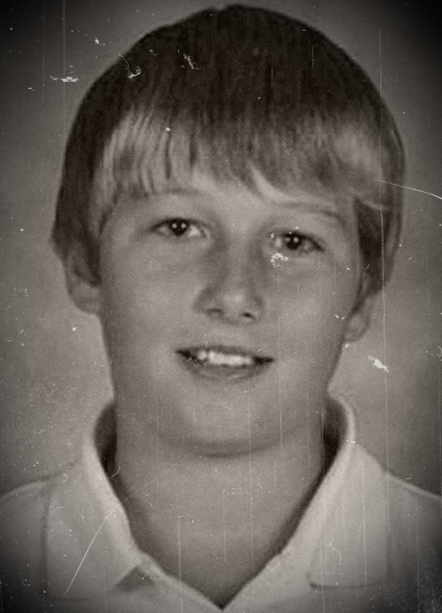
Twelve-year-old Garrett Phillips was a sixth-grade student at A.A. Kingston Middle School in Potsdam, New York, a village in St. Lawrence County near the Canadian border. He lived with his mother, Tandy Cyrus, and his younger brother, Aaron, in a second-floor apartment at 100 Market Street.
An enthusiastic athlete, Garrett enjoyed basketball, soccer, football, and hockey. He was an active member of the local community, where his participation in youth sports had brought him into contact with numerous families. His relatives and friends remembered him as an energetic, friendly boy who enjoyed spending time with others.
Garrett’s family had moved into their Market Street apartment only a few months before his death, following his mother’s separation from Oral Nicholas Hillary, commonly known as Nick. Hillary had previously lived with Tandy and her sons and was the head men’s soccer coach at Clarkson University in Potsdam.
On Monday, October 24th, 2011, Garrett attended school as usual. After classes ended, he remained at school to play basketball with friends. At approximately four thirty p.m., his mother called him and instructed him to return home.
Garrett gathered his belongings and left school with his skateboard, heading toward the apartment where he and his family lived. His mother was still at work, and his younger brother was elsewhere.
It was during the short period between Garrett’s arrival home and the police response that the fatal attack occurred.
At approximately seven minutes past five p.m., residents of the apartment building called police after hearing unusual noises coming from Garrett’s home. According to accounts later provided to investigators, the sounds included a scream, a loud bang, and what appeared to be moaning or cries for help. The neighbors became increasingly concerned that someone inside the apartment might be injured or in danger.
Potsdam police officer Mark Wentworth arrived at the building shortly afterward. When he approached Garrett’s apartment, he knocked on the door but received no response. Wentworth reported hearing movement inside, followed by a noise that sounded as though something had fallen. Despite his attempts to get someone to answer, the door remained closed.
The building’s property manager was eventually contacted and arrived with a key. At approximately five twenty-four p.m., Wentworth and the property manager entered the apartment.
Inside, they discovered Garrett lying unconscious on the floor near a bedroom. His face had turned blue, and he was not responding. There were visible injuries to his knees, along with small marks on his neck.
Officer Wentworth began performing CPR, and additional emergency personnel arrived to assist. Garrett was transported to Canton-Potsdam Hospital, where medical workers attempted to save his life, but he was pronounced dead at seven eighteen p.m.
His mother, who had been attending her younger son’s basketball practice, learned that something was wrong when the family’s landlord came to the gym and urged her to go to the hospital.
When investigators examined the apartment, they discovered something that suggested Garrett’s attacker might have escaped shortly before police entered. A window in one of the bedrooms was open, its blinds were bent, and the window screen appeared to have been pushed outward. Investigators believed that the person responsible might have climbed through the window and escaped across the roof of an adjoining section of the building. The circumstances suggested that whoever attacked Garrett may have still been inside the apartment when the first officer arrived, although investigators could not establish that possibility with certainty.
The medical examiner determined that Garrett had died from strangulation and suffocation. On October 28th, four days after his death, Potsdam police publicly confirmed that the case was being investigated as a homicide.
The brief window of time between Garrett’s arrival home and the emergency call became crucial to the investigation. Detectives attempted to reconstruct his final movements, identify anyone who had been near the apartment building, and determine who might have had a reason to enter the family’s home.
As detectives examined Garrett’s family relationships and the events leading up to his death, their attention turned to Nick Hillary. Hillary was a Jamaican-born former soccer player who had become the head men’s soccer coach at Clarkson University. He had dated Garrett’s mother, Tandy Cyrus, and had lived with her and her two sons until their relationship ended during the summer of 2011.
Investigators explored whether tensions surrounding the breakup might have played a role in Garrett’s death. Prosecutors would later allege that Hillary resented Garrett and believed the boy had contributed to the end of his relationship with Tandy. Hillary denied involvement in the murder and maintained that he had not harmed Garrett.
Investigators also examined Hillary’s whereabouts on the afternoon of October 24th. Witnesses reported seeing him or a vehicle resembling his near Garrett’s apartment in the period preceding the killing. Surveillance footage captured the movements of both Hillary and Garrett in the surrounding streets, although it did not show Hillary entering the apartment or attacking the boy.
Prosecutors believed the timing and location of Hillary’s movements supported their theory that he could have encountered Garrett near his home. Hillary’s defense maintained that the evidence did not establish that he had been inside the apartment.
Another man who had previously dated Tandy, St. Lawrence County sheriff’s deputy John Jones, was also examined during the investigation. Prosecutors ultimately ruled him out as a suspect and did not charge him.
On October 26th, 2011, two days after the murder, Hillary was questioned by police. He later alleged that he had been improperly detained and subjected to an intrusive search, claims that became the basis of a separate civil rights lawsuit.
Despite investigators’ suspicions, Hillary was not immediately charged with Garrett’s murder. The case remained without an arrest for more than two years.
One of the central difficulties facing investigators was the absence of conclusive physical evidence identifying Garrett’s attacker. Police collected fingerprints and DNA samples from the apartment and examined evidence associated with the window and the possible escape route. However, investigators did not recover fingerprints or conventional DNA evidence that conclusively placed Hillary at the crime scene.
A particularly contentious issue involved a tiny quantity of DNA recovered from beneath one of Garrett’s fingernails. The prosecution sought to introduce results obtained using STRmix, a computer program designed to analyze complex mixtures of DNA. Prosecutors argued that the analysis supported a connection to Hillary.
However, earlier testing had failed to establish such a connection, and Hillary’s attorneys challenged the reliability of the later results. They argued that the extremely small sample and the methods used to interpret it made the findings unsuitable for use in court.
Following a hearing, Judge Felix Catena ruled in August 2016 that the disputed STRmix results were unreliable in this case and could not be presented as evidence at trial. The ruling left prosecutors without the DNA evidence they had hoped would strengthen their case against Hillary.
The investigation took a significant turn after Mary Rain became St. Lawrence County district attorney. In 2014, a grand jury indicted Hillary on a charge of second-degree murder. That indictment was subsequently dismissed, but prosecutors secured another indictment in 2015.
Hillary continued to deny responsibility for Garrett’s death. His attorneys argued that the investigation had focused too heavily on him while failing to establish that he had committed the crime.
By the time the case reached trial in September 2016, it had attracted national attention. Hillary, a Black man accused of murdering a white child, and his supporters raised concerns that racial bias had influenced the investigation and the treatment he received from police. Law enforcement officials defended their investigation, maintaining that their actions were based on the evidence and their belief that Hillary was a legitimate suspect.
The case generated strong feelings within the community, with Garrett’s family seeking accountability for his death and Hillary’s supporters maintaining that an innocent man had been unfairly accused.
Hillary waived his right to a jury trial, choosing instead to have Judge Felix Catena determine the verdict. During the trial, prosecutors presented evidence concerning Hillary’s relationship with Tandy, the circumstances of their breakup, his movements on the day of the murder, and discrepancies they believed existed in his accounts of his whereabouts. The prosecution argued that the combined circumstantial evidence established that Hillary had committed the murder.
The defense maintained that the prosecution’s case rested on speculation rather than proof. Hillary’s attorneys emphasized that no eyewitness had seen him enter Garrett’s apartment, no usable fingerprint evidence placed him inside, and no admissible forensic evidence established that he had attacked the boy. They also challenged the prosecution’s interpretation of the timeline and the significance of Hillary’s movements around Potsdam that afternoon.
On September 28th, 2016, nearly five years after Garrett’s murder, Judge Catena delivered his verdict in a packed St. Lawrence County courtroom. Hillary was found not guilty of second-degree murder.
In explaining his decision, Catena noted that the prosecution’s case was based entirely on circumstantial evidence. Although circumstantial evidence can support a criminal conviction, the judge determined that the evidence presented at trial did not establish Hillary’s guilt beyond a reasonable doubt.
The courtroom reaction reflected the divisions that had developed around the case. Garrett’s mother and other family members were visibly distressed by the verdict. Hillary, meanwhile, embraced his attorneys and thanked his family and supporters.
Prosecutors expressed disappointment with the decision, while Hillary’s defense team maintained that the evidence had never established his involvement in the murder.
The acquittal brought the criminal proceedings against Hillary to an end, but it did not answer the central question of who had killed Garrett Phillips. No one else was charged with the murder.
The case continued to attract attention after Hillary’s acquittal, particularly because of the questions surrounding the original police investigation. Hillary pursued civil litigation against Potsdam police officials and the village, alleging that his rights had been violated during his detention and questioning in October 2011.
In June 2022, a federal jury rejected his unlawful-detention claim, finding that he had not established that the defendants had violated his rights. Hillary subsequently appealed the decision. The civil proceedings were separate from his criminal trial and did not change his acquittal.
The murder investigation also became the subject of the 2019 HBO documentary Who Killed Garrett Phillips?, which examined the killing, the investigation, Hillary’s prosecution, and the questions surrounding the case.
In the years following Hillary’s acquittal, questions persisted about whether investigators had adequately explored alternative leads. In 2019, North Country Public Radio reported that investigators had received information concerning a possible new lead that did not involve Hillary. St. Lawrence County District Attorney Gary Pasqua acknowledged that the information was being investigated but declined to provide details. The report did not establish the identity of a new suspect or demonstrate that the information would lead to an arrest.
As of September 2026, Garrett Phillips’ murder remains unsolved. Hillary is the only person who has been charged in connection with the killing, and his 2016 acquittal stands. No subsequent conviction has been reported.

