
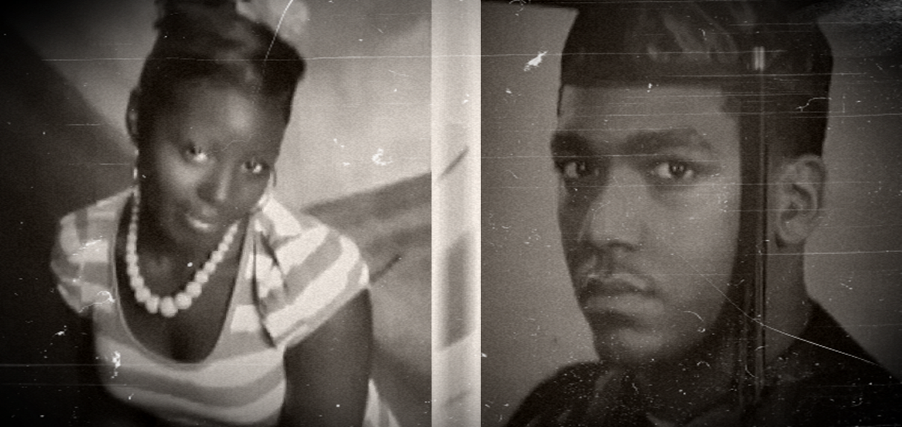
The last day Dyamond Manire spent with her daughter Jewel had begun as a happy one. On October 6th, 2012, the family gathered to celebrate the fourth birthday of Jewel’s young son. By the end of the night, Jewel Manire and her friend Khalil Gibson were dead, three other young women had been shot, and police in Camden, New Jersey, were searching for a masked gunman responsible for one of the city’s most disturbing crimes of an already exceptionally violent year.
Jewel was a Camden High School graduate, a mother and a grocery-store cashier who was attending school with the goal of becoming a licensed practical nurse. She had been living at the Gramercy Park Garden Apartments in Camden’s Fairview section for almost a year. On the day she was killed, she had been with relatives celebrating her son’s birthday before leaving the gathering to meet friends.
Khalil Gibson was remembered as an unusually ambitious young man who thought seriously about both his own future and the future of Camden. A 2011 graduate of MetEast High School, he was attending Camden County College and working part time at a Taco Bell in Cherry Hill. He hoped eventually to attend Morehouse College in Atlanta, where his older brother was a student, and friends recalled that he dreamed of a career in the music industry.
His ambitions went beyond personal success. As a teenager, when a teacher once asked what he would do if he were given control of an abandoned Camden block, Khalil envisioned a community center for teenagers along with dance and music studios. He had participated in an internship with Young Urban Leaders and had discussed becoming a mentor himself through the Boys and Girls Club of Camden County. Shortly before his death, his godmother had planned to help him sign up.
Sometime late on the night of October 6th, Jewel, Khalil and three other young women were together in Jewel’s burgundy Chevrolet Lumina outside the Gramercy Park apartments. One of the passengers was Jewel’s cousin, Quajena Pouncy, who was dating Khalil. The group was still sitting in the vehicle at approximately eleven forty p.m. when a man approached.
The assailant had taken steps to conceal himself. Early police descriptions said he wore a black covering over the lower part of his face and yellow latex gloves. Witness information described him as approximately six feet tall, and early reports said he carried both a firearm and a machete. Authorities later said they believed that he knew at least one person inside the car. They also said they did not believe drugs or gang activity were behind the shooting.
Pouncy later provided a chilling account of the moment Jewel realized the approaching stranger posed a real threat. According to Pouncy, Jewel dropped her keys, raised her hands and pleaded with the man to take the car or anything else he wanted rather than hurt them. Khalil attempted to shield Pouncy with his own body. Seconds later, the shooting began.
The gunman fired repeatedly into the Lumina. Jewel, who was in the driver’s seat, was struck in the head. Khalil was also fatally wounded. Pouncy was shot in the face, while two other teenage girls were wounded, one in the head and another in the arm and shoulder.
One of the wounded teenagers managed to get out of the car and summon help. The attack, however, was not yet over.
After the initial shooting, the gunman took control of Jewel’s car and drove away with the remaining victims still inside. Later investigators described the route as traveling through an area known locally as “Snake Alley,” alongside Congress Road, before the Lumina ended up near Morgan Boulevard. Contemporary reporting placed the eventual stopping point roughly a mile from where the attack began.
During that terrifying drive, the wounded twenty-year-old passenger reportedly remained still and pretended to be dead. When the car finally stopped on a dirt road near the 2500 block of Morgan Boulevard, she saw an opportunity and jumped out. The gunman chased her.
Despite having been shot in the face, the woman escaped and was able to call for help. The attacker abandoned the pursuit and was last seen running toward basketball courts near Morgan Boulevard.
Police responding to the scene found the aftermath of an extraordinary attack involving five victims. Jewel and Khalil had been fatally shot. The three surviving women were transported to Cooper University Hospital. At least two were initially described as being in critical condition.
Pouncy survived but suffered permanent consequences. Speaking publicly about the case in 2025, she said the shooting had left her legally blind in one eye and with mobility problems affecting the left side of her body. More than a decade later, she was still living not only with those physical injuries but with the deaths of two people who had been central to her life.
The attack immediately generated questions about motive. One early newspaper report cited sources suggesting there might have been a dispute earlier in the day at a bowling outing connected with the birthday celebration, but police said they could not confirm that theory. What investigators did say was that they did not consider the attack random and believed the assailant knew at least one of the victims. Drugs did not appear to be involved, and Camden Police Chief Scott Thomson said investigators did not believe the shooting was gang-related.
That distinction made the lack of an arrest particularly frustrating. If the killer knew someone in the vehicle, investigators hoped that people in the community might also know something about his identity or the events leading up to the shootings.
Within days, a $15,000 reward was offered for information leading to an arrest and conviction. The Citizens Crime Commission supplied $10,000, while Jewel’s father, Demetrius Divine, initially provided another $5,000 himself. The families continued adding their own money to the effort, and by the following year Jewel’s parents had spent thousands of dollars distributing fliers and trying to keep the murders in public view.
Jewel’s mother and father refused to allow the case simply to become another entry in Camden’s homicide statistics. They placed fliers around the region and even sent information to lawmakers and President Barack Obama. On the anniversary of her daughter’s death, Dyamond Manire joined an antiviolence rally outside Camden City Hall and publicly asked why her daughter’s murder had not been solved.
The date carried another painful significance. According to later reporting, Jewel was officially pronounced dead on October 7th—the birthday of the son whose celebration she had attended the previous day. Three days later, when the four-year-old continued asking where his mother was, Dyamond finally told him that his mother was now an angel watching over them.
Khalil’s death created a different but equally painful absence. Teachers and mentors described a young man who appeared determined to escape the cycle of violence around him while finding ways to help other young people do the same. In a city struggling with abandoned properties, poverty and violent crime, the young man who had once imagined turning an empty block into a center for teenagers instead became one of Camden’s homicide victims.
The murders were the forty-ninth and fiftieth homicides recorded in Camden in 2012. The year ultimately became the deadliest in the city’s history at the time. Those numbers also presented practical difficulties for detectives. Severe budget problems had forced Camden to cut its police force dramatically in 2011, while the following year brought a surge in killings. Police Chief Thomson later said the homicide clearance rate fell sharply as investigators struggled simply to keep up with incoming cases.
After Camden reorganized policing under a county-run department, authorities revived a dedicated cold-case effort. By 2014, Jewel and Khalil’s murders had become one of approximately fifteen cases assigned to a veteran team of investigators. Detectives repeatedly returned to the Gramercy Park apartments, knocked on doors and searched for witnesses willing to tell them something they had not known before.
The obstacles were considerable. Police said fear of retaliation and distrust of law enforcement made witnesses reluctant to cooperate in Camden homicide investigations. Although three people survived the attack itself and investigators had a broad description of the gunman, the information available was never enough to publicly identify or charge a suspect.
Years passed. Then, in September 2025, the investigation received new public attention. Camden County cold-case Detective Daniel Crawford revealed that investigators still had physical evidence from the vehicle, including a machete as well as ballistic and other evidence. Some of that material had already been examined using the forensic technology available in 2012 and 2013. Now it was being sent to two laboratories for new DNA testing.
Crawford explained that modern testing methods are considerably more sensitive than those available when the crime occurred. Investigators hoped the evidence might now yield a usable DNA profile, although he cautioned that there was no guarantee testing would produce a breakthrough.
As of the latest public reporting, however, no one has been charged with murdering Jewel Manire and Khalil Gibson. The identity of the masked gunman, and the precise reason he targeted the five young people inside Jewel’s Chevrolet Lumina, remains unknown.

