
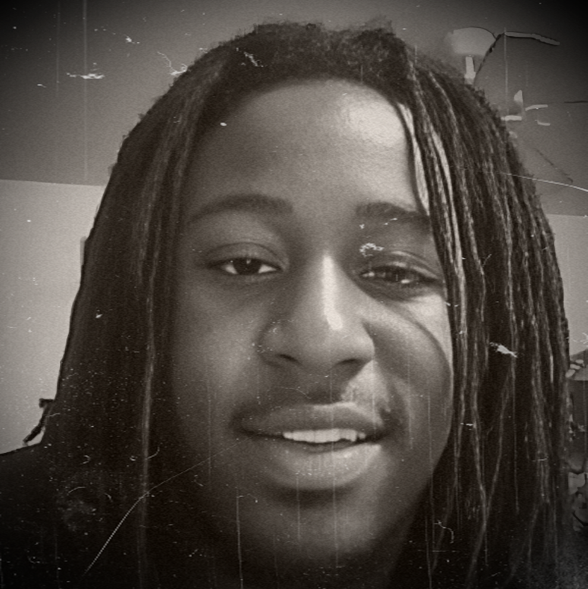
Twenty-eight-year-old Travis Smith was a native of Aiken County, South Carolina who had attended North Augusta High School and was a member of Laura Grove Baptist Church. He lived on Bradley Court in North Augusta and was the father of a daughter, Taniya. Friends and relatives would later describe Travis as easygoing, kind, devoted to his daughter, and particularly fond of basketball.
His death came suddenly on Saturday, September 29th, 2012, at Ridgeview Manor Apartments in North Augusta. According to later accounts of the investigation, Travis was outside the apartment complex talking with a woman when several men approached. Precisely how many men were involved has varied in published accounts. A 2024 summary from the nonprofit Season of Justice states that three men approached Travis and the woman. Travis’s sister, meanwhile, said in a later interview that she had been told two hooded men approached him. What is consistent is that an armed confrontation followed almost immediately.
The woman with Travis fled into an apartment as the men approached. Gunfire followed.
Travis was struck once in the upper torso. He was unarmed. Despite his wound, he managed to make his way inside apartment 417, apparently attempting to escape whoever had shot him. The woman had run inside as well. Another woman who lived in the apartment was reportedly asleep there with her children when the shooting erupted and called 911 after hearing the gunfire.
Travis reached a couch inside the apartment but was mortally wounded. When North Augusta Public Safety officers arrived, they found him unresponsive. Later reporting described a woman kneeling beside him and crying as officers entered.
The Aiken County Coroner’s Office determined that Travis died from severe blood loss caused by the gunshot wound. He was pronounced dead at the scene.
One detail regarding the timing of the shooting remains unclear in publicly available sources. Season of Justice lists the police response as occurring at approximately two forty-seven p.m., but the organization’s own appeal for information refers to events during the “early morning hours” of September 29th.
What does appear clear is that the attack unfolded quickly. There has never been a publicly established account of Travis arguing with his attackers beforehand, nor has law enforcement announced a definitive motive.
North Augusta Public Safety began canvassing Ridgeview Manor and questioning people who might have seen or heard what happened. The South Carolina Law Enforcement Division, or SLED, also assisted.
Detective John Nelson initially served as the lead investigator. Over the following year, investigators interviewed witnesses, spoke with informants and administered polygraph examinations while trying to determine who had confronted Travis that day.
There should, in theory, have been people who knew something. Travis was not killed in an isolated rural location or behind closed doors. The shooting occurred at an apartment complex where residents and visitors were present. Yet detectives encountered a problem that would become central to the case: witnesses were reluctant to talk.
Years later, North Augusta Public Safety Sgt. Jason Fox explained that investigating violent crime in apartment communities can be particularly difficult because residents who speak to police must continue living in the same place after investigators leave. Fear of retaliation, he said, can make people hesitant to be seen cooperating with authorities.
There was no indication, according to police, that Travis’s killing was gang-related. That made the apparent silence surrounding the murder even harder for his family to understand.
Friends reportedly recalled that Travis had seemed somewhat more nervous or on edge during the days before his death, but he apparently never explained why, and investigators have never publicly established whether his unease had anything to do with the shooting.
The circumstances left investigators with troubling possibilities. Was Travis deliberately targeted? Did he know the men who approached him? Had something happened in the days before his death that his family knew nothing about? Or had an apparently ordinary encounter escalated with almost no warning?
Travis Smith’s family did not allow the case to disappear quietly. In the weeks and months following the murder, relatives and community members participated in anti-violence events, rallies and other efforts to generate information. Over succeeding years, his sister Tyesha became one of the most visible advocates for solving the case.
Despite the lack of an arrest, the investigation did produce at least one significant development. According to Sgt. Jason Fox, investigators received cooperation from people who were incarcerated, and by December 2013 they had identified a potential suspect in Travis’s murder.
The man was being held at the Aiken County Detention Center. Investigators interviewed him several times. Fox later said that the man repeatedly refused requests to undergo a polygraph examination. As his release date approached, however, he eventually agreed to take one. Whatever investigators learned, however, was not enough to result in criminal charges.
Then the possible avenue of investigation abruptly closed. In April 2014, the potential suspect was himself killed in Augusta, Georgia. Authorities have not publicly identified him in the later reporting on Travis Smith’s case, and it is important to emphasize that he was described only as a potential suspect. He was never prosecuted for Travis Smith’s murder, and the publicly available evidence does not establish that he was the gunman. His death nevertheless deprived investigators of someone they clearly considered important enough to interview repeatedly.
As time passed, Travis’s murder entered cold-case status, but received renewed attention in 2023 when the investigative true-crime podcast The Fall Line devoted two episodes of its Unsolved South series to Travis Smith’s murder. The program characterized the attack as the killing of a man by apparent strangers without any known publicly established motive and reviewed years of local reporting on the case.
Another push for answers came in 2024. Season of Justice, a nonprofit organization that supports investigations of unsolved violent crimes, sponsored a billboard in North Augusta highlighting Smith’s case. The billboard was placed near U.S. 25 on Edgefield Road and was intended to keep the murder visible to thousands of motorists passing through the area.
Fourteen years after the shooting, though, the murder of Travis Smith remains unresolved.

