
Nineteen-year-old Moses Williams Jr., affectionately known as “Fat Man,” was born into an extended family with deep connections to Aiken, South Carolina and the surrounding communities. His parents were Timica James and Moses Williams Sr., and he grew up surrounded by siblings, grandparents, and other relatives.
He attended Aiken High School, where he played football and became a familiar face among his classmates. He graduated in 2011, only months before his death.
By the time he finished high school, Moses had already taken on one of life’s greatest responsibilities: fatherhood. His son, Devin K. Williams, was still very young when Moses died.
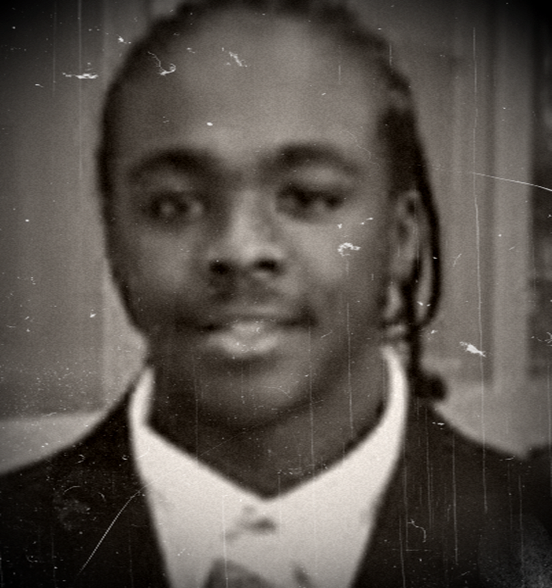
According to the investigative podcast The Fall Line, Moses worked seven days a week to provide for his family, trying to build a stable life for himself and his child.
February 5th, 2012, was a Sunday, and much of the country was occupied with the Super Bowl. In Aiken, the day’s celebrations were winding down when Moses found himself parked outside a residence on Bradley Lane.
Moses was in the driver’s seat of his vehicle when a gunshot rang out. According to contemporary reporting in the Aiken Standard, the shooting occurred at approximately eleven thirty p.m. Investigative reporting later established that Moses’s girlfriend and her sister were nearby, reportedly no more than approximately a hundred feet away.
Moses was subsequently found slumped inside the car, suffering from a gunshot wound. Despite the residential surroundings and the presence of people nearby, the identity of the shooter remained unclear.
Emergency personnel responded, and Moses was taken to Aiken Regional Medical Center. Doctors were unable to save him. He was pronounced dead at one twenty-six a.m. on Monday, February 6th.
The Aiken Department of Public Safety opened a homicide investigation. One of the first obstacles detectives encountered was the apparent absence of a clear motive. Moses had been shot while sitting in a vehicle outside a residence, but investigators did not immediately establish who wanted him dead or why.
On February 7th, 2012, the Aiken Standard published an article under the headline “Motive Unknown In Teen’s Aiken Slaying.” The newspaper reported that detectives were investigating the possibility that Moses had been the victim of mistaken identity, though this was not the only angle they were pursuing.
The presence of people nearby made the apparent absence of definitive eyewitness identification especially frustrating. Even in a neighborhood where someone might reasonably have seen or heard something, police could not establish who fired the fatal shot. Detectives were left trying to reconstruct the sequence of events, determine the shooter’s approach and escape, and discover whether the killing had been planned or resulted from an encounter that escalated into violence. Without a publicly identified suspect or established motive, the investigation would struggle to produce an arrest.
In 2018, television station WJBF reported on a billboard in Aiken connected to the case. The billboard campaign was another effort to draw public attention to the unsolved killing and encourage people who might have information to come forward. And in July 2021, WJBF revisited the murder as part of its Cold Case Project series.
For Moses’s mother, Timica James, the murder of her son marked the beginning of a long and painful struggle to obtain answers. As the months passed without an arrest, Timica continued seeking information about the investigation. She wanted the person responsible to be identified and held accountable.
Her determination eventually became a central part of the story. In 2022, the investigative true-crime podcast The Fall Line devoted two episodes to Moses’s murder. The second installment, titled Give It 10 Years, revealed an extraordinary promise Timica had made to local authorities. According to the podcast, she had agreed to prevent members of her family from conducting their own investigation if law enforcement solved the murder within ten years.
However, February 5th, 2022, would mark ten years since Moses was shot, and his killer still had not been brought to justice.
And as of this writing in October 2026, neither the motive nor the perpetrator in the murder of Moses Williams Jr. has been established.

