
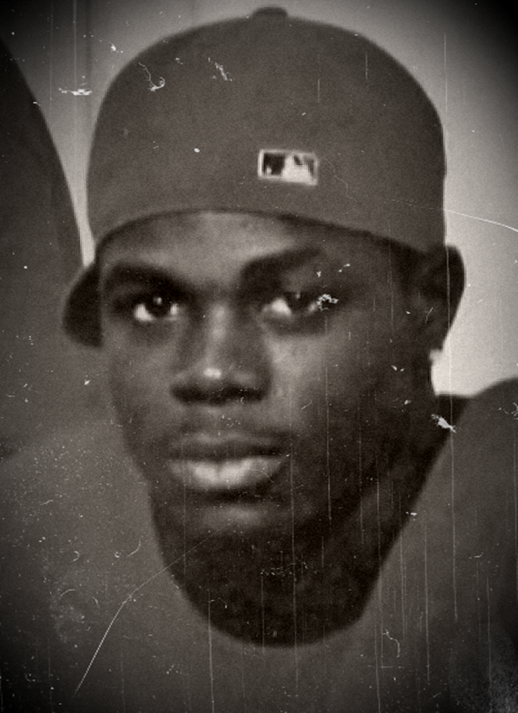
Daniel Earl Ervin was born on October 18th, 1983, in York County, South Carolina, to Alice Ervin Walker and James Earl Heath. He grew up in the Rock Hill area, graduated from Rock Hill High School, and belonged to St. Phillips Baptist Church in nearby Richburg. He was a father of five children, and those who knew him remembered a friendly, affectionate man with a lively sense of humor. His family described him as someone who cared deeply about others and was always willing to help. Daniel was only two days away from celebrating his thirtieth birthday when his life was cut short.
On Wednesday, October 16th, 2013, Daniel was visiting a residence in the 900 block of Pebble Road in southern Rock Hill. A group of relatives and friends had gathered there, cooking food, talking, and enjoying an otherwise uneventful evening. According to Detective Darren Swiger of the Rock Hill Police Department, who discussed the case in an August 2026 interview with WBTV, Daniel and several friends eventually prepared to leave the gathering.
At some point, Daniel walked around the darker side of the house, away from the other people. Suddenly, a gunshot rang out. Witnesses and family members heard what sounded like a single shot, but no one reported seeing the gunman approach or flee. Daniel, who had been wounded in the abdomen, managed to run toward the front of the residence, where he told those gathered that he had been shot. He then collapsed and lost consciousness.
Police officers responding to the shooting arrived at 940 Pebble Road and found Daniel lying in the front yard, surrounded by several people. In the immediate aftermath, Rock Hill Police Captain Mark Bollinger told reporters that Daniel had suffered a gunshot wound to the back. Later investigative accounts described an abdominal wound; the publicly available reports do not fully explain this difference.
Daniel was transported to Piedmont Medical Center, where he died that evening. His death was Rock Hill’s second reported homicide of 2013.
Investigators began interviewing witnesses and examining the circumstances of the shooting. Initially, police had little information about the killer’s identity or what had precipitated the attack. Family members suggested that Daniel might have argued with the person responsible earlier that day, but investigators never publicly established that such an argument was connected to the murder.
Daniel’s sister, Tiffany Ervin, was devastated by the killing. Speaking to WBTV in the days afterward, she described the loss of her brother, whom she also considered her best friend. The timing was particularly painful because his 30th birthday would have been that Friday, October 18th.
Family members and friends struggled to understand why anyone would want to hurt him. One friend, identified in news coverage only as Junior, remembered Daniel’s joking personality and insisted that he had done nothing to deserve such a violent death. Tiffany publicly appealed to the person responsible to surrender to authorities.
Although the investigation initially generated few publicly disclosed leads, detectives collected important physical evidence. A 9mm shell casing was recovered from the side of the house where Daniel had been shot. Several days later, an employee at an automobile salvage yard a couple of blocks from the murder scene discovered a firearm behind the business. Police recovered the weapon, and forensic examination linked it to the evidence found at the Pebble Road residence.
Investigators also recovered fingerprints from the gun. Unfortunately, those impressions lacked sufficient ridge detail to identify an individual or make a reliable comparison. The discovery of the apparent murder weapon was significant, but it did not produce the breakthrough investigators needed.
Detective Swiger later explained that investigators had examined several persons of interest and that different pieces of evidence suggested different investigative possibilities. However, none of the available evidence was sufficient to establish who had fired the fatal shot. He also indicated that detectives did not believe the shooter was among the family members or other guests inside the residence that evening.
The motive remained elusive. Police could not determine whether Daniel had been deliberately targeted or had encountered someone whose intentions turned violent.
As the months became years, Daniel’s murder remained unsolved. His family continued mourning a son, brother, and father whose life had ended without warning. His children grew older without him, and his mother, Alice Walker, continued hoping that someone with information would finally speak to investigators.
On October 16th, 2023, exactly ten years after Daniel’s murder, the Rock Hill Police Department announced the creation of a dedicated Daniel Ervin Task Force. The effort brought together Rock Hill investigators, the South Carolina Law Enforcement Division, and the York County Coroner’s Office to reexamine the case.
During a news conference marking the anniversary, police acknowledged that they had collected significant evidence over the years but had not obtained enough information to charge anyone. Investigators also disclosed that evidence was being submitted for additional forensic testing, with the hope that advances in laboratory technology might uncover information that earlier examinations had missed.
Daniel’s mother and daughter attended the news conference. His daughter Bianca, who had been eight years old when her father died, was now eighteen. She spoke about the family’s desire for closure after an entire decade without answers.
Alice Walker also appealed directly to anyone who knew something about the killing. She believed that the answers existed somewhere in the community and hoped that someone would finally find the courage to come forward.
The case received renewed attention in August 2026, when WBTV’s True Crime Carolinas revisited the investigation and interviewed Detective Darren Swiger. His account provided previously undisclosed details about the shooting, the recovery of the firearm, and the forensic obstacles investigators had encountered.
Swiger confirmed that additional evidence had been submitted for another round of forensic examination. Although the fingerprints recovered from the weapon could not be improved sufficiently for identification, investigators hoped other evidence might yield more useful information through modern testing techniques.
He also revealed that police had several persons of interest but had not yet assembled a sufficiently strong case against any one individual. As of that August 17th, 2026 report, investigators were still awaiting forensic results, and no arrest had been announced.
Despite those setbacks, Swiger remained hopeful that further testing or new witness information could finally identify the killer. He emphasized that the passage of time would not cause investigators to abandon Daniel’s case.
Thirteen years after his death, though, Daniel Earl Ervin’s murder remains an open investigation.

