
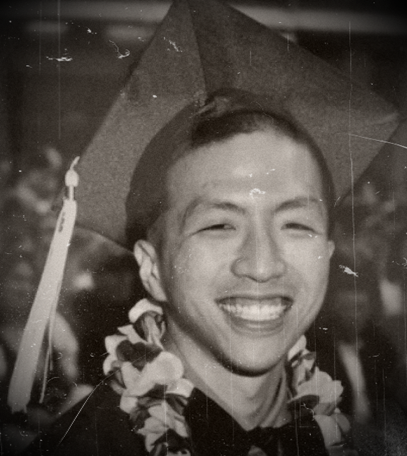
Aya Nakano was born on June 13th, 1990, and grew up in the San Francisco Bay Area. Those who knew him remembered an outgoing, personable young man who seemed to make friends effortlessly.
He attended Sacred Heart Preparatory School in Atherton, California, graduating in 2008. He subsequently enrolled at the University of Oregon, where he earned a bachelor’s degree in sociology in 2012.
By the summer of 2013, he had returned to Northern California and was living in Emeryville, a small city situated between Oakland and Berkeley. He was employed at a logistics firm and appeared to be settling comfortably into life after college.
Friends described someone who was enthusiastic about being back in familiar surroundings. He enjoyed spending time with the people he had grown up with, maintaining friendships formed during his college years, and playing basketball.
These descriptions were echoed by Aya’s family. His uncle, Troy Aquino, remembered him as friendly, good-natured, and generally inclined to avoid confrontation. His parents had even joked with him about staying out of trouble and not trying to become a hero when faced with a dangerous situation. Nothing about Aya’s life suggested that he would become the victim of a violent confrontation.
Wednesday, June 12th, 2013, began as an ordinary day for Aya. His twenty-third birthday was the following day, and his family had prepared a meal for him. Instead of heading directly home, however, he decided to spend part of the evening playing pickup basketball at the University of California, Berkeley. According to his uncle, the young man told his family that he intended to play basketball before returning home to eat the dinner they had prepared. His family expected to see him later that night.
After finishing at the recreation center, Aya got into his silver Jeep Cherokee and began driving toward Emeryville. The journey should have been short. Berkeley, Oakland, and Emeryville are closely connected cities in the East Bay, and Aya was traveling through an area he knew. By a little before eleven p.m., he had reached the vicinity of Stanford Avenue and Market Street in North Oakland.
At some point during the drive, however, Aya became concerned that another vehicle was following him. This detail was not widely discussed in the earliest reports of the murder but became especially significant in later coverage. In subsequent reports, local news organizations reported that Aya had called a friend shortly before his death and said that he was being followed. The public record does not establish exactly when he first noticed the vehicle, how long it had been following him, or whether he knew anything about its occupants.
At approximately ten fifty-seven p.m., Aya Nakano’s Jeep Cherokee was struck from behind by another automobile near Stanford Avenue and Market Street. Investigators identified the other vehicle as a newer-model, silver, four-door sedan with tinted rear windows.
The damage appeared consistent with a relatively minor traffic collision. Under normal circumstances, both motorists would have stopped, exchanged insurance information, and dealt with the matter through their insurance companies.
Aya did precisely what a driver would ordinarily be expected to do. He pulled over near the 5800 block of Market Street, in the vicinity of a bus stop and a liquor store. The silver sedan stopped nearby.
Two men then got out of the sedan and approached Aya. Precisely what was said during the confrontation has never been publicly established. Within moments, one of the men drew a handgun and fired. Aya Nakano was struck by a single gunshot.
The suspects immediately returned to their sedan and fled. Early police reporting indicated that they drove south on Market Street. Aya collapsed at the scene. The shooting was fatal. He died less than an hour before the beginning of his twenty-third birthday.
Oakland homicide detectives began investigating Aya Nakano’s murder. One of their most important early discoveries was that the area surrounding the intersection had surveillance cameras. Investigators obtained footage showing portions of the incident, including the suspect vehicle. Unfortunately, the available images were not clear enough to establish the suspects’ identities or determine the sedan’s license plate number.
Police described the vehicle as a relatively new silver four-door sedan, and considered whether the car might have sustained front-end damage during the collision. Detectives hoped that someone would recognize the sedan or remember seeing a similar vehicle in the neighborhood around the time of the shooting.
They also examined the physical evidence left behind by the collision. According to ABC7’s initial reporting, investigators collected paint samples from Aya Nakano’s damaged rear bumper. They hoped that the transferred paint might eventually help them connect another automobile to the crime.
Initially, investigators considered whether the killing had resulted from an unexpected escalation of a traffic dispute, or whether the men deliberately collided with Aya’s vehicle to force him to stop.
The sequence could, at least initially, have suggested an episode of road rage. A motorist rear-ends another car, an argument develops, and one of the participants responds with disproportionate violence. But the possibility that the collision had been staged was also under consideration from the beginning. The fact that two men emerged from the sedan and one immediately resorted to lethal violence made the case particularly disturbing.
Later developments gave investigators additional reasons to question the idea that this was simply a chance encounter. In June 2023, KTVU reported that the FBI believed surveillance footage showed Aya Nakano’s Jeep had been rear-ended deliberately. The suspects appeared to have singled out the victim’s vehicle and pursued it, although their reasons remained unknown. Investigators also emphasized that the assailants had not stolen anything from the victim.
On September 10th, 2015, more than two years after the murder, the Federal Bureau of Investigation announced a renewed effort to identify the men responsible. The FBI offered an additional $25,000 reward for information leading to the identification, arrest, and prosecution of those involved. By that time, Aya Nakano’s family had raised its own reward to $100,000, bringing the combined figure to $125,000.
The FBI released information about the murder and publicized the surveillance image of the suspected vehicle. The case was also featured in the Bureau’s National Digital Billboard Initiative, which displayed information about wanted individuals and unsolved crimes. Investigators hoped that the increased publicity would reach someone who had previously overlooked or withheld information.
Despite the substantial publicity and increased reward, however, the announcement did not produce an immediate public breakthrough.
The case resurfaced in the public eye again in June 2018, approaching the fifth anniversary of Aya’s murder. On June 25th, the Oakland Police Department and the FBI released a public service announcement specifically addressing his killing. The video was part of an effort to bring attention to older homicide investigations and encourage people with information to contact authorities.
June 12th, 2023, marked the tenth anniversary of Aya’s death. The renewed coverage included some of the most significant public statements about the investigation since the FBI became involved. Dan Costin, an FBI assistant special agent in charge, confirmed that federal investigators were continuing to assist Oakland police. Their work included collecting and examining evidence, as well as conducting DNA analysis.
Costin also offered important clarification about the apparent nature of the crime. Investigators no longer viewed the circumstances as a straightforward road-rage confrontation. The collision was believed to have been deliberate, and the suspects appeared to have targeted Aya Nakano’s vehicle.
Nevertheless, investigators had not established a motive. Costin also stated that the FBI had not identified a person of interest.
As of October 2026, Aya Nakano’s murder remains unresolved. The FBI continues to maintain an active appeal seeking information about the case.

